Travelling with kids — especially those with ADHD, sensory sensitivities or anxiety — takes planning. The key: compact, varied toys, fidgets within easy reach, and transition routines announced in advance. This guide brings together the practical travel tips with kids that separate an exhausting trip from a genuinely enjoyable one.
You know the moment: you've been on the road or in the air for 45 minutes, and the dreaded question floats up from the back seat — "Are we there yet?" With an energetic child, a highly sensitive kid, or an ADHD adventurer, the journey itself can become the main challenge of the trip. Boredom, sensory discomfort and the unexpected make a formidable trio.
The good news: the most effective travel tips with kids are often the simplest. You do not need a suitcase full of electronic gadgets — a few well-chosen toys, some discreet fidgets and a bit of thoughtful organization can completely transform the experience. Here is how to build your travel kit, head off sensory overload, and get through transitions without a meltdown.
Packing the perfect travel kit
Your travel kit is your secret weapon. The idea: everything your child needs to stay occupied without relying entirely on you during the journey. The golden rule — every item must fit in a child's backpack or a pouch you keep within easy reach, not buried in the trunk.
The essentials to slip into the kit
- Compact sensory toys: a Rolliii on a pencil, a fidget ring, a textured drawing pad — objects that keep fingers busy without making noise.
- Calm activities: reusable sticker books, activity pads (word searches, mazes), wax crayons (not markers that bleed through).
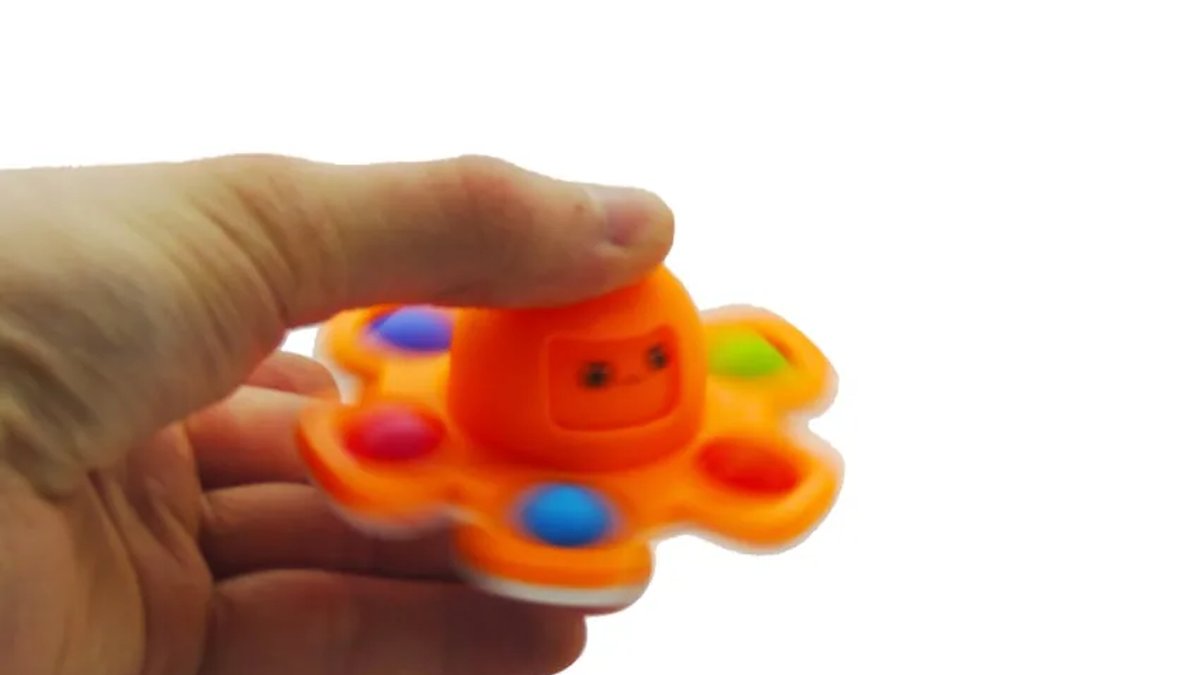
- A discreet fidget: a fidget pad or a fidget spinner ring — ideal on a plane or in a restaurant.
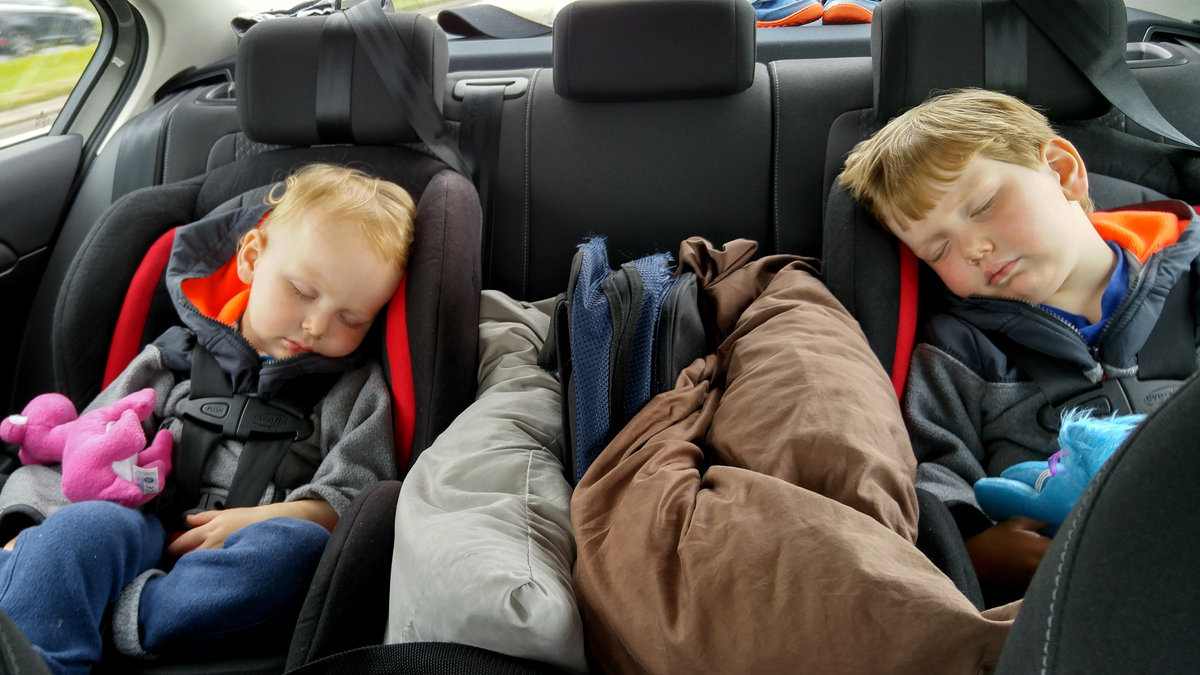
- Sensory comfort items: a favourite stuffed toy, a familiar lightweight blanket, noise-cancelling earmuffs if your child is sound-sensitive.
- Wrapped surprises: 2 or 3 small gifts wrapped in tissue paper to open mid-route — novelty captures attention like nothing else.
For long drives, pack one bag per child and don't forget the practical basics: wet wipes, non-sticky snacks, juice boxes, headphones, washable crayons and paper, charging cables, a light blanket (car air conditioning rarely pleases everyone) and a lap tray for meals. Audiobooks are a great option for children prone to motion sickness. Keep chewable anti-nausea tablets (ask your pharmacist which product and dose suit your child's age) and a few disposable plastic bags within reach, and consider handing out a small wrapped surprise every hour — kids remember it for years.
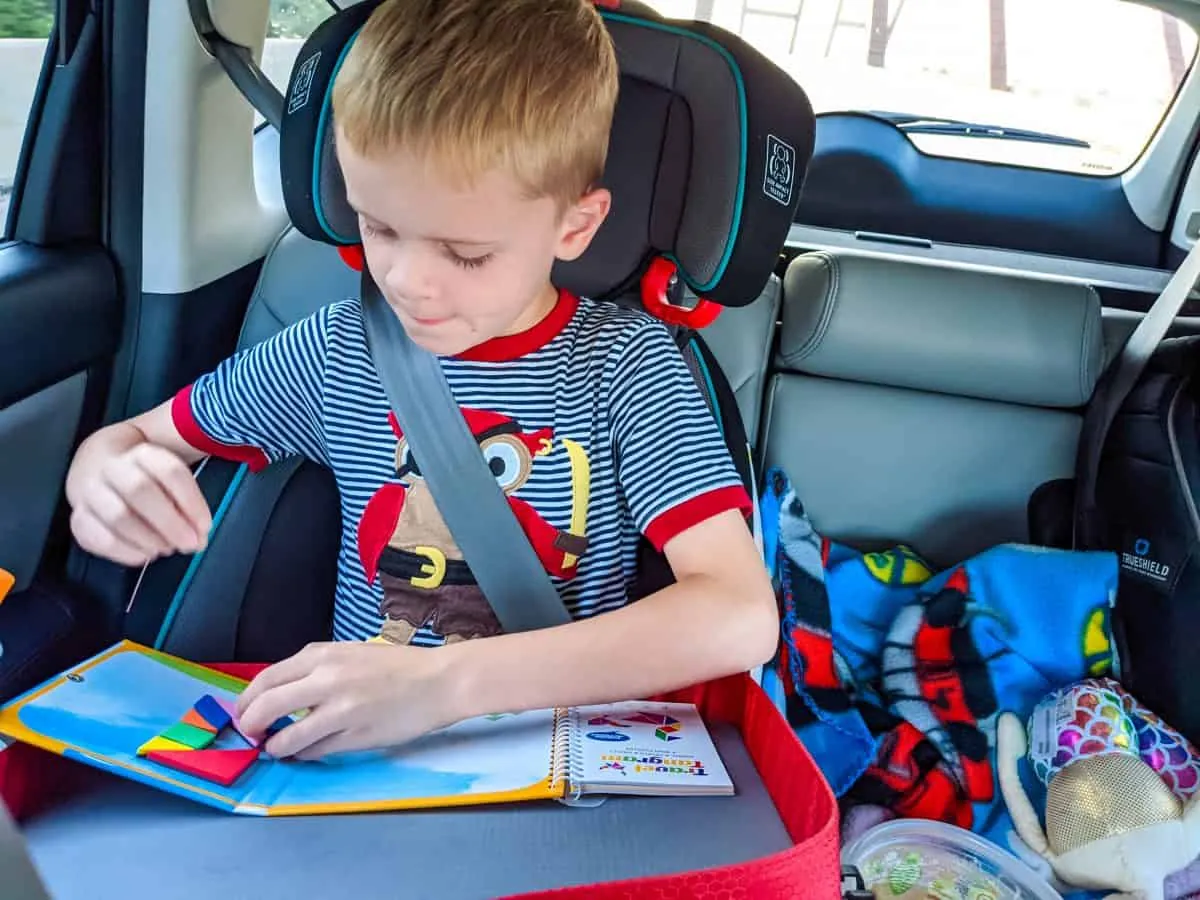
Tip: get your child involved in the packing. Let them choose 3 toys or activities to put in their own bag. That sense of ownership reduces restlessness and boosts engagement throughout the trip.
Best travel toys by age
Not all toys travel equally well. Here is a quick guide by age group so you pack what will actually keep your child occupied — not what will stay untouched at the bottom of the bag.
| Age | Recommended toys and activities | Why it works |
|---|---|---|
| 2–4 yrs | Soft figurines, touch-and-feel books, repositionable stickers | Short attention spans: variety and tactile handling are key |
| 5–7 yrs | Activity pads, magnetic travel games, fidget pad, wax crayons | Emerging reading and logic skills: simple challenges work well |
| 8–11 yrs | Books, card games, fidget spinner ring, creative journal, word games | Longer concentration spans: intellectual stimulation keeps them engaged |
| 12 yrs + | Graphic novels, travel journal, music, fidget cube, strategy games | Greater autonomy: they choose and manage their own time |
For children with ADHD, the best fidget toys are especially valuable during travel: they let kids move their hands discreetly, relieving the need for movement without disturbing fellow passengers. Think fidget pads, spinner rings, or therapy putty in a small resealable container.
Managing sensory sensitivity on the go
Some children — particularly those who are autistic, have ADHD or are simply highly sensitive — experience transport as a multi-sensory assault: engine noise, flickering artificial light, fast-food smells, seat vibrations, unexpected crowds. This sensory overload is real and genuinely exhausting.
Strategies to reduce overload
- Noise-cancelling earmuffs: child-sized noise-cancelling earmuffs filter sound spikes without completely cutting your child off — they can still hear your voice.
- Lightweight sunglasses: helpful for children who are sensitive to bright lighting in airports or train stations.
- Blanket or compression vest: gentle pressure calms many children who need proprioceptive soothing, although research on these products is mixed.
- Olfactory anchor: a few drops of a familiar essential oil (lavender, for example) on a handkerchief can recreate a reassuring sensory reference point in an unfamiliar environment.
The best gift you can give a sensory-sensitive child on a trip is preparation. A child who knows what is coming does not merely endure the journey — they move through it. — The Robiii team
For a deeper look at this topic, check out our article on creating a sensory diet for your child — the same principles apply on the road.
Travel tips with kids for meltdown-free transitions
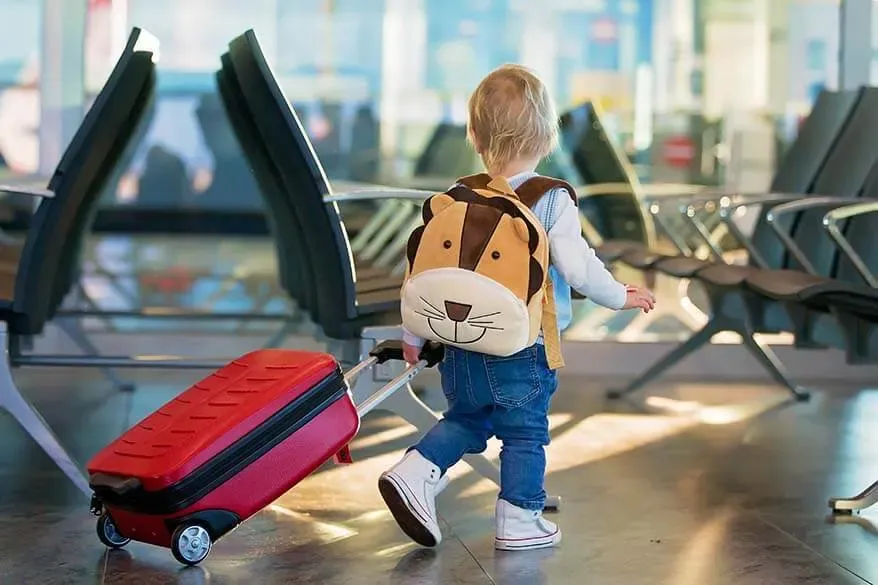
Airports, train stations, highway rest stops: these transition moments are often the hardest. A child does not always understand why they have to stop, start again, and keep waiting. A few strategies make a noticeable difference.
Announcing and visualizing the steps
Children — especially those with ADHD or anxiety — handle the unexpected far better when they have been prepared. Before the trip, walk through the main stages together: "First we drive two hours, then we stop for lunch, then one more hour and we arrive." A drawn or illustrated list works well for younger children.
Active breaks
In the car, plan a 10-minute stop every 60 to 90 minutes where your child can run, jump or stretch. That quick burst of physical activity often reduces restlessness in the minutes that follow. On a plane, a trip to the restroom or a few exercises in the aisle (shoulder rolls, ankle circles) go a long way.
- Announce the next step quietly, about 5 minutes before it happens.
- Use a mini sand timer to make wait time visible — even 5 minutes feels shorter when the sand is flowing.
- Have a "transition activity" ready — one reserved specifically for these moments (stickers, a card game) so there is something to do immediately.
- Stay calm yourself: sensitive children pick up adult stress like a sponge — your emotional regulation is contagious.
Good to know: if your child has an individualized education plan (IEP) or classroom accommodations, the same tools work on the road. A fidget during boarding, a blanket on the flight — small preventive adjustments like these head off meltdowns before they start.
Screens and digital balance during travel
The screen question divides parents — understandably so. Screens calm a tired or anxious child effectively, but overuse leads to overstimulation, headaches and meltdowns on arrival. A balanced approach works far better than an outright ban or unlimited screen time.
The alternating principle
Structure the journey in 20-to-30-minute blocks: 20 minutes of screen, then 20 minutes of a calm activity (drawing, a sensory toy, reading). This alternation reduces eye strain, prevents sensory saturation, and helps children maintain better self-regulation when you arrive.
For children with ADHD, stress-management tools between screen sessions make a real difference — a fidget in hand for 10 minutes helps them come back down before picking the tablet back up.
Content worth choosing
- Educational or creative apps (drawing, music, simple coding) rather than passive video streams.
- Audiobooks or children's podcasts: they engage the imagination without overloading the eyes.
- Games downloaded offline in advance — no Wi-Fi dependency, no frustration if the signal drops.
Screen-free car games for long drives
Sometimes the best entertainment is you. A few classics to lead from the front seat:
- I'm going on a trip: a memory game where each player adds an item to the suitcase and must repeat, in order, everything the others have said.
- The alphabet game: pick a category (animals, foods, cities…) and name one word for each letter of the alphabet, in order.
- The colour game: choose a colour and take turns spotting a new object of that colour outside the car.
- Guess the object: pick an object inside the car and give clues; the children ask yes-or-no questions to narrow it down.
- No yes, no no: players ask each other questions, but nobody may answer "yes" or "no" — whoever does is out.
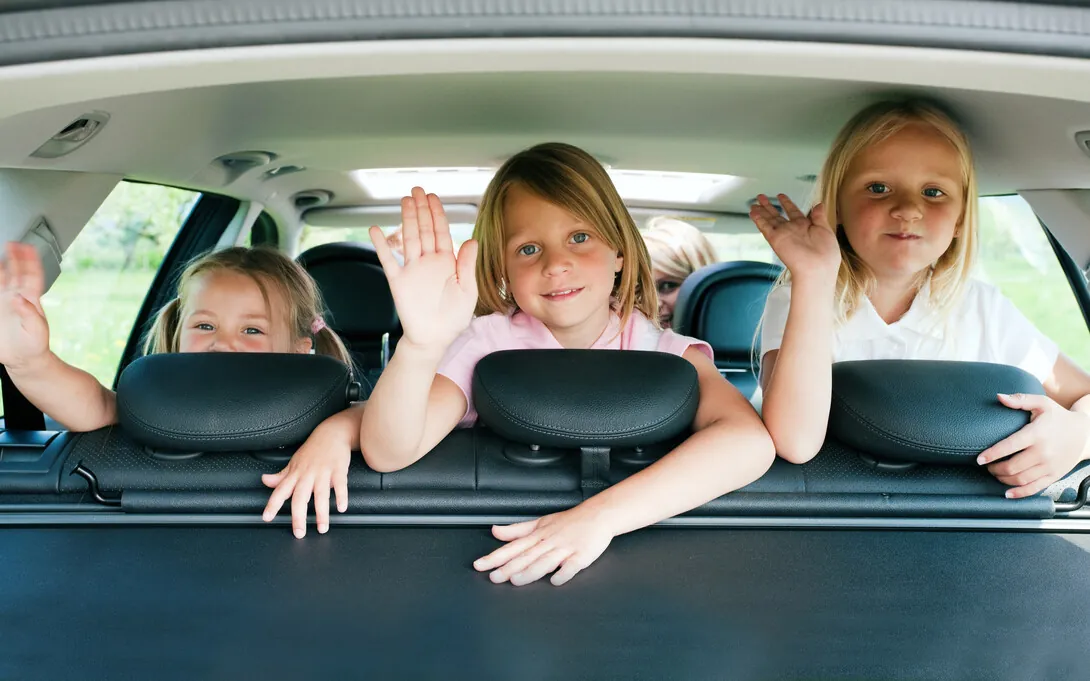
Older children can also help follow the route on the map, or leaf through brochures about your destination picked up at a tourist information booth to build excitement. And at every stop, take a few minutes to stretch your legs — some rest areas even have space to kick a ball around.
Specific travel tips for children with ADHD or autism
If your child has an ADHD diagnosis or is on the autism spectrum, certain travel strategies deserve extra attention. These children are not "pretending" to struggle: their brains process stimuli differently, and long journeys pile up sensory, cognitive and emotional challenges in a way that is genuinely taxing.
Before you leave
Run a "dress rehearsal" if you can. For a first flight, for example, visit the airport a few days beforehand to get familiar with the sounds, sights and procedures. For a road trip, do a short test run on the same stretch. This advance familiarization reduces anticipatory anxiety considerably.
During the journey
- Bring more snacks than you think you need — hunger amplifies irritability and emotional dysregulation.
- Always have a fidget or sensory toy in your pocket, not at the bottom of the bag.
- Use a mini sand timer or a visual timer app to make the remaining time concrete.
- Do not underestimate the power of quiet: sometimes 5 minutes with noise-cancelling earmuffs and eyes closed is enough to recharge a child who is hitting overload.
For broader strategies, our article on parenting children with ADHD covers many of these techniques in an everyday context — all of them adapt well to travel situations.
Parent organization: arriving in one piece
We talk a lot about the kids — but parents need a plan too. An exhausted parent loses patience faster, reacts more strongly to meltdowns, and recovers more slowly after the trip.
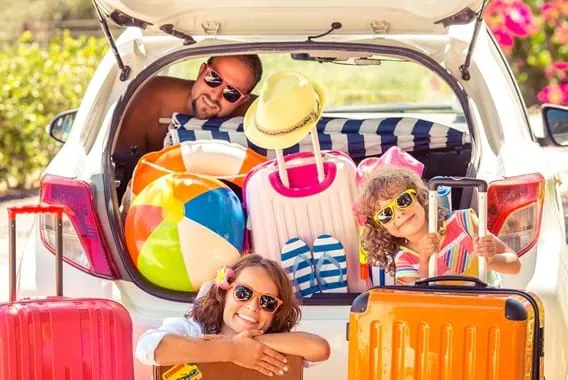
The zone system for your bag
Divide your carry-on or shoulder bag into three zones:
- Red zone (instant access): fidgets, snacks, tissues, medication if prescribed. What you need to reach in under 5 seconds.
- Orange zone (quick access): activity pads, a book, a light blanket. What you pull out every half-hour or so.
- Green zone (bottom of the bag): wrapped surprises, a change of clothes, a first-aid kit. What you use once or twice at most.
This system means you never have to empty the whole bag at the worst possible moment, lowers your own anxiety, and models organized thinking for your child.
Parent to parent: pick up a few small new toys from the Robiii shop and wrap them before you leave. The thrill of opening a "road gift" halfway through the journey reboots enthusiasm like magic — and buys you another 20 minutes of happy, focused play.