
Parenting a child with ADHD calls for consistency, flexibility, and the right tools. Clear visual routines, warm structure, and well-chosen sensory supports reduce daily stress and help your child reach their full potential.
Raising a child with attention-deficit/hyperactivity disorder (ADHD) is a journey unlike any other — demanding, sometimes exhausting, but also deeply rewarding. These children are often bursting with energy, creativity and enthusiasm; the challenge is learning to channel all of that rather than shut it down. This is not about stricter discipline — it is about smarter structure.
The tips below draw on evidence-based practices in child neuropsychology and on the real-world experience of thousands of families. They are designed to be put into practice today, without specialist training. Whether your child was recently diagnosed or you are refining your approach after years on this road, you will find concrete, accessible strategies here.
Understanding ADHD to parent more effectively
Before acting, it helps to understand what is actually happening in an ADHD child's brain. ADHD is not a lack of willpower, laziness, or the result of poor parenting. It is a neurological difference that primarily affects executive functions — the ability to plan, organize, start tasks, manage emotions and inhibit impulses.
The ADHD brain: a race-car engine in an ordinary body
Brain-imaging research shows that children with ADHD have slower development of certain regions of the cortex, most notably the prefrontal areas that govern attention control and planning. In a landmark NIMH study (2007), this developmental lag averaged around three years compared with neurotypical peers. In other words, a 10-year-old with ADHD may self-regulate more like a 7- or 8-year-old — not out of defiance, but because their brain simply is not fully "ready" yet.
The three main profiles
ADHD presents in three forms:
- Predominantly inattentive — the child seems to daydream, forgets belongings, struggles to finish tasks, but is not necessarily hyperactive.
- Predominantly hyperactive-impulsive — the child is constantly moving, interrupts, acts before thinking, but may have relatively intact attention in certain contexts.
- Combined presentation — both patterns overlap; a frequent profile in clinics.
To learn more about how ADHD works, read our article What Is ADHD? Understanding the Signs and Solutions.
Don't go it alone: a pediatrician, psychologist or child psychiatrist who specializes in ADHD can confirm the diagnosis and tailor a plan to your child. Medication is not automatically part of that plan; it is a case-by-case decision made with those professionals, and it works best alongside the everyday strategies below.

Building strong visual routines
Predictability is one of the greatest gifts you can give a child with ADHD. When the flow of the day is clear and consistent, the child does not have to spend cognitive resources "guessing" what comes next — they can spend them acting.
Why visual beats verbal
Repeated verbal reminders — "tidy your room," "put your shoes on," "hurry up" — land poorly with ADHD children. The message goes in one ear and out the other, not because the child does not care, but because working memory — often impaired in ADHD — cannot hold multi-step sequences. A visual support — picture chart, laminated checklist, pictograms — externalizes memory and frees the child from that load.
Building a morning routine that works
- Identify the 5 to 7 essential morning steps (wake up, wash, breakfast, get dressed, pack bag, shoes, leave).
- Create a visual list with images or pictograms, posted at the child's eye level.
- Pair a timer or giant sand timer with each step to make time visible.
- Prepare as much as possible the night before: packed bag, clothes laid out, lunch ready.
- Celebrate success, even partial: "You put your shoes on all by yourself this morning — well done!"

Tip: laminate the checklist and give the child a dry-erase marker to tick off each step. That physical gesture reinforces engagement and provides a concrete sense of progress.
Leaning into positive reinforcement
Research points to differences in the ADHD brain's reward system, which relies on dopamine — a neurotransmitter involved in motivation. In practice, children with ADHD tend to respond much better to frequent, immediate rewards than to punishments or delayed consequences. The golden rule: 3 encouragements for every 1 correction.
What actually works
- Specific praise: skip the vague "great job" in favour of "you put your backpack away without being asked — that's exactly what we wanted to see."
- Token systems: the child earns points or stickers for target behaviours, redeemable for a privilege chosen together.
- Positive surprise: an unexpected special moment (board game, outing) after a tough period that was handled well.
- Achievement board: a visual space where the child watches their progress accumulate — powerful for self-esteem.
Clear rules and bite-sized tasks
Keep house rules few, short and phrased in simple, positive language ("we walk inside"), and apply the same predictable consequence every time a rule is broken. Big jobs such as tidying a bedroom or finishing a worksheet should be broken into small steps given one at a time: each finished step is a quick win instead of an overwhelming mountain.

Children with ADHD often hear far more corrections than praise. Every sincere word of encouragement counters that effect and builds resilience. — The Robiii team
Using sensory tools every day
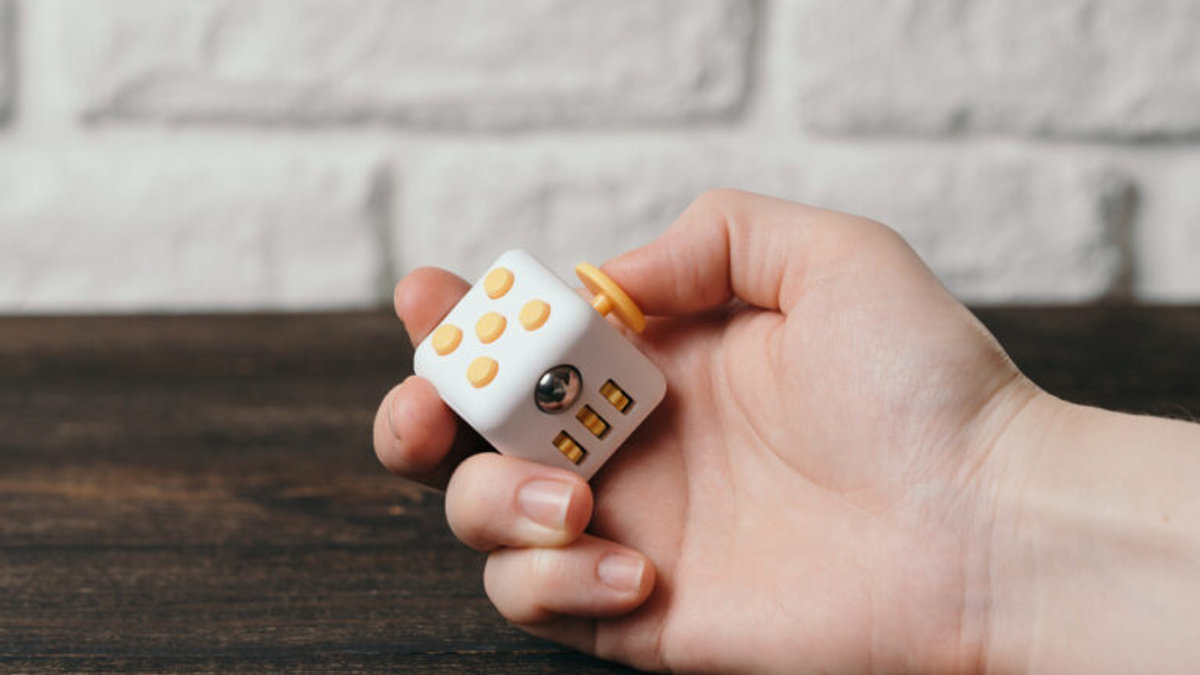
Children with ADHD often need movement and sensory stimulation to maintain the arousal level required for focus. For many of them, this stimulation helps rather than distracts. Fidget toys, therapy putty, seat cushions or stress balls give hands something to do while the brain concentrates on a cognitive task.
When and how to use sensory tools
| Context | Suggested tool | Why it helps |
|---|---|---|
| Homework and reading | Discreet fidget, spinner ring, putty | Keeps hands busy without engaging the eyes |
| Transitions or waiting | Fidget Pad, stress cube | Reduces impulsivity during unstructured moments |
| Calm-down time | Soft therapy putty, stress ball | Helps the child slow down and self-soothe |
| Classroom or meetings | Fidget ring, resistance band under the chair | Allows movement without disturbing others |
Our article on the benefits of sensory toys explains in detail why these tools work neurologically. You can also browse our store to discover our selection tailored to children with ADHD.
Keep in mind: a sensory tool is not a reward or a distraction. It is a therapeutic support. Frame it that way when speaking with your child's teacher to avoid misunderstandings.
Adapting the home environment
The physical environment plays a role that parents often underestimate in managing ADHD. An orderly, predictable space adapted to the child's needs can dramatically reduce friction.
The homework zone
Pick a quiet corner with minimal visual and auditory distractions. Screens should be out of sight during work periods. Good lighting, a properly sized chair and a clear desk all make a real difference. If your child needs to move, an inflatable seat cushion or wobble stool can reduce restlessness without hurting focus.
The bedroom
Simplify storage: too many options leads to paralysis and chaos. Labelled bins by category (toys, books, school supplies), closet doors without distracting mirrors, and dimmed lighting in the evening all ease the transition to sleep — often difficult for children with ADHD.
Reducing sensory overload
- Avoid overly cluttered spaces full of colours, posters or piles of toys during work time.
- If your child is hypersensitive to noise, noise-cancelling earmuffs can transform their school experience or homework sessions at home.
- Keep a short but daily tidying routine — 5 minutes before bath time — rather than one overwhelming weekly session.
Partnering with the school
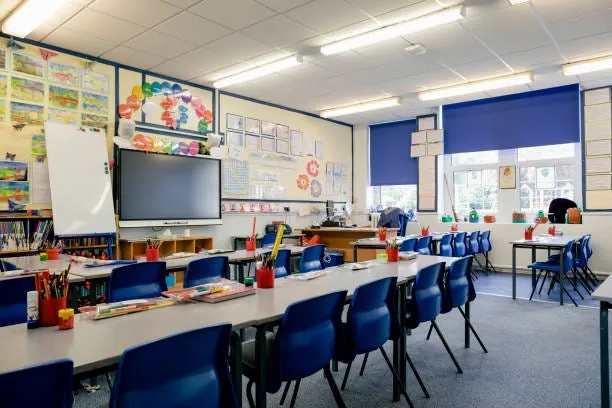
School support is one of the pillars of helping a child with ADHD. Regular communication between parents and teachers, an individualized education plan (IEP), and consistency between strategies used at home and at school make a real difference to the child's outcomes and well-being.
What you can ask the school for
- A seat near the teacher, away from windows and sources of distraction.
- Instructions given one or two steps at a time, ideally with a visual support.
- Regular movement breaks (5 minutes of movement every 30 to 40 minutes).
- Permission to use a discreet fidget in class.
- Extra time on exams if the IEP provides for it.
For concrete strategies to share with the teacher, read our article ADHD in the Classroom: Strategies for Teachers and Parents.
Supporting your child's emotional well-being
Children with ADHD often live with a recurring sense of failure, low self-esteem and emotional hypersensitivity. Emotional dysregulation — anger outbursts, intense frustration, sudden tears — is one of the least talked-about but most draining aspects of ADHD for the whole family.
Validate before correcting
When your child is mid-meltdown, their brain is literally overwhelmed. Logic and explanations have no traction at that moment. The first step is always emotional validation: "I can see you're really angry. It's okay to feel angry." That single gesture helps your child calm down before you move to problem-solving.
Activities that regulate
Physical exercise is one of the better-studied non-medication supports for ADHD: research reviews suggest that regular physical activity — and even a single session of moderate-to-vigorous exercise — can improve attention and executive functions, at least in the short term. Other regulating activities include:
- Creative arts (drawing, modelling clay, music) — often areas of strength for these children.
- Deep breathing or child-adapted mindfulness exercises (apps like Calm Kids or Headspace for Kids).
- Structured sensory play with kinetic sand, slime or therapy putty.
- High-intensity individual sports — swimming, martial arts, track — that offer both physical release and structure.

Build on strengths rather than plugging gaps
Every child with ADHD has zones of intense competence — areas where their capacity for focus and enthusiasm outstrips their peers. Identifying those passions and giving them a legitimate place in daily life (a club, a class, a project) is a direct investment in self-esteem and overall motivation.

Keep communication open, especially with teens
Set aside regular one-on-one time to talk, invite your child to share feelings and worries, and listen without jumping to solutions. With teenagers, involve them in setting realistic goals and teach time-management tools (a planner, phone reminders, a timer) so they gradually take ownership of their own organization.
Taking care of yourself as a parent
You cannot pour from an empty cup. Parenting a child with ADHD day in, day out is a marathon, not a sprint. Parents who neglect their own physical and mental health inevitably run out of resources precisely when their child needs them most.
Practical strategies for parents
- Join a support group — organizations like CADDAC (Centre for ADHD Awareness Canada) or local ADHD parent groups offer resources, meetings and a space to connect with people who truly understand.
- Read to understand — books like Taking Charge of ADHD (Dr. Russell Barkley) or The ADHD Advantage (Dale Archer) provide a solid evidence-based foundation.
- Consult a professional — a psychologist specializing in ADHD can help not only the child but also equip you with evidence-based parenting strategies.
- Celebrate small wins — the morning when your child put their shoes on without a reminder, the homework session that finished without tears — these moments count and deserve to be acknowledged.
You do not need to be a perfect parent. You need to be a good-enough parent who learns, adapts and keeps going. — The Robiii team
To go further and separate myth from reality about ADHD, read our article Understanding ADHD: Myths and Facts for Parents.