Noise-cancelling earmuffs passively reduce ambient noise for children who are hypersensitive to sound — autistic, ADHD or anxious. With a typical noise reduction rating (NRR) of 22 to 27 dB for children's models, they allow the student to stay in the classroom, focus and self-regulate without feeling overwhelmed. Comfortable, battery-free and reusable, they fit seamlessly into any classroom sensory box.
The bell rings, chairs scrape the floor, conversations overlap, the ventilation hums — for most children, this background noise goes practically unnoticed. But for a child who is hypersensitive to sound, that everyday cacophony can trigger a genuine internal storm: headaches, irritability, inability to follow instructions, meltdowns or withdrawal. Auditory sensory defensiveness is common in autistic children and is also seen in some children with ADHD or anxiety — and yet it remains poorly understood in schools.
The good news? A simple, discreet and affordable tool exists: noise-cancelling earmuffs for children. Far from being miniature construction-site hearing protection, modern models are designed to be worn in the classroom, at home and during outings, offering an acoustic shield without fully cutting the child off from the world. Here is everything you need to know to choose well, use them effectively and integrate them into your child's daily life or classroom routine.
What is auditory hypersensitivity?
Auditory hypersensitivity — also called hyperacusis or sensory sensitivity to noise — refers to an amplified neurological response to sounds. The child's brain processes sound information with a disproportionate intensity compared to what neurotypical people perceive. It is not a matter of willpower: it is a difference in sensory processing.
In a classroom of 25 students, the noise level can easily exceed 70 decibels during group activities (Shield & Dockrell, 2004). For a child with autism, ADHD or auditory hypersensitivity, that level can be genuinely painful and make learning almost impossible. At school, it shows up as trouble concentrating, intense emotional reactions to unexpected sounds, and sometimes a refusal to go to class or to the cafeteria.
Several neurodevelopmental profiles are associated with this sensitivity:
- Autism (ASD): a 2021 meta-analysis estimated that about 4 in 10 autistic people currently experience decreased sound tolerance, and about 6 in 10 at some point in their lives (Williams et al.). Sudden or repetitive sounds can trigger sensory overload meltdowns.
- ADHD: a less efficient attentional filter makes noisy environments particularly disruptive to concentration.
- Generalized anxiety: a nervous system on high alert interprets every sound as a potential threat, amplifying stress.
- Giftedness: some gifted children show multi-sensory hypersensitivity that includes hearing.
- Dyslexia and central auditory processing disorder (CAPD): difficulty isolating relevant sounds from background noise complicates understanding of verbal instructions.
Good to know: auditory hypersensitivity is not the same as hearing loss. The child hears very well — often better than average — but their brain does not efficiently filter out unnecessary or unpleasant sounds.
How noise-cancelling earmuffs work
Noise-cancelling earmuffs (or passive ear defenders) work through mechanical acoustic attenuation: the rigid cups surround the outer ear and create a barrier that absorbs and reflects sound waves before they reach the eardrum. No electronics, no batteries and no Bluetooth connection are required.
The noise reduction rating (NRR and SNR)
The level of protection is expressed in decibels (dB) according to two systems:
| Rating | Standard | Recommended use | Typical attenuation |
|---|---|---|---|
| NRR | North America (ANSI) | Everyday use | 22–27 dB |
| SNR | Europe (EN 352) | Everyday use | 26–31 dB |
| NRR 30+ | North America | Very noisy environments (concerts, construction sites) | 30–36 dB |
For everyday school or home use, an attenuation of 22 to 27 dB NRR is ideal: it dampens harsh sounds (background voices, cafeteria noise, fire drill alarms) while still allowing the child to hear their teacher's instructions clearly.
Difference from electronic noise-cancelling headphones
Active noise-cancelling (ANC) models use microphones and algorithms to cancel low-frequency sounds. They are more effective against continuous background noise (aircraft engines, ventilation), but cost significantly more, need regular charging and can be fragile in a child's hands. For most school settings, passive earmuffs offer the best balance of protection, simplicity and durability.
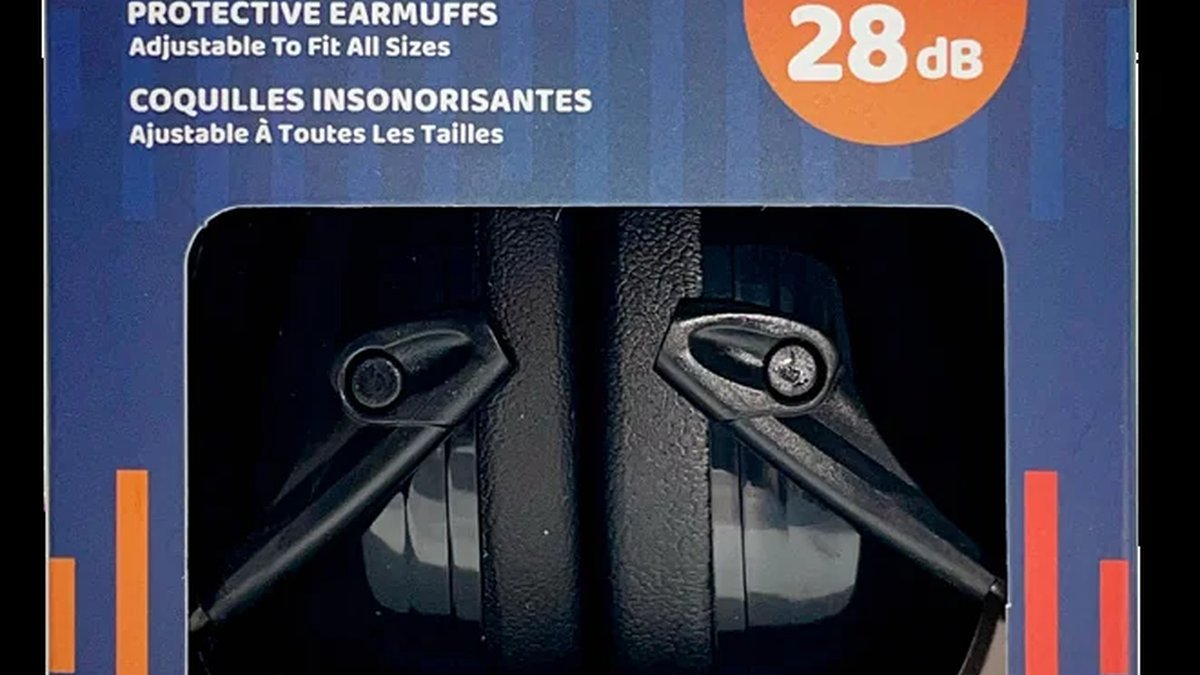
Robiii product
Noise-Cancelling Earmuffs
Passive ear defenders for children, designed to reduce ambient noise in the classroom and at home. Adjustable and battery-free — for sound-sensitive kids, teens and adults.
$32.99 CAD · View in store →
Colours, pricing and wholesale
Robiii's noise-cancelling earmuffs come in five bright colours: black, white, blue, pink and yellow. The suggested retail price is $32.99. Specialty shops, pharmacies, occupational therapy clinics and school co-ops can also order them wholesale: wholesale pricing is available to registered retailers. Wholesale orders start at $200 and ship within 3 business days — see our wholesale program.
How to choose the right earmuffs for your child
Not all ear defenders are created equal. Here are the essential criteria to evaluate before buying:
Fit and comfort
A headband that is too tight or cups that are too small will make the earmuffs unbearable after five minutes. Look for an adjustable headband, memory-foam or soft faux-leather cushions, and a weight under 200 g for preschool and elementary-aged children.
The right attenuation level
Resist the temptation to go for maximum protection. Earmuffs that are too isolating prevent the child from hearing instructions, communicating with classmates and remaining aware of their environment — which can create anxiety rather than reduce it. Aim for 22 to 27 dB NRR for everyday use.
Durability and ease of maintenance
Children are not gentle with their gear. Choose a steel headband covered in plastic, robust ABS cups and removable, washable cushions. Avoid models made entirely of rigid plastic that crack easily.
Tip: involve your child in choosing the colour or style of their earmuffs. When a child is proud of their tool, they use it willingly — which is exactly the goal.
Using earmuffs at school and at home
Noise-cancelling earmuffs are versatile. Here are the situations where they make the biggest difference:
- Individual work periods: the child puts them on to concentrate on reading, writing or math without being distracted by surrounding conversations.
- Assemblies and gatherings: a buzzing gymnasium during a school assembly can be a real ordeal for a hypersensitive child. Earmuffs reduce the sonic chaos without excluding the child visually from the group.
- Transitions and hallways: the hubbub between classes, locker doors slamming, students running — stimuli that can trigger overload. Wearing the earmuffs around the neck and lifting them as needed gives the child a sense of control.
- Homework at home: siblings, television, kitchen sounds — the home environment is often noisier than we realize. Earmuffs create a bubble of calm without requiring a separate room.
- Outings and public places: grocery stores, restaurants, birthday parties, public transit — high-traffic environments are among the most difficult for hypersensitive children. Earmuffs make these experiences far less stressful, alongside a well-planned sensory diet.
- During free play: some autistic children wear their earmuffs even during enjoyable activities to maintain their optimal activation level and prevent overload before it sets in.
Earmuffs also help during exams, in occupational therapy clinics and in very noisy public places such as shopping malls and movie theatres. In Quebec, ear defenders are a recognized accommodation that is commonly written into a student's intervention plan (plan d'intervention).
Noise-cancelling earmuffs do not cut a child off from the world: they turn the volume down so the child can finally participate in it fully. — The Robiii team
How to introduce earmuffs to your child
A new sensory tool, however useful, can be rejected if introduced awkwardly. Here is a four-step approach:
- Frame the tool positively: avoid linking them to noise as a problem. Instead say: "These earmuffs will give you a little extra quiet when you need it." Present them as a superpower, not a stigma.
- Let the child explore at their own pace: allow them to touch and try the earmuffs in a calm environment first — at home, while playing or reading — before introducing them in a noisy context.
- Set clear rules of use: agree together on the situations where earmuffs may be worn (individual work, hallways, outings) and those where they are not needed. The goal is to maintain normal social participation.
- Collaborate with the school: inform the teacher and, if needed, the occupational therapist or speech-language pathologist. An individualized education plan (IEP) can formalize the use of earmuffs as a reasonable accommodation, alongside other adaptations for autistic children.
Earmuffs in the classroom sensory box
A well-stocked classroom sensory box includes several complementary tools. Noise-cancelling earmuffs hold a prime spot because of their immediate effectiveness. Here is how to combine them with other sensory resources:
- Earmuffs + fidget: while the earmuffs filter noise, a handheld object like the Robiii Fidget Pad channels the need to move. The child enters a balanced sensory bubble that is conducive to concentration.
- Earmuffs + dimmed lighting: reducing auditory and visual stimuli simultaneously can help during a calm-down after overload.
- Earmuffs + sand timer: for individual work periods, pairing the earmuffs with a visual time cue helps the child know how long they need to maintain their focus effort.