
Raising an autistic child calls for adaptation, creativity and a great deal of patience — but also stable routines, sensory anchors and kind communication. The bond forms differently, less through words than through consistency, predictability and a genuine respect for the child's pace.
Receiving an autism spectrum disorder (ASD) diagnosis for your child is often a pivotal moment: a swirl of emotions, questions and sometimes a deep sense of isolation. But a diagnosis is not an ending — it is a starting point for understanding your child better, adapting your daily life and building a deep, genuine relationship together.
Over time, families who support an autistic child discover that love does not need a single language. The strategies that work best are not universal, but they share one thing in common: they respect the child's unique neurology rather than trying to force conformity. Here is a practical, warm-hearted guide to help you find your own path.
Understanding Autism Spectrum Disorder
Autism spectrum disorder (ASD) is a neurodevelopmental condition characterised by differences in social communication, interaction and sensory processing. The word "spectrum" is essential: no two autistic children are alike. Some are highly verbal with an intense passion for a specific subject; others are non-verbal and communicate through gesture, picture or eye contact.
The core features of ASD
Health professionals generally observe three affected areas:
- Communication: language delays, echolalia (repeating words or phrases), difficulty initiating or sustaining a conversation, literal interpretation of language.
- Social interaction: trouble reading facial expressions, tone of voice or implied meaning; preference for solitary or parallel play; awkwardness in peer exchanges.
- Repetitive behaviours and restricted interests: rigid routines, stereotyped movements (stimming), intense attachment to specific objects or subjects.
What a diagnosis changes
An official diagnosis opens the door to specialised services: speech-language therapy, occupational therapy, special education and early intervention programmes. In Quebec, the public health network (CISSS and CIUSSS) offers intensive behavioural intervention (ICI) to autistic children of preschool age, although access and waiting times vary by region (INESSS). Early action leads to better long-term outcomes — without promising a "normalisation" that is neither achievable nor desirable.

Key point: autism is not a disease to be cured. It is a different way of perceiving and interacting with the world. The goal of support is not to erase those differences, but to help the child build on their strengths and navigate daily challenges.
The Power of Routines and Structure
If you take one thing away from this article, make it this: predictability is a gift for an autistic child. The autistic brain processes uncertainty as a threat. When a child knows exactly what to expect, their nervous system relaxes and their ability to learn, play and communicate often improves.
Building visual routines
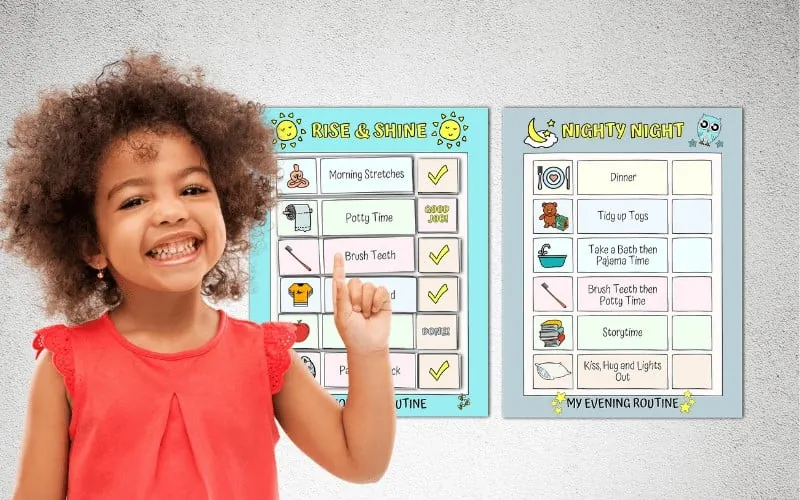
Words fade; pictures stay. A visual routine board — using picture symbols or photos of the child completing each step — turns an abstract sequence into something concrete and predictable. Here is how to build an effective one:
- Identify the toughest moments of the day (morning, after school, bedtime).
- Break each moment into 4 to 7 simple steps (one action per image).
- Laminate the images and add velcro so the child can handle and move them as they go.
- Post the board at the child's eye level in each relevant room.
- Review the routine calmly with the child every morning, before the day begins.
Managing transitions
Shifting from one activity to another is often the most explosive moment of the day. A visual time management tool — such as a sand timer or a colour-changing timer — announces the end of an activity in a neutral, predictable way. The child no longer struggles against you: they measure themselves against the object. That simple shift can reduce meltdowns.
A routine is not a cage — it is the safety net that lets an autistic child take risks, explore and even play freely, because they always know where they land. — The Robiii team
Compassionate Communication and Emotional Connection
Building a bond with an autistic child often means reinventing what "communicating" means. Connection can form in silence, in parallel play, in a shared glance at something fascinating. Here are some principles that genuinely make a difference.

Entering the child's world
Rather than always pulling the child toward your expectations, try sitting beside them and watching what captivates them. Roll the same toy car in silence. Watch the ceiling fan spin together. This "agenda-free presence time" builds trust more reliably than any structured session. Approaches like DIR/Floortime (Stanley Greenspan) are grounded in exactly this principle.
Simple, direct language
Less is often more. Short sentences, a calm tone, one instruction at a time. Avoid sarcasm, metaphors and irony — autistic children tend to interpret words literally. "Can you put your shoes on?" may be heard as a genuine question (answer: "Yes," shoes still on the floor). Say instead: "Put your shoes on."
Honouring all forms of communication
A child who points, takes your hand to guide you or uses a communication tablet is communicating — and that deserves to be celebrated. For non-verbal children, augmentative and alternative communication (AAC) tools — PECS boards, symbol tables, dedicated apps — are precious bridges to the world.
Creating a Sensory-Friendly Environment
Most autistic children have sensory differences — about three in four in a large U.S. study (Kirby et al., 2022): hypersensitivity (everything is too loud, too bright, too rough) or hyposensitivity (seeking intense sensations). In either case, the environment can become a constant source of stress — or, with the right adjustments, a place of regulation and calm.
Tip: work with an occupational therapist to establish a precise sensory profile for your child. That assessment guides adjustments at home and at school, and may include a personalised sensory diet.
Adapting the home
A few simple changes can make a significant difference:
- Lighting: replace flickering fluorescent bulbs with warm-spectrum LEDs. Blackout curtains can transform a bedroom into a calm retreat.
- Sound: identify trigger sounds (vacuum cleaner, hair dryer, alarms) and anticipate them with noise-cancelling earmuffs or advance warning.
- Textures: choose seamless, tag-free clothing, soft sheets and accepted food textures. Never force — sensory integration therapy proceeds gradually.
- Calm corner: create a decompression space (a tent, a corner with cushions, a weighted blanket) where the child can retreat without shame when overwhelmed.
Sensory toys as regulation tools
Sensory toys are not mere playthings: they are self-regulation tools. A child who chews their clothes needs oral input — a purpose-built chew tool is safer and more hygienic. A child who rocks or seeks proprioceptive input benefits from a weighted ball or vibrating cushion. These tools give the nervous system what it is asking for, reducing the need for more disruptive self-stimulation.
| Sensory need | Common sign | Adapted tool |
|---|---|---|
| Tactile (seeking) | Touching everything, mouthing objects | Therapy putty, textured balls |
| Tactile (avoiding) | Refusing certain clothing or food textures | Seamless clothes, adapted cutlery |
| Oral | Chewing clothes, pencils | Silicone chew tool |
| Auditory (avoiding) | Covering ears in noisy places | Noise-cancelling earmuffs |
| Proprioceptive | Jumping, rocking, crashing into surfaces | Trampoline, weighted blanket, compression vest |
| Visual (seeking) | Spinning objects, staring at lights | Sensory bottle, observation toys |
Taking Care of Yourself as a Parent
Talking about parental wellbeing in an article about autism is not a detour — it is a necessity. Studies consistently find that parents of autistic children report higher parenting stress than other parents (Hayes & Watson, 2013). That is not weakness: it is the reality of an intense, often isolated caregiving journey.

Finding your community
Isolation is one of the hardest challenges to manage. Support groups — online or in person (Autism Canada, the Fédération québécoise de l'autisme and its regional associations, Facebook parent groups) — offer a space to share, learn and feel less alone. Parents who "truly get it" are sometimes worth more than every psychology book put together.
Accepting help
Accepting respite care — from a trusted family member, a specialised childcare service or a funded respite programme — is not abandoning your child. It is giving yourself the means to be fully present when you are there. In Quebec, the Family Support Programme (PSF) offers respite allowances to families of children with disabilities.
Celebrating small wins
The journey with an autistic child is rarely a straight line. It is made of plateaus, setbacks and unexpected leaps forward. Learn to celebrate progress on your child's own scale — a first shared glance, a spontaneous word, a transition completed without a meltdown — rather than measuring against external norms. Those victories have a flavour all their own.

Playing with an Autistic Child: Approaches and Tools
Play is the universal language of childhood — and autistic children need to play just as much as anyone. Their way of playing may look different: more solitary, more repetitive, more focused on a particular object. Rather than "correcting" the play, use it as a door into the relationship.

Parallel play and imitation
Start by sitting beside the child and imitating what they do. If they stack blocks, stack blocks. It may seem like nothing, but it sends a powerful message: "I am here with you." Gradually, you can introduce small variations — placing a block next to theirs, offering a different colour — to create interaction without pressure.
Toys that tend to work
Every autistic child is different, but certain types of toys consistently appear in occupational therapists' and special educators' recommendations:
- Predictable cause-and-effect toys: xylophones, simple musical toys, shape sorters — the child controls what happens.
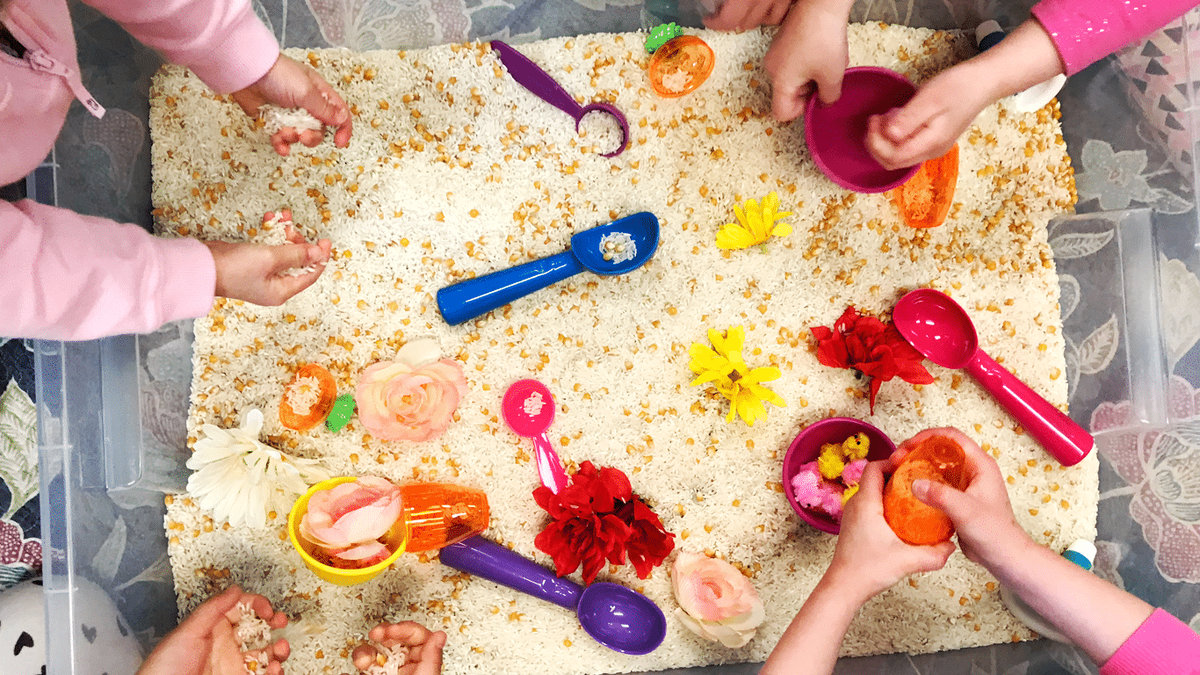
- Sensory toys: kinetic sand, sensory bins, spiked balls, Rolliii — for exploring sensations safely.
- Construction toys: Lego, wooden blocks, Duplo — support fine motor skills and sustained attention.
- Sorting and sequencing games: puzzles, matching games — well suited to children who love order and categories.
What matters is not that the child plays "correctly" by the rules, but that they find pleasure, mastery and — ideally — a point of contact with you or a peer.
Daycares, schools and therapy clinics can also buy sensory toys in bulk through our wholesale program.
At School and Beyond: Building a Team Around Your Child
Raising an autistic child is not a solo endeavour. School, therapists and extended family are essential partners. But that collaboration does not happen automatically — it is built, sometimes with effort.
Working with the school
In Quebec, students with ASD are entitled to adapted services under the Education Act. Here are some concrete steps to advocate for your child's needs:
- Request an Individualised Education Plan (IEP) from the very start of school — it is an official document, provided for in Quebec's Education Act, that defines objectives and support measures.
- Attend IEP meetings with your own written observations: what you see at home is valuable information for the school team.
- Keep a daily communication journal with the educator or teacher.
- Do not hesitate to request a special class, a classroom support worker or assistive technology if your child needs it.
The interdisciplinary care team
Optimal ASD support generally involves several professionals working together:
- Speech-language pathologist: for language, communication and sometimes texture-related eating difficulties.
- Occupational therapist: for sensory profile, fine motor skills and activities of daily living.
- Special educator / psychoeducator: for behaviour, routines and social integration.
- Psychologist or psychiatrist: if anxiety, depression or other co-occurring conditions are present.
For families waiting on long public-system lists, resources like adapted toys and well-documented family strategies can make a real difference while waiting for services to begin.