Effective stress management for kids rests on three complementary pillars: body-based techniques (breathing, movement), predictable routines that reduce uncertainty, and sensory tools that help the nervous system recalibrate daily. Used together, these approaches give children the skills to recognize their emotions and respond to them without being overwhelmed.
Does your child get stomachaches every Sunday evening before school? Are they irritable after a busy day, waking up at night, or falling apart when plans change? These aren't tantrums — they're signals that their nervous system is overwhelmed. Stress in children is real, and it deserves to be taken seriously well before it becomes a lasting pattern.
The good news: we now have a range of concrete, accessible, and evidence-backed strategies to help kids better manage their anxiety. Breathing exercises, consistent routines, sensory play, age-appropriate mindfulness — the goal isn't to shield children from emotions but to give them the tools to navigate them. Here is a thorough, practical, and compassionate guide.
Understanding stress in children
Stress isn't exclusive to adults. From a very young age, a child's brain responds to environmental pressures with the same hormonal cascade as adults — cortisol, adrenaline — with one key difference: the prefrontal cortex (the emotional regulation centre) is still developing. A stressed child doesn't yet have the neural pathways to "handle" what they feel on their own. They need adults to co-regulate with them.
The most common sources of stress
Every child is different, but certain stressors come up again and again:
- Academic pressure: tests, expectations, fear of failure or of disappointing adults.
- Social dynamics: conflicts with friends, exclusion, bullying.
- Life transitions: changing schools, a new sibling, moving, family separation.
- Overstimulation: excessive screen time, packed extracurricular schedules, noise, not enough unstructured downtime.
- Neurological differences: for children with ADHD, autism or anxiety disorders, ordinary daily life can itself be a significant source of stress.
Recognizing the signs
Stress signals look different depending on a child's age and temperament. In toddlers: frequent crying, clinginess, regressions. In school-age children: morning stomachaches, trouble sleeping, irritability or withdrawal. In preteens: chronic fatigue, loss of motivation, repeated physical complaints with no identified medical cause.
Good to know: occasional stress is normal and can even be motivating. It's chronic or intense stress — the kind that lingers, isolates, or disrupts sleep and appetite — that calls for careful attention and, sometimes, professional support.
Breathing techniques: the first line of defense
Breathing is one of the most accessible stress-regulation tools available, at any age. Slowing the breath engages the parasympathetic nervous system — the one that puts the brakes on the stress response — and sends a safety signal to the brain. Research on slow, paced breathing supports this calming effect, although results vary from person to person.
The 4-7-8 technique
Inhale through the nose for 4 counts, hold for 7, exhale slowly through the mouth for 8. This can work well for children aged 7 and up, especially before a stressful situation like a test or a difficult conversation.
Balloon breathing
Perfect for younger children: imagine inflating a big balloon in the belly as you breathe in, then slowly deflating it as you breathe out. The child can place one hand on their stomach to feel the movement. Simple, concrete, accessible from age 3 or 4.
Heart coherence breathing
Breathe in for 5 seconds, out for 5 seconds, repeat for 5 minutes. Practiced three times a day (morning, noon, evening), heart coherence breathing is a popular way to practise slow breathing and ease background anxiety. Free apps offer child-friendly visual guides.
Novelty, unpredictability, a threat to the ego and a low sense of control: these are the four ingredients of stress. — The "N.U.T.S." model of the Centre for Studies on Human Stress, founded by Dr. Sonia Lupien (Montreal)
Routines and predictability: reducing uncertainty
For a child's brain, uncertainty is one of the biggest drivers of stress. Not knowing what is going to happen — when or how — keeps the nervous system on high alert. That is exactly why predictable routines are among the most powerful tools in childhood stress management: they create a reliable structure the child can settle into.
A good stress-relief routine doesn't need to be rigid or long. What matters is consistency and predictability. Here are a few ideas for building calming daily rituals:
- A morning ritual: the same sequence of steps each day (wake up, breakfast, get dressed), possibly paired with a visual timer for children with ADHD.
- A decompression window after school: 15 to 20 minutes of unstructured free time before homework — no screens, just free play or a snack.
- An evening ritual: bath, reading, a brief check-in about the day (three good things, one hard thing). A consistent bedtime is especially protective.
- A designated calm corner: a soft space in the child's room where they know they can go when they feel overwhelmed — no punishment attached, no pressure to explain.
Tip: involve the child in building their routine. A child who has co-created their ritual buys into it far more than one who has had it imposed. Even a 4-year-old can choose between two options for the order of their bedtime steps.
Sensory tools: regulating through the body
Stress is not only a mental experience — it is, first and foremost, a physical one. The tension in the shoulders, the knot in the stomach, the restless hands — the body speaks before the child finds words. Sensory tools address precisely this reality: they deliver physical input that helps the nervous system recalibrate.
Several categories of sensory stress-relief tools exist:
| Tool type | Main effect | Sample use |
|---|---|---|
| Fidgets (hand-held objects) | Channels nervous energy in the hands | In class during a lesson, in the car, in a waiting room |
| Therapy putty | Releases muscle tension, keeps hands occupied | After school, before an anticipated stressful event |
| Weighted blanket | Calming deep pressure input (proprioception) | At bedtime, during a calm-down break |
| Stress ball | Immediate muscular release | Before an anxiety-inducing situation |
| Chewable tools | Addresses oral sensory needs | Continuously for children with a hypersensitive profile |
These tools are especially valuable for children with ADHD, autism or sensory hypersensitivity, for whom emotional regulation is often more challenging. But they benefit any stressed child, with or without a diagnosis. For guidance on choosing the right tool, see our article on the benefits of sensory toys.

At school, a discreet fidget toy in a pocket can make all the difference for a child who can't focus because their nervous system is running hot. Research on fidgets is still limited and mixed, so treat it as a trial: watch whether your child seems calmer and more on task with it.
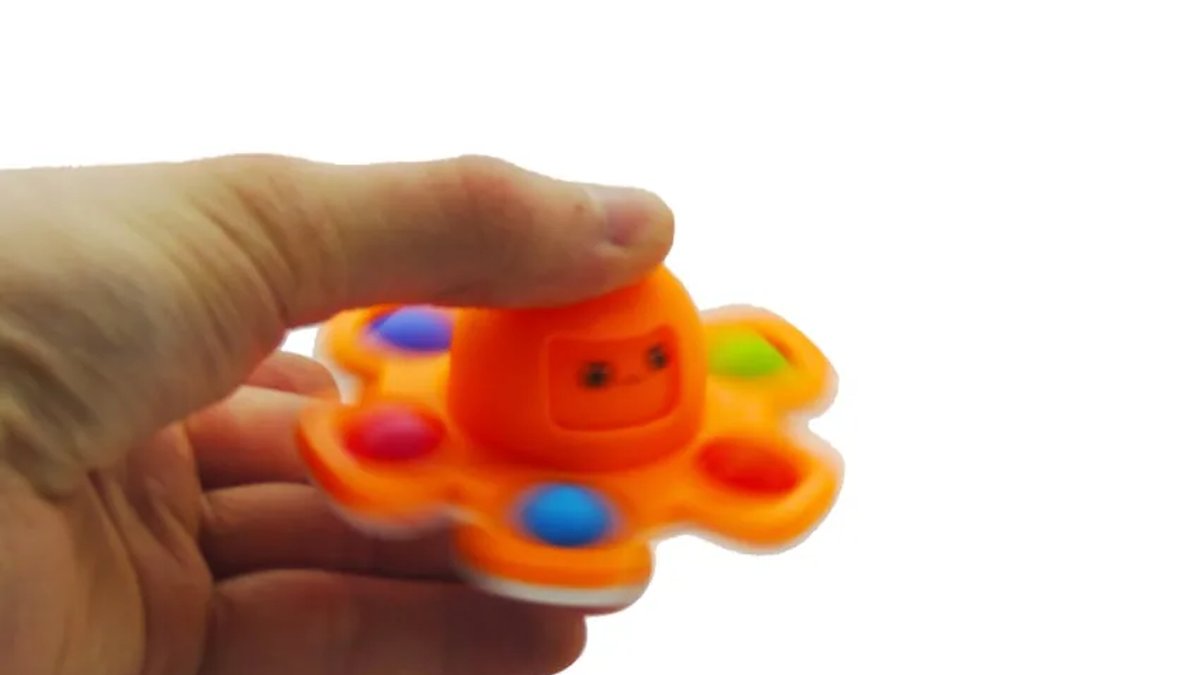
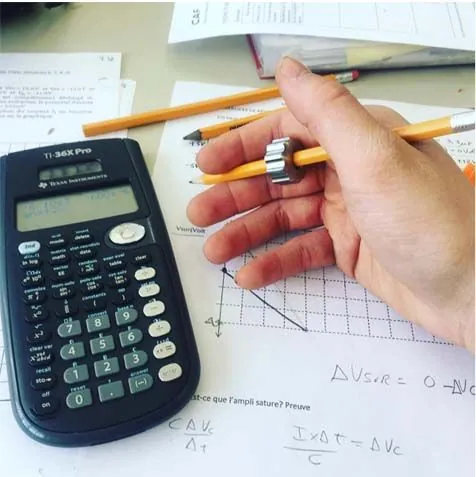
What matters is how the object is used. Spun just for fun, a fidget spinner is a toy; used deliberately to calm down — a stress ball you squeeze, a Rolliii you spin on your pencil — the object becomes a regulation tool, much as a computer can be either a distraction or a work tool. Without guidance on which tool to pick and how to use it, children (and adults) rarely get the full benefit, so show them when and how to reach for it. Silent and pocket-sized, the Rolliii works for adults too: in a meeting, in a waiting room or on the bus.
Mindfulness and emotional skills adapted for children
Mindfulness isn't reserved for adults on silent retreats. Adapted for children, it takes the form of short, playful exercises that train the brain to observe emotions without being swept away by them. In a randomized trial in British Columbia schools (Schonert-Reichl et al., 2015), children who followed the MindUP program showed better stress regulation and greater decreases in depressive symptoms and peer-rated aggression than a comparison group.
Practised regularly, even a few minutes of meditation a day can pay off: it can increase self-awareness, ease negative emotions, builds patience and tolerance, brings a fresh perspective to everyday problems and even boosts imagination and creativity.

The STOP technique
Teach the child the four-step STOP: Stop what you're doing, Take a deep breath, Observe what you feel in your body, Proceed with more calm. This simple tool can be used at school or at home, individually or as a group.
The emotion thermometer
A visual tool the child can use independently to rate the intensity of their stress on a scale of 1 to 10. It helps them name the feeling ("I'm at a 7"), move beyond the stuck "fine / not fine" binary, and identify the right moment to use a regulation strategy. From about age 5 or 6, this tool becomes very accessible.
The emotion journal
For children aged 8 and up, keeping a small journal where they write down one stressful situation each evening — how they felt, and what helped (or didn't) — builds self-awareness and emotional perspective. It also becomes a useful communication tool with parents and professionals if anxiety persists.
Heads up: avoid pushing a child to "calm down" or label their emotions at the peak of a crisis. Co-regulation first — a calm adult presence, gentle physical contact if welcomed — then words, once the storm has passed.
Physical activity and free play
Physical activity is one of the most powerful natural stress regulators available — for children and adults alike. Movement helps the body discharge the stress response and is linked to better mood. A 2021 meta-analysis (Carter et al., Journal of Affective Disorders) found that physical activity moderately reduced anxiety symptoms in children and young people, although the studies available were of limited quality.
But physical activity goes beyond organized sport. Unstructured outdoor play — climbing, running, rolling in the grass — is itself a form of sensory and emotional regulation. The body literally processes stress through movement. For children with ADHD or hyperactivity, a burst of physical activity before homework can transform a difficult session into a productive one. See our article on the best sports for children with ADHD for concrete ideas.
Conversely, too many structured activities and too little free time can paradoxically increase a child's stress. Non-directed play — without imposed rules or performance expectations — is essential for developing the capacity to self-regulate. According to child psychology, it is in free play that children learn to handle frustration, negotiate, and bounce back from disappointment.
When to seek professional support
The strategies in this article are everyday support tools, not substitutes for professional care. Certain signs suggest it is time to consult a doctor, psychologist or pediatrician:
- Stress has lasted more than two weeks with no improvement.
- The child has repeated physical symptoms with no identified medical cause: stomachaches, headaches, muscle pain.
- There is significant social withdrawal: the child avoids friends, activities, or school.
- Sleep is chronically disrupted: insomnia, recurring nightmares, frequent night waking.
- The child expresses persistent negative thoughts about themselves, life or the future.
- There are signs of self-harm or statements that raise serious concern.
In Canada, several resources are available: your family doctor, a school psychologist, community mental health services, or specialized youth mental health clinics. The key is not to wait for things to get worse. Asking for help early is a sign of strength.
For children with ADHD or specific needs, the strategies here pair naturally with the tips for parenting children with ADHD and the classroom strategies for teachers and parents we cover in our other articles.