Play is a child's first language. Long before children can name their emotions or reason abstractly, they play to understand the world, regulate themselves and form relationships. Developmental psychology broadly agrees: play is not wasted time — it is brain-building in action. Cutting play time means depriving a child of their primary engine for emotional, social and cognitive growth.
"Stop playing and do something useful." How many generations have heard those words without ever questioning them? Yet for more than a century, developmental psychologists have repeated the same message: play is the most serious activity of childhood. It is not time stolen from learning — it is learning itself, dressed up as fun.
From Jean Piaget to Lev Vygotsky to Donald Winnicott, the towering figures of child psychology spent decades documenting the ways play shapes the brain, emotions and relationships. What science confirms today goes well beyond parental common sense: the role of play in child psychology is fundamental, universal and irreplaceable. Here is why — and how to honour that truth every day.
The major theories of play in child psychology
Modern psychology did not invent the idea that play matters — but it documented it rigorously. Three names dominate the scientific literature.
Piaget: play as a cognitive engine
For Jean Piaget, play both reflects and supports each stage of cognitive development. He described three main forms of play — practice play, symbolic play and games with rules — and researcher Sara Smilansky later added constructive play to his model:
- Practice play (0–2 years): the child repeats actions for the sheer pleasure of it — shaking a rattle, dropping an object again and again. They are exploring causality and object permanence.
- Symbolic play (2–7 years): a spoon becomes a rocket, a shoebox becomes a house. The child develops abstract thinking and language.
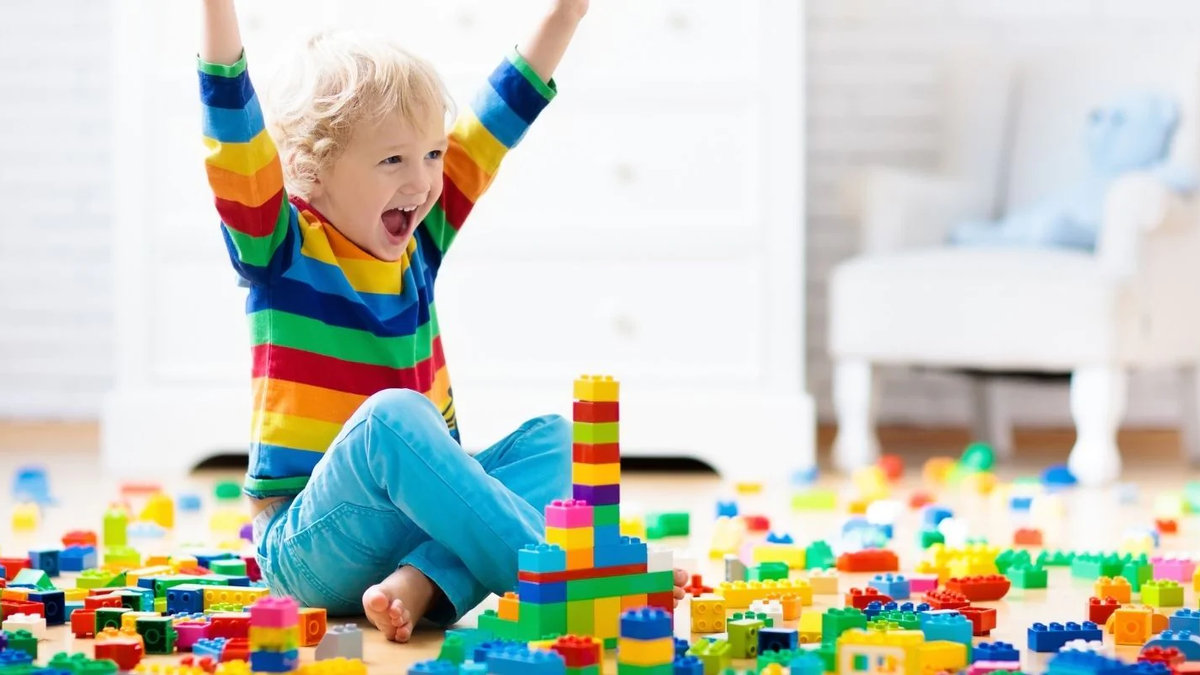
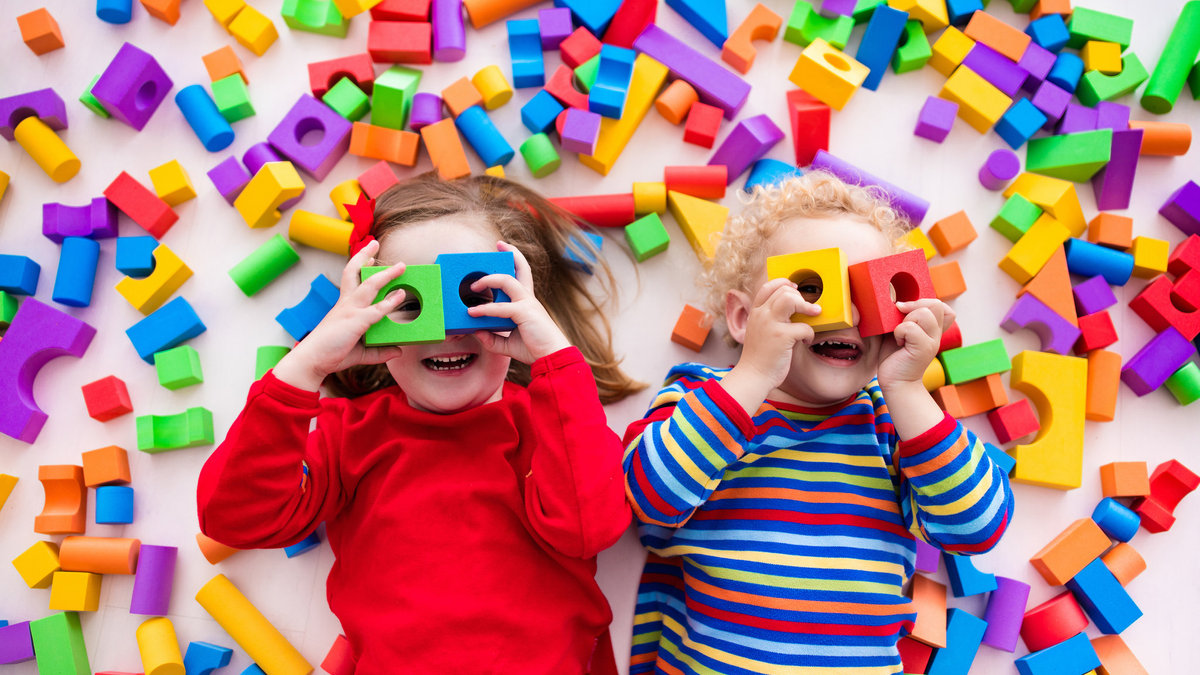
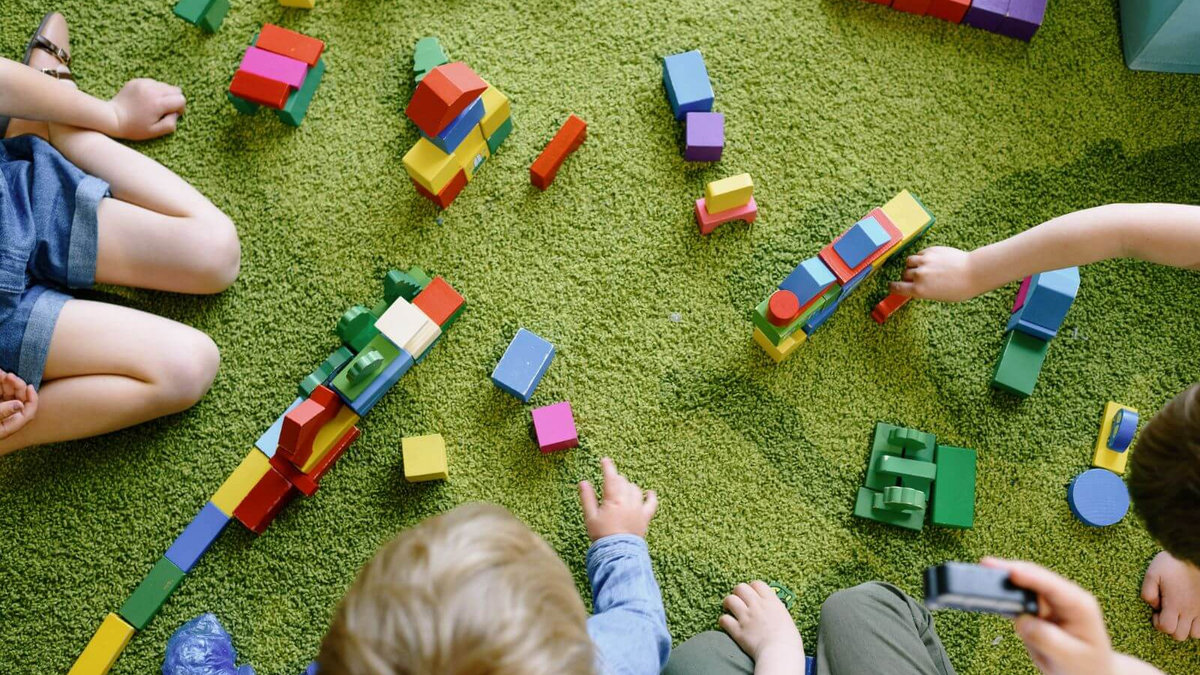
- Constructive play (from age 3): stacking blocks, completing puzzles. This builds planning, fine motor skills and problem-solving.
- Games with rules (from age 7): board games, sports. The child internalizes social norms, competition and cooperation.
Vygotsky: play as a zone of proximal development
Lev Vygotsky saw symbolic play as a natural "zone of proximal development": when playing, a child consistently acts above their usual level. A 4-year-old playing "doctor" demonstrates attention, speech organization and emotional control they would not show in a non-playful context. Play, therefore, is a developmental accelerator.
Winnicott: play as transitional space
Donald Winnicott emphasized the emotional dimension: play unfolds in a transitional space between the child's inner world and external reality. This space — neither fully real nor fully imaginary — is precisely where the child learns to tolerate uncertainty, experiment without serious consequences and find their own solutions.
Key takeaway: these three theories complement one another. Play is not a harmless pastime between serious moments — it is the core work of childhood.
Play and emotional development
On an emotional level, play is both a laboratory and an outlet. A child who replays the same scene — their character lost in the forest and then found by their parents — is not simply bored: they are processing real anxiety in a safe container.

Researchers think play engages both the brain's emotional systems and the prefrontal cortex, which helps explain its role in emotional development. In practice, play allows the child to:
- Put words to their feelings through the characters they embody.
- Experience stressful scenarios (conflict, loss, danger) without real consequences.
- Build frustration tolerance by accepting game rules and defeats.
- Strengthen self-confidence through gradually mastering playful challenges.
- Release tension: many children come out of a free-play session calmer than they went in.
This is precisely why child therapists use play therapy: it gives access to difficult emotions that words alone — especially in children under 8 — cannot reach.
The highest form of research is essentially play. — Neville V. Scarfe, education professor (1962), a line often misattributed to Albert Einstein (Quote Investigator)
Play and cognitive development
Every game of hide-and-seek, every Lego session, every make-believe scenario exercises executive brain functions — and strengthens them. Cognitive psychology identifies several key mechanisms.
Working memory
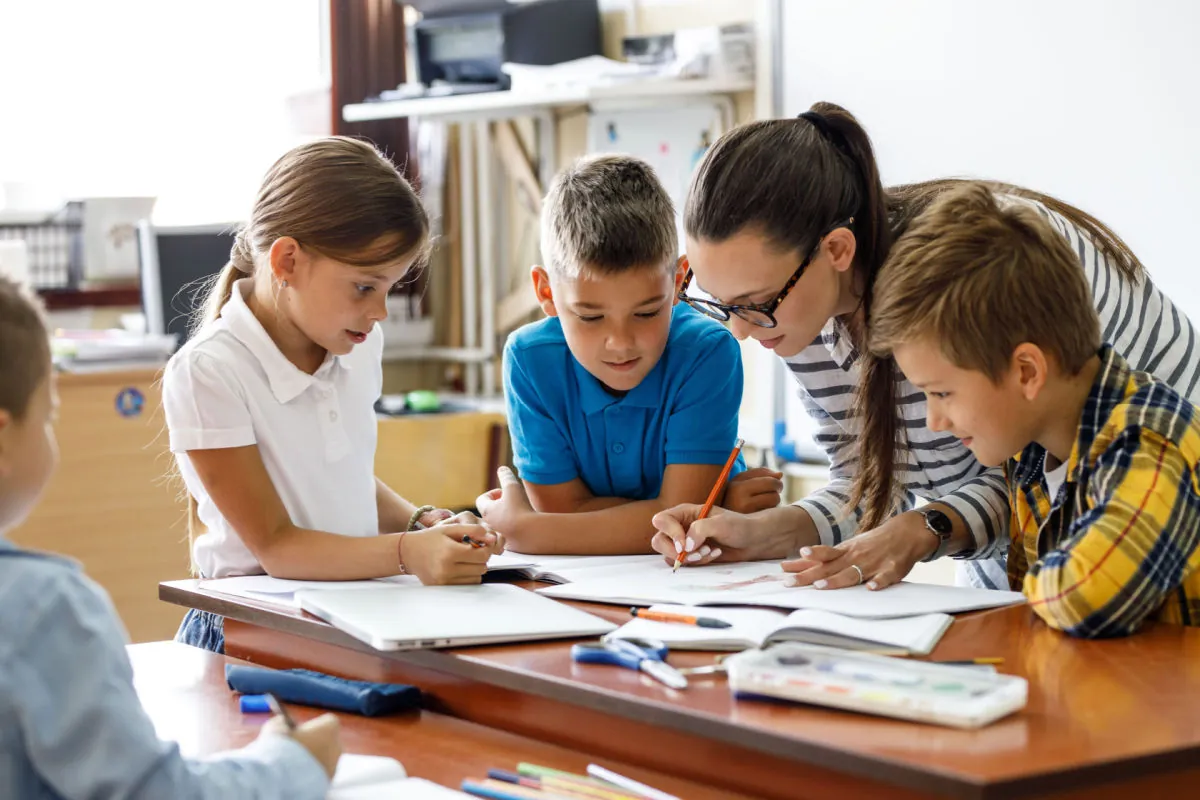
To play a board game, a child must hold the rules, the state of the game and their intended strategy in mind — all while interacting with other players. This constant exercise strengthens working memory, one of the best predictors of academic success.
Cognitive flexibility
Symbolic play requires the child to continuously shift between reality ("I know this is a stick") and imagination ("in our game it's a sword"). Holding two representations simultaneously is the very definition of cognitive flexibility — a key skill in learning to read and do mathematics.
Problem-solving
When a block tower falls for the third time, a child does not give up: they adjust their approach. This try-fail-adjust cycle, repeated hundreds of times in free play, builds a healthy relationship with failure and develops persistence.
| Type of play | Cognitive skills developed | Concrete example |
|---|---|---|
| Symbolic / role play | Cognitive flexibility, language, empathy | Playing store, superheroes |
| Constructive play | Fine motor skills, planning, spatial reasoning | Lego, wooden blocks, puzzles |
| Games with rules | Working memory, impulse control, cooperation | Board games, card games |
| Physical play | Coordination, emotional regulation, body awareness | Tag, climbing, dancing |
| Sensory play | Sensory integration, concentration, calming | Sand, water, modelling clay, fidget toys |
Play and social development
Play is the first school of social life. It is through playing with others that children learn the unspoken rules of living together, long before school explicitly teaches them.
Empathy and perspective-taking
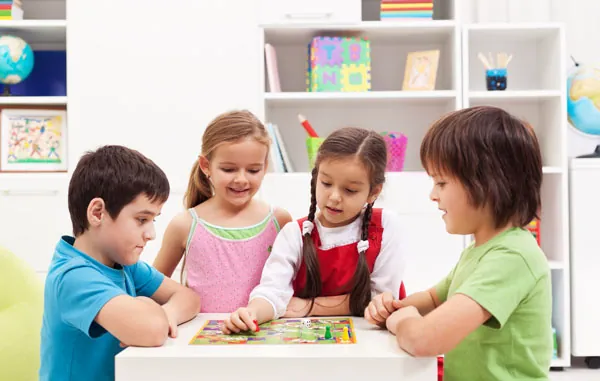
Pretend play — being the "villain," the "injured princess" or the "doctor" — requires stepping into someone else's shoes, imagining their thoughts and feelings. This process gives children practice at empathy. Studies have linked role play with theory-of-mind skills, although a major review concluded that the evidence is inconsistent and that play's causal role remains unclear (Lillard et al., 2013).
Negotiation and conflict resolution
"I'm the captain!" — "No, I am!" These playground arguments are not mere noise: they are real-time negotiation lessons. The child learns to assert their point of view, listen to another's and find a compromise — or to manage disappointment when the compromise does not favour them.
Cooperation skills
Cooperative games — where all players win or lose together — are especially powerful for building teamwork, communication and solidarity. For more on this topic, our article on toys and social skills outlines the best practices in detail.
Language and communication
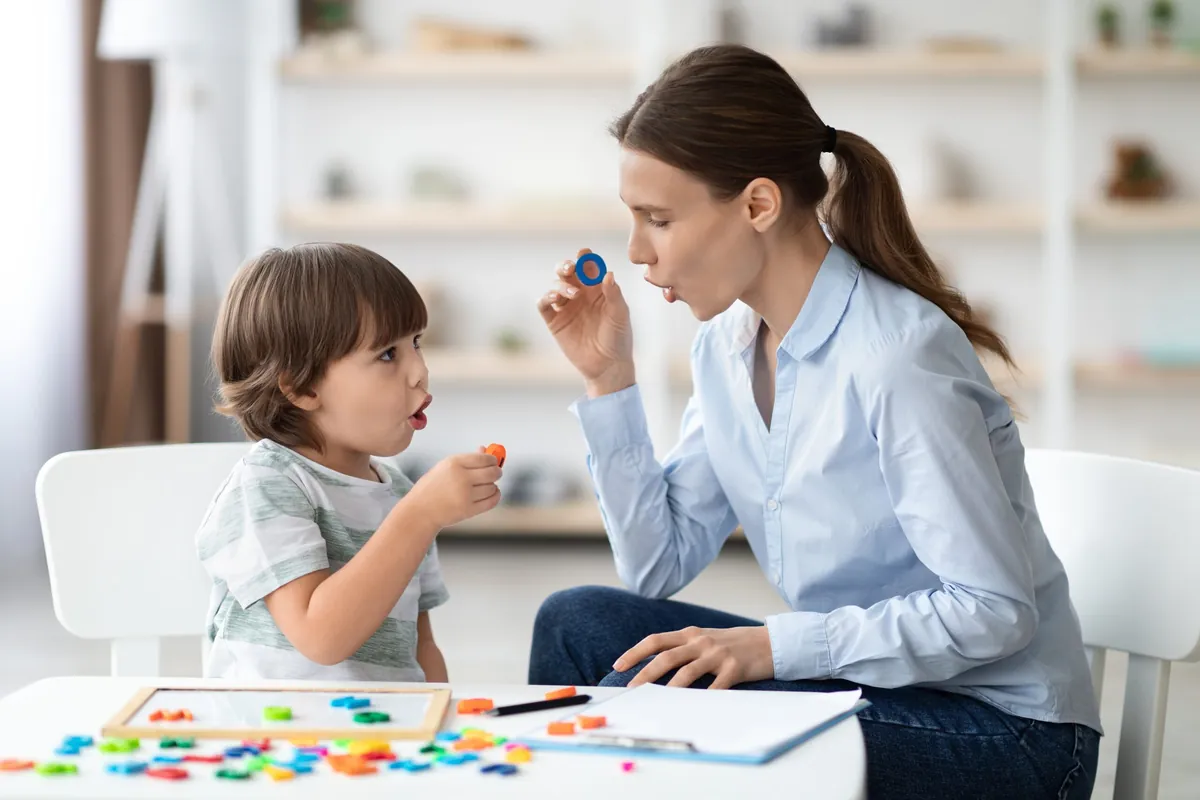
Play is also one of the richest settings for language. While playing, children hold conversations, ask questions, negotiate roles and tell stories, alone or with others. Role play and storytelling expand vocabulary and comprehension and lay the groundwork for both verbal and non-verbal expression.
Practical tip: introduce at least one cooperative game into your weekly family routine. Titles like Hoot Owl Hoot, Max, or collaborative building sets work well from age 3 onward.
Free play versus structured play: which should you choose?
The debate between advocates of free play and advocates of structured activities is often poorly framed — in reality, both are necessary and complementary.
Free play — without an adult directing or a set objective — is the soil in which creativity, autonomy and divergent thinking grow. A child who decides for themselves what to play develops initiative, the ability to sit with boredom without catastrophizing, and the drive to invent their own solutions. A 2014 University of Colorado study found that 6- and 7-year-olds who spent more time in less-structured activities showed better self-directed executive functioning (Barker et al., Frontiers in Psychology).
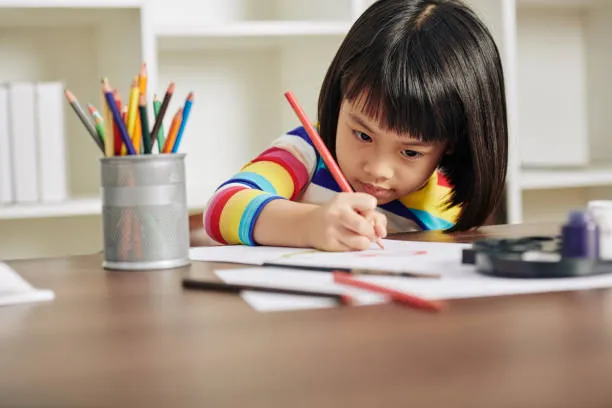
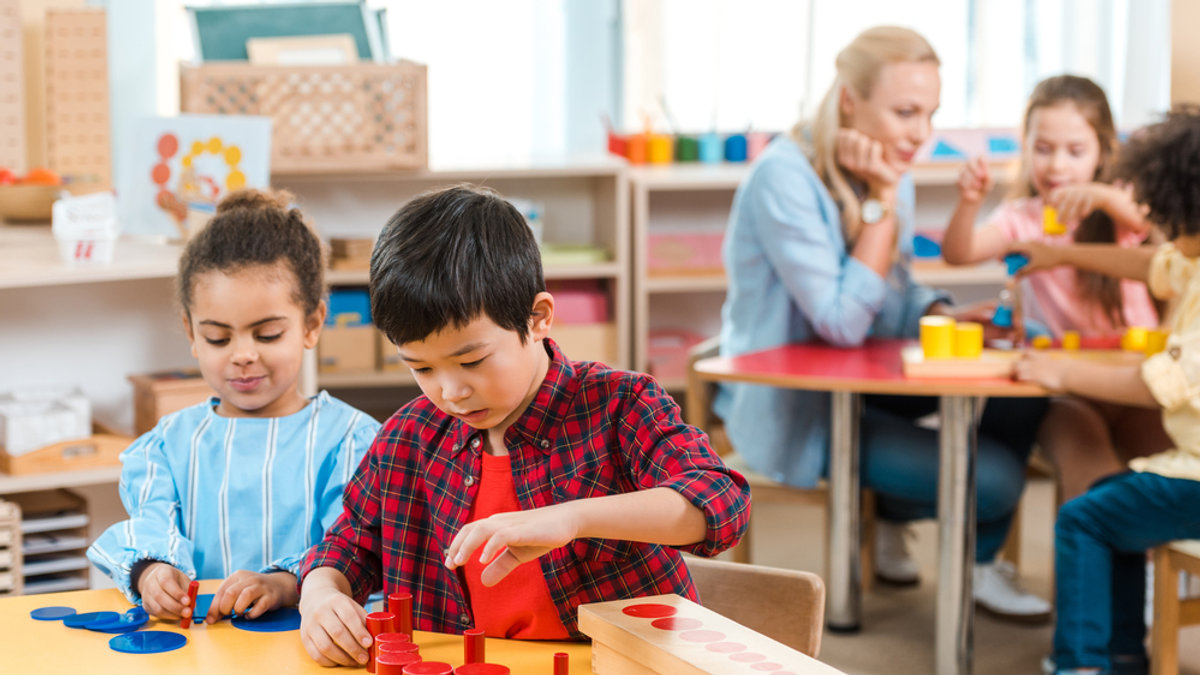
Structured play — sports, music lessons, board games with precise rules — brings different benefits: following instructions, mastering technique, experiencing performance and organized group dynamics. The Montessori approach offers an inspiring example of how to structure an environment without dictating the play itself.
- Active play: the WHO and Canada's 24-Hour Movement Guidelines recommend at least 180 minutes of physical activity a day for children aged 1 to 4 — much of it can be free play, ideally outdoors.
- Structured play: 2 to 3 organized activities per week at most, to avoid schedule overload.
- Balance: let your child be bored sometimes — boredom is the precursor to creativity.
Play for children with special needs
For children growing up with ADHD, autism spectrum disorder (ASD), anxiety or dyslexia, play takes on even greater importance — though it sometimes needs to be adapted.
ADHD and play
Children with ADHD often struggle to sustain attention in long or complex games, but they thrive in play that offers varied stimulation, a fast pace and immediate rewards. Fidget toys play a dual role here: they channel the need to move while allowing the child to focus on another activity. Sensory tools such as therapy putty or the Rolliii are especially popular.
ASD and play
Autistic children often develop highly specific play centred on precise interests and personal rituals. Rather than forcing a more "typical" style of play, specialists recommend joining the child in their own play and gradually broadening the repertoire. Sensory toys — varied textures, lights, gentle sounds — facilitate engagement and regulation.
Anxiety and play therapy
For anxious children, play is often the only pathway to what troubles them. Play therapy — practised by trained psychologists — builds on exactly this principle. At home, offering a child a safe, non-judgmental play space (even if their imaginary scenarios are dark or repetitive) is already a form of meaningful support. Our article on toys for child development can guide you toward the right tools.
Watch for this: if a child consistently avoids play with peers or displays very repetitive and distressing play themes, a consultation with a mental health professional is worth pursuing.
The adult's role in children's play
Adults are not absent from children's play — they play a crucial role, as long as they play it well.
Creating a supportive environment
An adult who sets up a safe space, provides varied toys and adapts the environment to the child's sensory needs is already doing significant work. A quiet corner with open-ended toys (blocks, crayons, modelling clay, sensory toys) stimulates development more effectively than a room full of screens.
Playing with the child — without taking over
When a parent plays with their child, they must resist the urge to direct the play, correct mistakes or "do it better." The principle of floor time, developed by Dr. Stanley Greenspan, is simple: follow the child's lead, enter their world, comment without judging. Many clinicians recommend it as a simple way to strengthen the parent–child connection.
Protecting play time
In a world where children's schedules are often packed with extracurricular activities, protecting unstructured free-play time is a conscious decision. The World Health Organization recommends at least 3 hours of physical activity (including play) per day for children aged 1 to 4 (WHO, 2019).
Play is a child's natural response to their own existence. — The Robiii team
When it comes to toys, choosing objects that stimulate without prescribing makes all the difference. To go further, our complete guide to toys for child development offers age-by-age recommendations, and our article on the Montessori approach presents a full philosophy for turning the play environment into a learning tool.