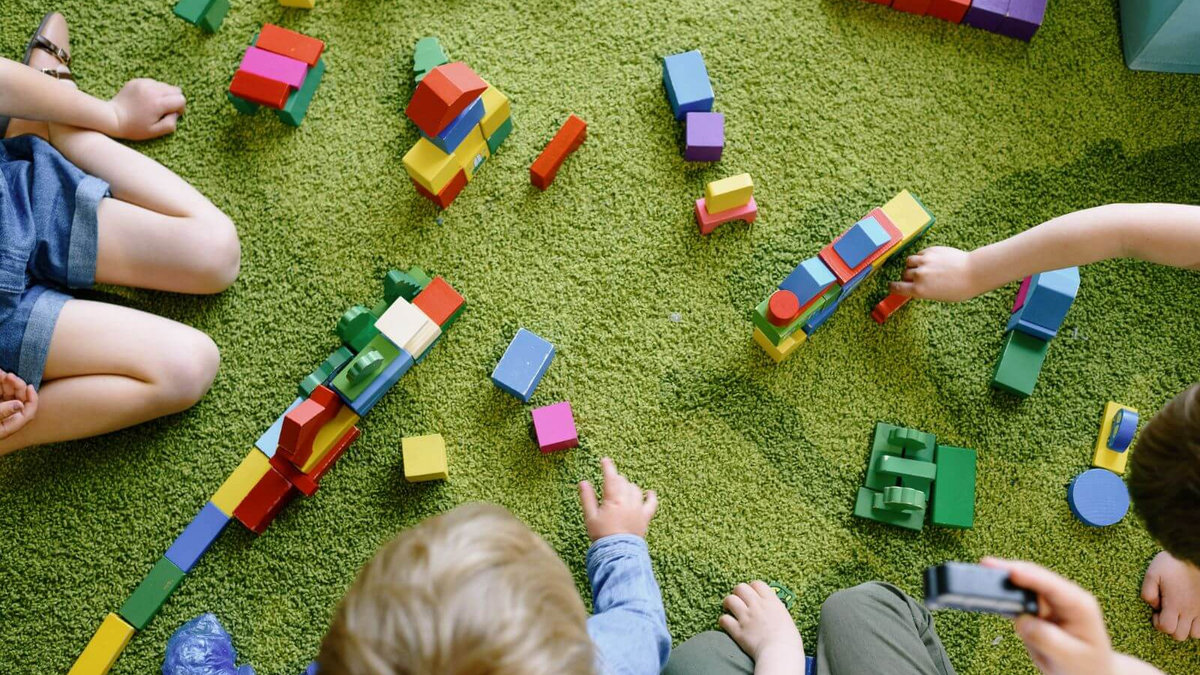

The Montessori approach makes play the primary engine of learning: children freely choose their activities, work with concrete, hands-on materials and discover their own mistakes. The result is deeper focus, stronger independence and a positive relationship with learning that lasts well beyond early childhood.
More than a century ago, an Italian physician named Maria Montessori noticed something remarkable: when children were free to choose their own activities in a carefully prepared space, they became deeply absorbed in their work, concentrated for surprisingly long stretches and learned with obvious joy. No punishments, no external rewards — the pleasure of discovering was enough.
Today, the Montessori method is practised in some 15,700 schools around the world (according to the 2022 Global Montessori Census), and its principles inspire parents at home as much as educators in the classroom. Here is how it works, why it works and how to weave it into everyday life — with or without specialist materials.
The core principles of Montessori teaching
The Montessori method rests on a handful of key ideas that run through every aspect of the approach — materials, environment and the adult's role.
The child as an active learner
For Montessori, the child is not an empty vessel waiting to be filled by an adult. They are a naturally curious being, equipped with what she called the "absorbent mind": a unique capacity to take in information from the environment effortlessly, especially between birth and age six. The adult's job is therefore to prepare the environment, then step back.
Control of error
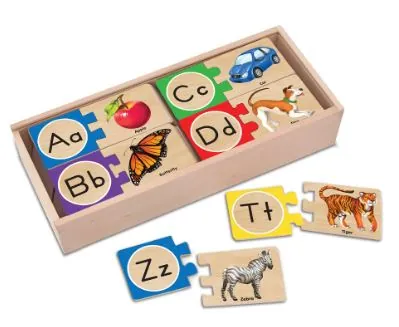
Montessori materials are designed so children can see for themselves whether they have succeeded. A piece that does not fit, a colour that does not match: the mistake is visible without adult intervention. This mechanism protects self-esteem and builds critical thinking.
Sensitive periods
Montessori identified privileged windows of learning she called "sensitive periods" — moments when a child is especially receptive to a particular type of learning (language, order, sensory experience, movement). Offering the right tools during these windows can make learning feel almost effortless.
Why play is at the heart of Montessori teaching
Contrary to a widespread misconception, Montessori does not ban play — she reveals its depth. For her, play is the child's work: it is through play that children explore, test, repeat and integrate. The boundary between playing and learning is deliberately blurred in her method.
Play is the work of the child. — A saying often attributed to Maria Montessori
This principle has concrete implications:
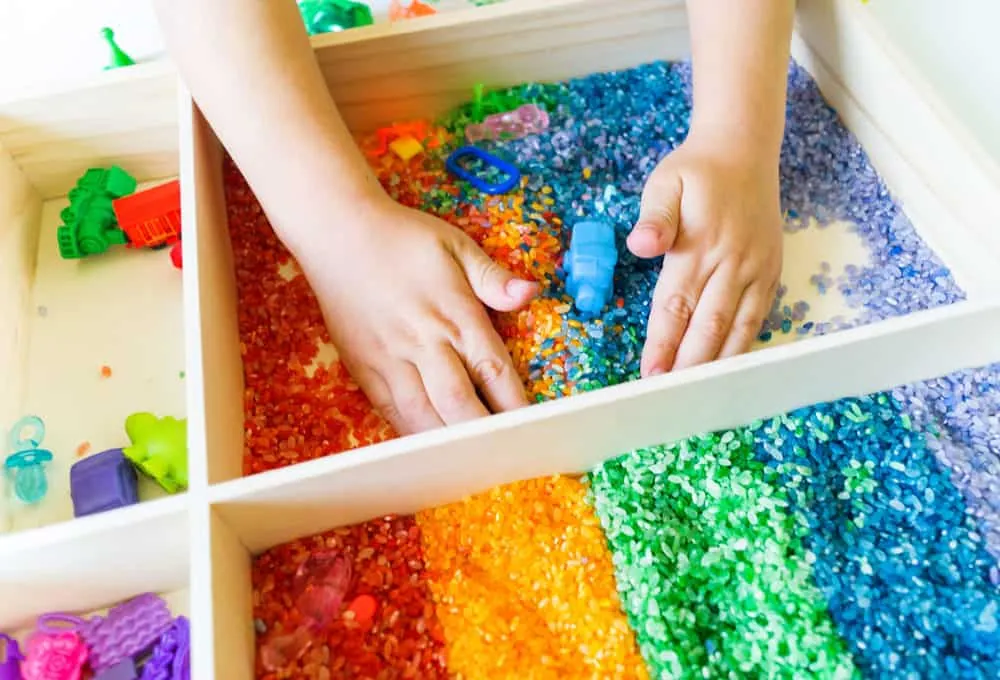
- Montessori activities look like play: pouring water, sorting seeds, assembling cylinders, tracing letters in sand.
- The child chooses freely the activity they are drawn to, which guarantees intrinsic motivation.
- Duration is not fixed: the child stops when they decide, often after a natural concentration cycle that can last a surprisingly long time.
- Adults do not interrupt a child absorbed in an activity — not even to praise them.
This respect for play as a vehicle for learning explains why the method is so often described as liberating: children learn because they want to, not because it is imposed. To go further, read our article on the role of play in child psychology.
The prepared environment: the secret of the Montessori setting
One of the most practical pillars of the method is the concept of the prepared environment. The idea is simple: if the space where the child moves and works is well designed, learning happens almost naturally.

Good to know: a Montessori environment does not require an expensively equipped classroom. At home, a few adjustments are enough to bring its spirit to life.
The features of a well-prepared Montessori environment:
- Accessible at child height — materials sit on low shelves; the child chooses without asking for help.
- Orderly and uncluttered — every object has a place, few objects are available at once to prevent sensory overload.
- Beautiful and well maintained — Montessori insisted on aesthetics: a pleasant space invites children back.
- Scaled to the child — low tables, light chairs, coat hooks at child height.
- Real, not plastic — as much as possible, children use real objects: a real pitcher, a real (blunt) needle, real seeds to sort.
At home, starting with a single well-organised "work corner" is more than enough. The wholesale learning aids available for classrooms and families make it easy to build out that space at a reasonable cost.

Montessori and children with special needs
Maria Montessori first developed her ideas working with children with intellectual disabilities, then applied them in 1907 to young children from a poor Rome neighbourhood. This origin is often overlooked, but it explains why the method is so valuable today for children with ADHD, ASD (autism spectrum disorder), dyslexia or anxiety.
For children with ADHD
The Montessori framework matches their needs directly: freedom of movement, hands-on activities, the ability to shift tasks when focus wanes, and no judgement about pace. Research specific to ADHD in Montessori settings is still limited, but these features line up well with the strategies usually recommended for these children.

For autistic children
The order, predictability and sensory richness of Montessori materials appeal to many autistic children. Each activity follows a structured sequence; materials are stored in the same place; transitions emerge naturally rather than being imposed. These features reduce anxiety and encourage exploration.
For children with dyslexia
Montessori developed a tactile approach to learning letters — the celebrated "sandpaper letters" — that fits the multisensory approach often used with dyslexic learners. Tracing a letter's shape with a fingertip while saying its sound adds a tactile route for linking letters and sounds.
Robiii tip: for children with ADHD or autism, pair Montessori activities with targeted sensory toys from our shop. The two approaches reinforce each other beautifully.
Accessible Montessori materials and activities
The good news: the Montessori spirit does not require a large budget. Here is a practical selection of activities any family can set up, with or without specialist materials.
| Age range | Montessori activity | What it develops |
|---|---|---|
| 18 mo – 3 yrs | Pouring water or grains | Fine motor skills, concentration, coordination |
| 2 – 4 yrs | Sorting objects by colour or shape | Logic, categorisation, sustained attention |
| 3 – 5 yrs | Sandpaper letters, sand tracing | Pre-reading, letter recognition, sensory memory |
| 4 – 6 yrs | Math games with beads or blocks | Numeracy, operations, sense of quantity |
| 5 – 8 yrs | Practical life activities (gardening, cooking) | Independence, sequencing, responsibility |
| 6 – 12 yrs | Independent research projects | Intellectual curiosity, organisation, critical thinking |
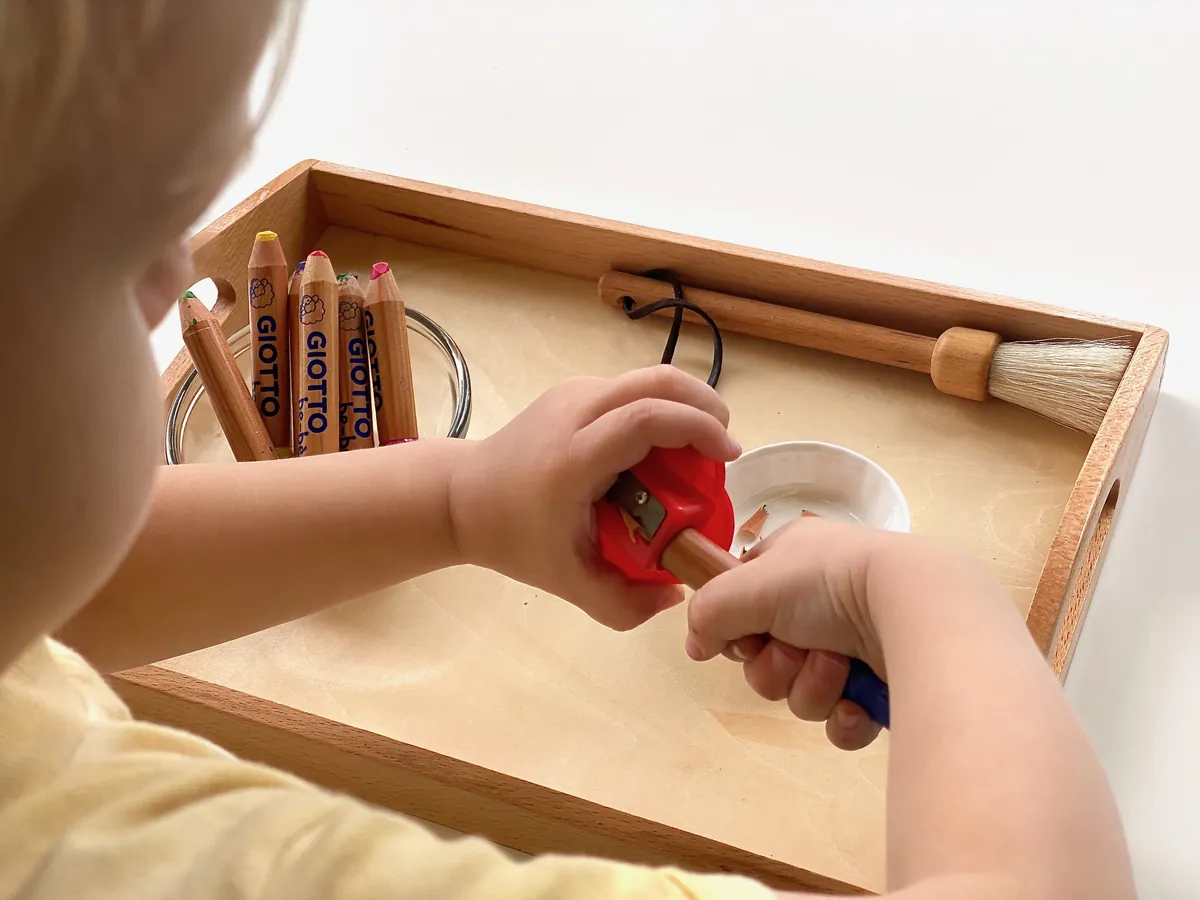
For mathematics in particular, toys for teaching math concepts fit perfectly within Montessori philosophy: they make abstract ideas visible and tangible. Similarly, the Monkey Balance is an excellent Montessori-style tool for introducing concepts of weight and equilibrium.
Montessori-friendly toys to look for
- Self-correcting puzzles — pieces fit together only one way, so children spot and fix their mistakes on their own.
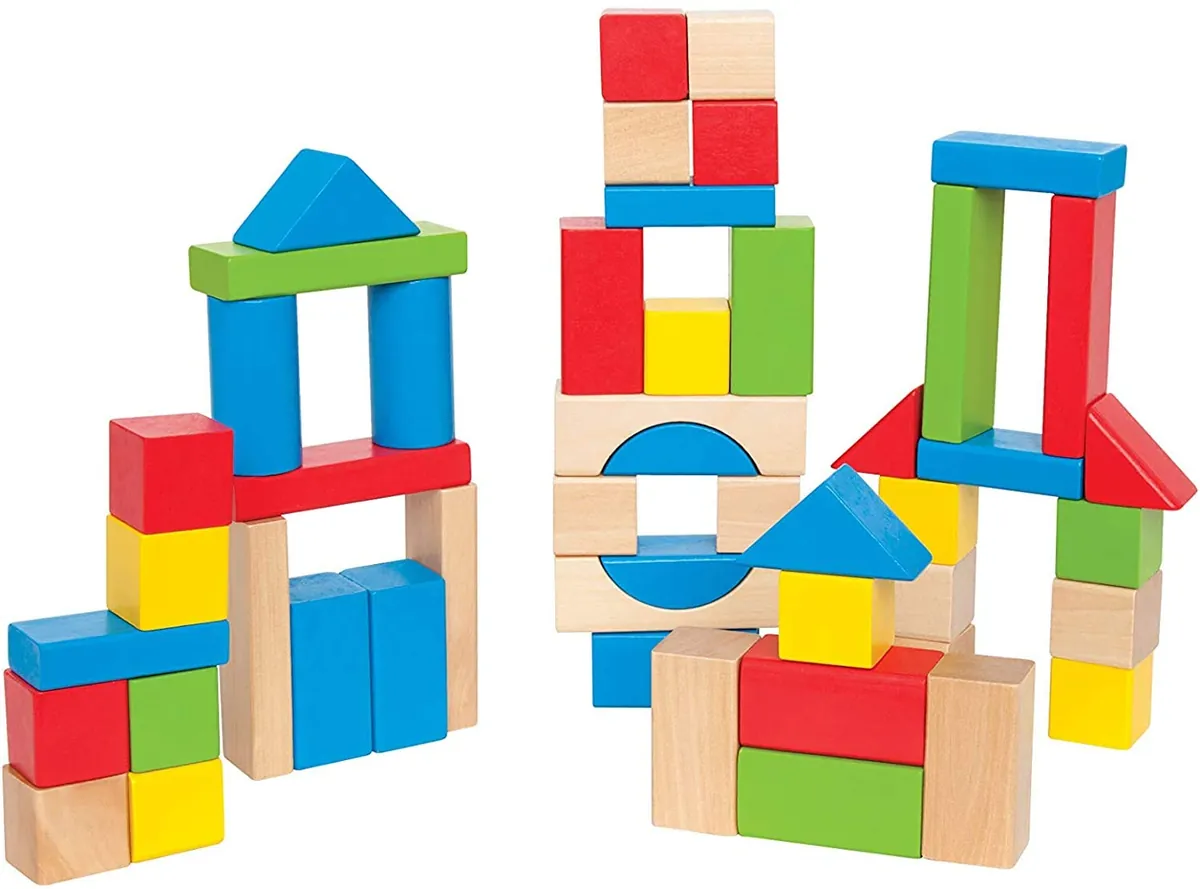
- Wooden building blocks — a classroom staple for creativity, spatial reasoning and fine motor skills, made from safe, durable materials.
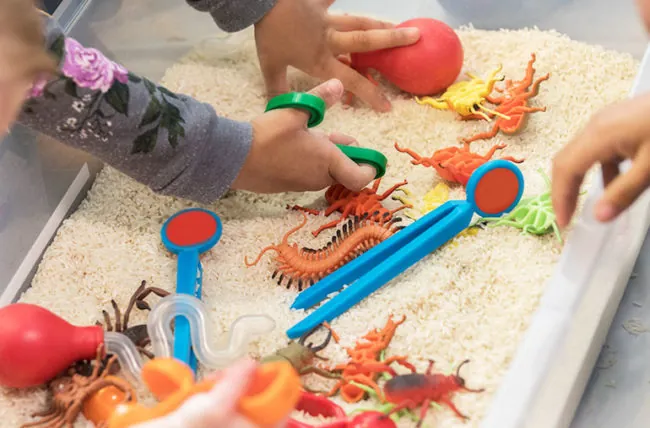
- Sensory play sets — kinetic sand, textured balls and sorting trays that invite hands-on exploration.
- Practical-life toys — child-sized kitchen sets, gardening kits and real tools that mimic everyday tasks.
- Educational games — memory games, chess and simple strategy games that build concentration and problem-solving.
The adult's role: guide rather than instructor
In Montessori pedagogy, the adult — whether a parent or a teacher — is not at the centre of the learning. Their role is that of a quiet guide: prepare the environment, introduce activities in a neutral way and observe without intervening unnecessarily.
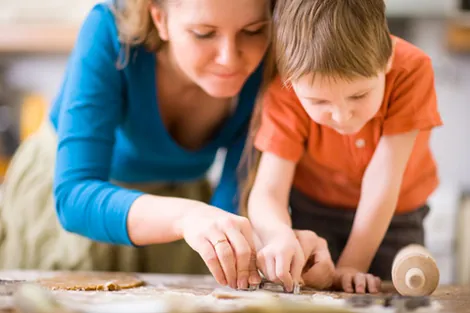
This shift in posture can feel strange for adults used to correcting, praising or explaining. Here are some practical anchors:
- Introduce an activity only once, slowly, with few words. Then leave the child to explore it in their own way.
- Do not interrupt concentration. A child absorbed in a task does not need encouragement — it breaks the thread.
- Adjust the environment, not the child. If an activity is too hard or too easy, change the material rather than stepping in.
- Encourage "I can try" rather than doing things for the child, even when that would be faster.
- Observe actively. Montessori recommended that educators keep an observation notebook to track each child's interests and progress.
This model applies equally well at home and in the classroom. It aligns with current recommendations on child development through free play: the more we let children solve problems on their own, the more resilience and creative thinking they develop.
Applying Montessori at home: 6 concrete starting points
You do not need to enrol your child in a Montessori school to benefit from the method. These practical adjustments are enough to bring its spirit into daily life.
- Create a stable work area. A corner of the bedroom or living room with a small table and dedicated low shelves for activities.
- Limit the number of toys available. Store three quarters of them and rotate every three to four weeks: interest renews itself without overwhelm.
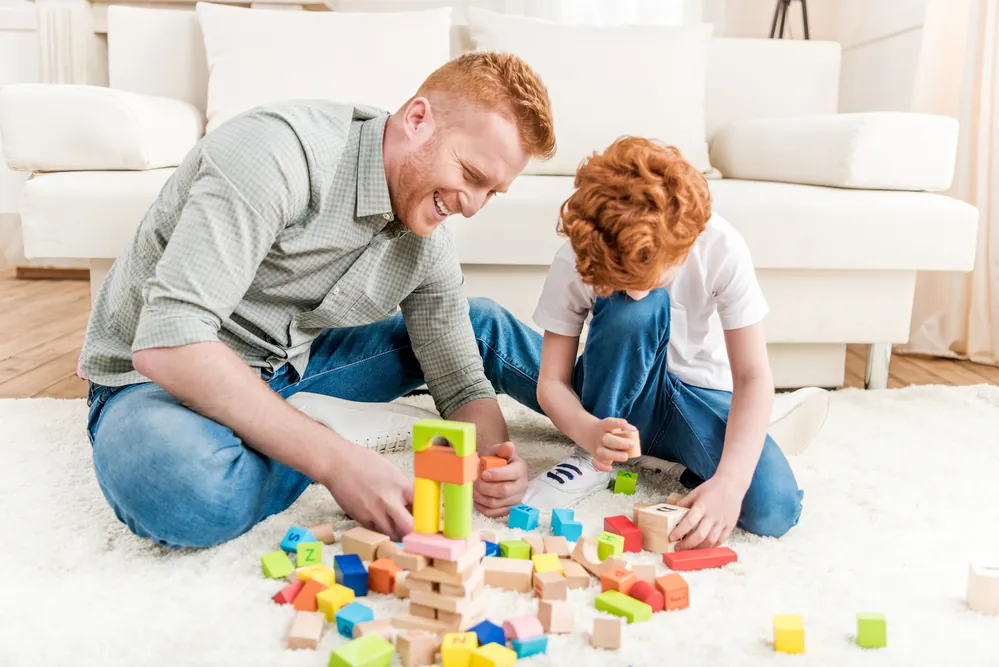
- Choose open-ended toys. Favour blocks, wooden puzzles and sorting games over toys that do everything for the child. Learning aids fall naturally into this category.
- Involve the child in household tasks. Pouring their own glass, setting the table, watering plants: practical-life activities build concentration and independence more effectively than many toys.
- Follow the child, not the curriculum. If your child is fascinated by insects, build activities around that theme for a few weeks — even if it falls outside any programme.
- Accept temporary mess as a sign of learning. A child pouring water, sorting objects or cutting paper will inevitably make a mess. That is the price of real experience.