Sensory toys do far more than calm a child down — they actively stimulate the developing brain. By engaging touch, sight, hearing and proprioception, they can support working memory, sustained attention and problem-solving, three pillars of cognitive skill.
Most people think of sensory toys as tools for soothing a child mid-meltdown or burning off restless energy. That is true — but it misses the bigger picture. Developmental science shows that early experiences — sensory ones included — shape the neural connections that underpin thinking, memory and the capacity to learn.
Whether your child is neurotypical, autistic, has ADHD, struggles with anxiety, or is working through dyslexia, sensory toys can become a meaningful part of their learning environment. This article unpacks the science behind that relationship, identifies the most effective toy types for each cognitive skill, and gives you concrete steps for weaving them into daily life at home and in the classroom.
The link between sensation and cognition: what science says
A child's brain is a connection-making machine. At birth it already contains nearly all the neurons it will ever have, but most of the connections between them have yet to be built. Experience — being touched, hearing sounds, seeing faces, moving the body — helps drive and refine the formation of these connections (synapses). Rich, varied everyday experiences give the developing brain more to work with.
Sensory integration theory
Developed in the 1970s by occupational therapist and psychologist A. Jean Ayres, sensory integration theory holds that the brain must first organize incoming sensory information before it can use that information to think, learn and act. When this integration is disrupted — as is often the case for autistic or ADHD children — learning is impaired, not because the child lacks intelligence, but because the brain is busy "filtering" sensory noise rather than processing cognitive content.
Sensory toys act directly on this integration process: by providing predictable, modulated and engaging sensory input, they help the brain organize its signals more efficiently, freeing up cognitive capacity for learning.
What recent research shows
The research is still developing, and it is worth being honest about it. Occupational therapy based on Ayres Sensory Integration has shown benefits for some autistic children on individual goals — for example in a 2014 randomized trial published in the Journal of Autism and Developmental Disorders. For sensory toys used on their own, however, the evidence remains limited and mixed: they are a promising support, not a proven treatment.
Key takeaway: sensory stimulation is not a luxury — it is a developmental need. Sensory toys meet that need in a structured, intentional way, filling gaps that an ordinary environment often leaves.
Which cognitive skills do sensory toys strengthen?
"Cognitive skills" covers a wide range of mental functions. Here are the ones sensory play most often engages:
Attention and concentration
Attention is the gateway to all learning. Toys that engage touch — varied textures, therapy putty, spiky balls — provide proprioceptive input that helps the nervous system reach an optimal level of arousal. A child who is neither too agitated nor too drowsy is a child who can focus. This is one reason many parents find that fidget toys help children with ADHD: for some children, keeping the hands busy makes it easier to stay with the main task.
Working memory
Working memory is the ability to hold and manipulate information in the short term — following multi-step instructions, doing mental arithmetic, composing a sentence. Research on hands-on learning and gesture suggests that handling concrete objects can help some children understand and remember information better than listening passively. Physical engagement can help anchor information in memory.
Problem-solving and logical thinking
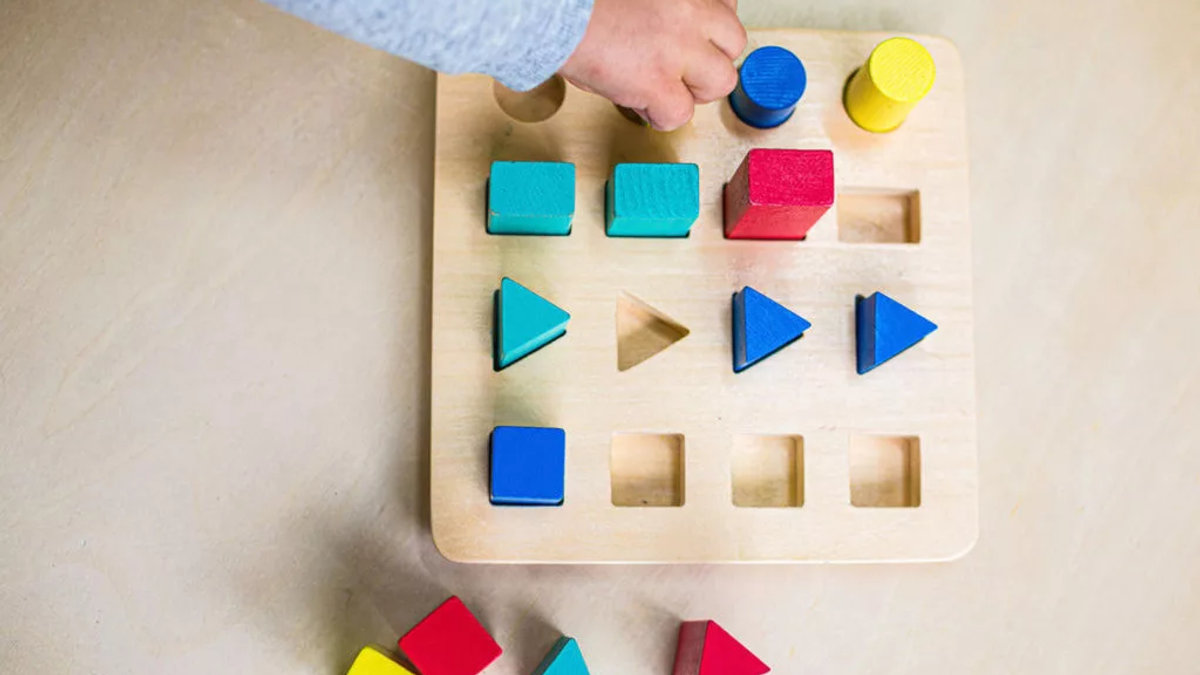
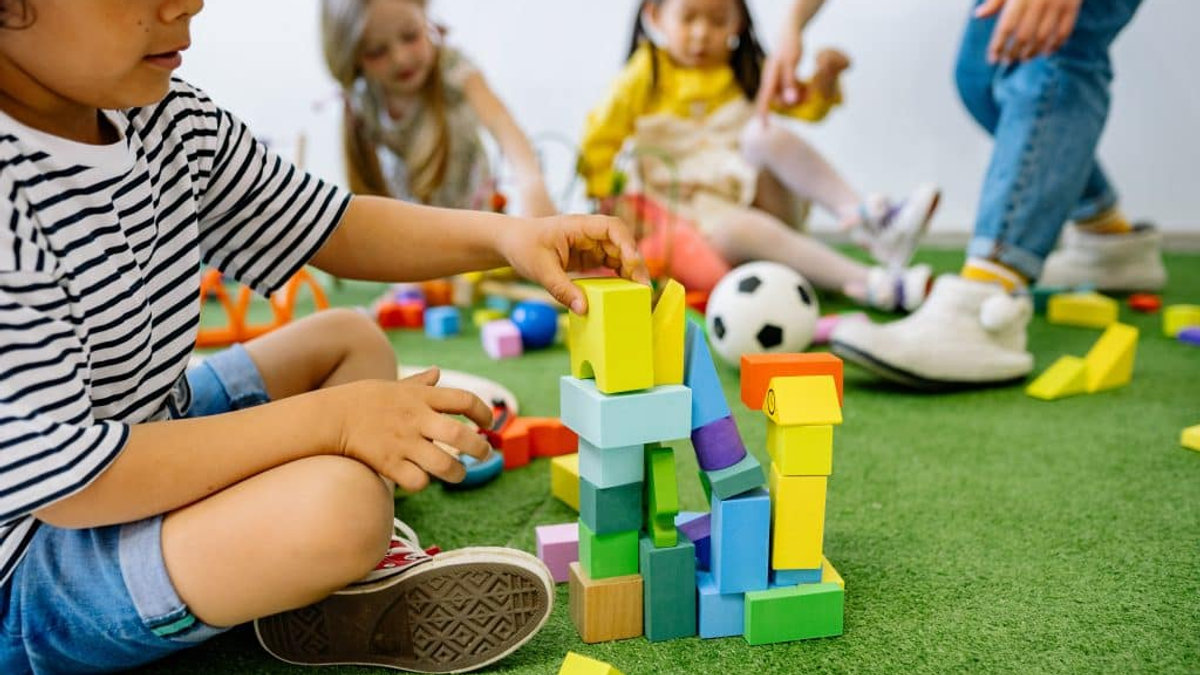
Shape sorters, textured puzzles and block constructions directly engage the executive functions: planning, cognitive flexibility and inhibitory control. A child must try, fail and adjust — a cycle that builds persistence and strategic thinking. As our article on puzzles and problem-solving explains, regular logic-based play gives children repeated, low-pressure practice in reasoning.
Language and communication
Often overlooked: sensory play can also support language development. When a child describes what they feel — "it's rough," "it's slippery," "it's warm" — they are enriching their sensory vocabulary while practising the ability to articulate inner experience. For autistic children in particular, shared sensory play creates natural anchor points that ease the entry into communication.
Emotional regulation
Emotional regulation is not strictly a cognitive skill, but it is its prerequisite. A child who cannot manage their emotions cannot learn. Sensory toys that provide deep-pressure input — modelling clay, squeeze balls, weighted lap pads — are widely used by occupational therapists to help children calm down, creating better conditions for learning.
Types of sensory toys and their cognitive effects
Not all sensory toys are created equal. Here is an overview of the main categories, with their primary cognitive benefit:
| Sensory toy type | Sense engaged | Primary cognitive benefit |
|---|---|---|
| Therapy putty, modelling clay | Touch, proprioception | Attention, emotional regulation |
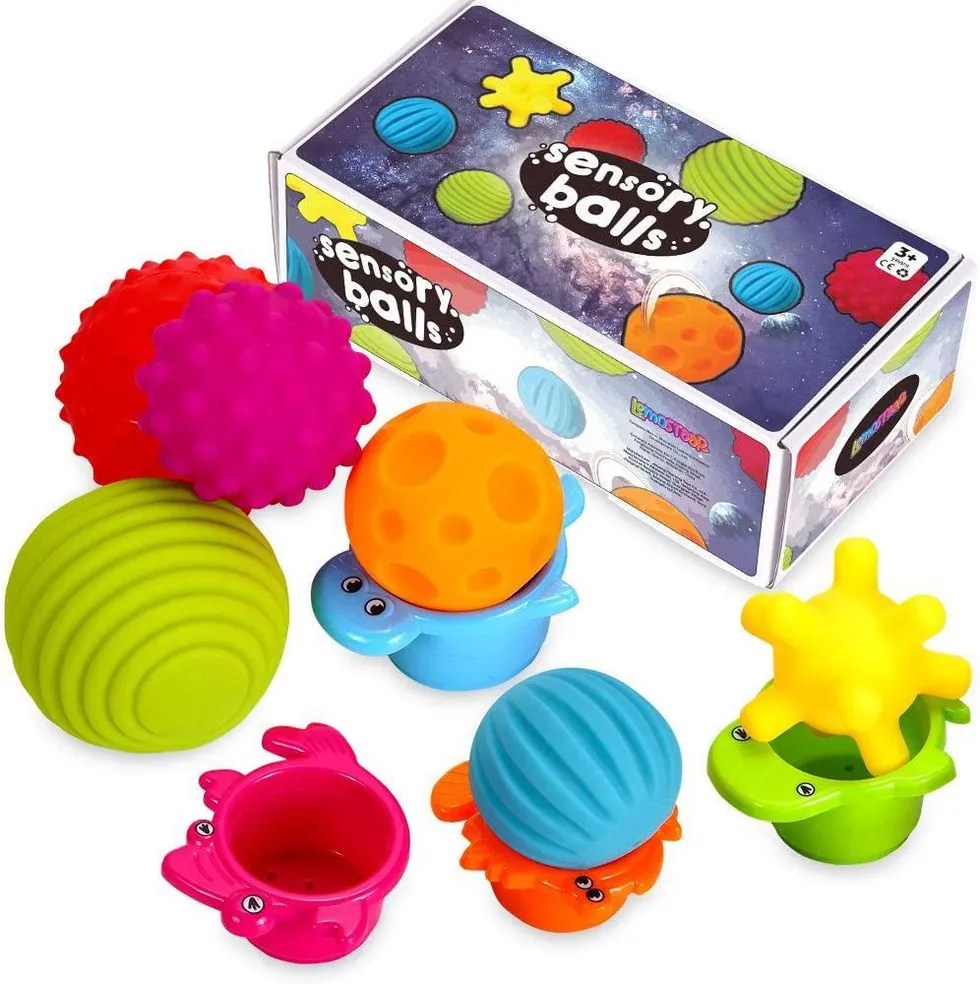
| Spiky balls, textured objects | Tactile touch | Sensory discrimination, memory |
| Fidgets (cubes, rings, pads) | Touch, proprioception | Sustained attention, working memory |
| Shape sorters, building blocks | Touch, sight | Problem-solving, spatial reasoning |
| Light-up toys, light tables | Sight | Visual discrimination, focused attention |
| Simple musical instruments | Hearing, touch | Sequential memory, language |
| Swings, mini trampolines | Vestibular, proprioception | Global attention, coordination |
Tip: aim for variety over volume. A child who alternates between two or three types of sensory stimulation in a single session usually stays more engaged than one who uses the same toy on repeat for an hour.
Matching toys to the child's sensory profile
Every child has a unique sensory profile — a set of senses they actively seek out and others they avoid or tolerate poorly. Understanding that profile is the key to choosing sensory toys that stimulate without overwhelming.
The sensory-seeking child
This child constantly craves intense sensory input: they touch everything, throw themselves onto furniture, speak loudly and love strong textures. They benefit most from:
- High-resistance therapy putty
- Heavily textured or weighted balls
- Intense proprioceptive activities (pushing, pulling, carrying)
- Fidgets with strong physical resistance
The hypersensitive child
At the other end, this child avoids unusual textures, loud sounds and bright lights. They are easily overwhelmed by a rich sensory environment. The goal here is to gently and gradually desensitize, starting with soft, predictable stimulation:
- Soft fabrics, light foam balls
- Quiet toys with uniform textures
- Noise-cancelling earmuffs to reduce ambient sound during play
- Warm-water play (excellent for tactile hypersensitivity)
A sensory toy that is poorly matched to a child's profile can worsen sensory disorganization rather than ease it. Watching the child closely during play is always the best guide. — The Robiii team
To go further, our article on creating a sensory diet explains how to build a balanced daily program that accounts for your child's unique sensory needs.
Sensory toys in the classroom: a cognitive boost for every student
The benefits of sensory toys are not limited to the home. In the classroom, they have become indispensable tools for improving concentration and cognitive performance across the whole group — not just for students with identified needs.
Classroom research on sensory tools is still limited and its results are mixed: small studies — for example on therapy-ball seating for students with ADHD — have reported more time seated and on task for some students, while other tools show little effect. In practice, many teachers and occupational therapists trial a small desk kit (fidgets, putty, rings) with specific students and watch what changes.
The reasoning is straightforward: when the brain receives just enough sensory stimulation, it no longer needs to "search" for it by moving around, touching classmates or scanning the room. That energy is freed up for the cognitive task at hand. This is the central argument explored in why every classroom should have a sensory box.
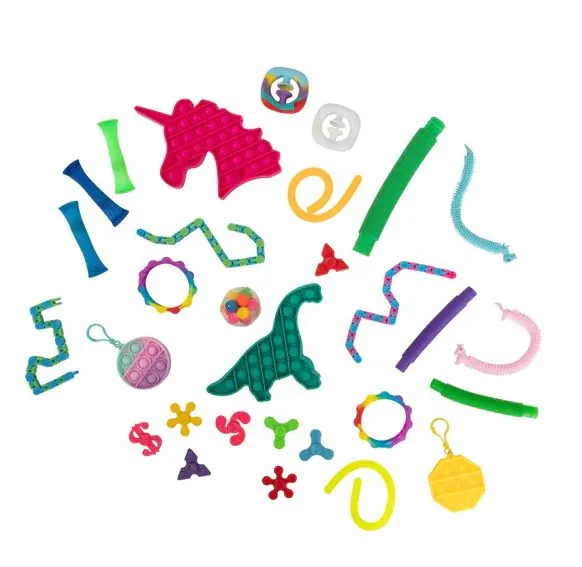
Note: not all sensory toys are suited to every classroom setting. Choose discreet, quiet tools (fidgets, putty, rings) to avoid distracting other students. Save more stimulating toys for breaks or designated calm corners.
How to choose and integrate sensory toys day to day
Knowing that sensory toys enhance cognitive skills is one thing; putting that knowledge into practice is another. Here is a four-step approach:
Step 1: Observe the sensory profile
Track your child's sensory behaviours for one week. What do they spontaneously reach for? Which textures or sounds do they avoid? At what times of day are they most dysregulated or most focused?
Step 2: Choose two or three targeted toys
There is no need to buy everything at once. Start with two or three toys that match the profile you observed. Browse the Robiii shop for a curated selection of sensory toys suited to different profiles and age groups.
Step 3: Build intentional play into the routine
Sensory play is most effective when it is intentional. Build 15 to 20 minutes into key moments: before homework (to prime the brain for attention), during transitions (to regulate emotion), or after school (to decompress). Our article on the benefits of sensory toys offers further guidance on structuring these sessions.
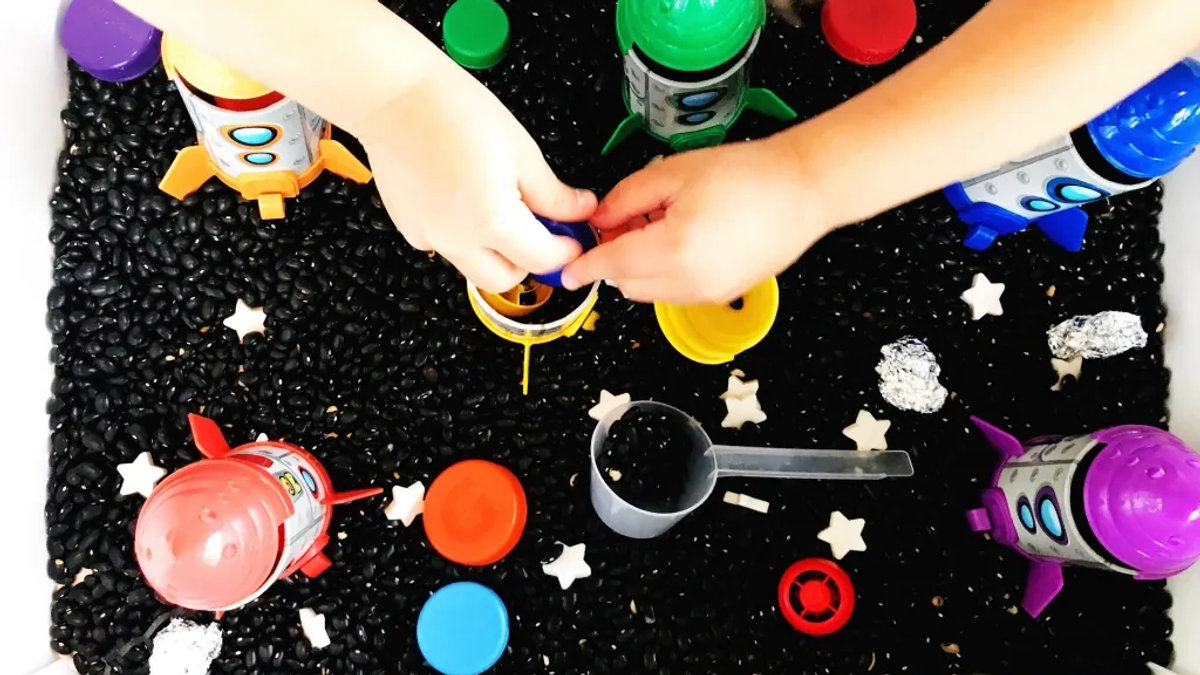
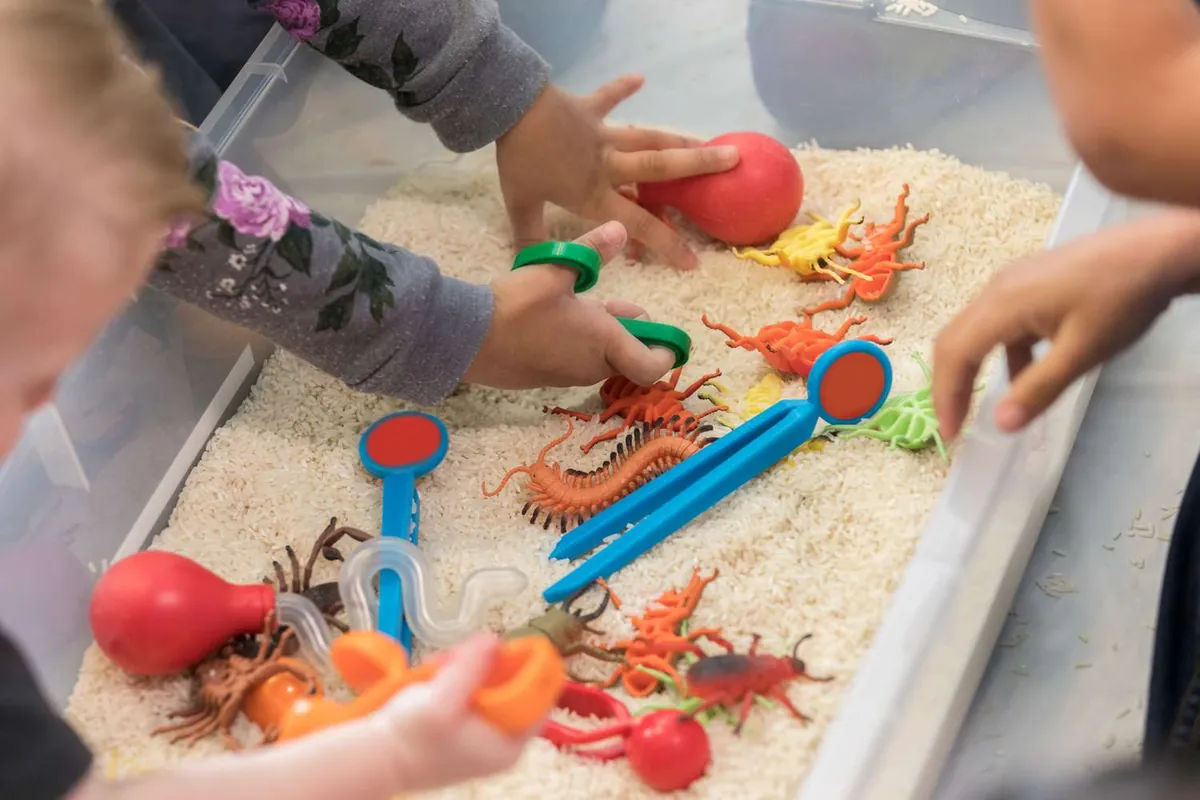
During the session, take part rather than just supervise: ask open-ended questions such as "How does it feel? What does it remind you of?" and add small challenges, like building a tower with blocks or finding objects hidden in a sensory bin filled with rice or sand. Play then becomes active practice in problem-solving and language.
Step 4: Observe, adjust, vary
A toy that captivated your child at four may hold little appeal at seven. Sensory needs evolve alongside development. Stay attuned to your child's signals and do not hesitate to rotate the selection as the months go by.
- Keep a simple log: toy used, duration, behaviour before and after. Patterns emerge quickly.
- Let the child have a say in choosing toys — their own interest dramatically increases engagement and outcomes.
- Share your observations with the teacher or occupational therapist to maintain home-school consistency.
- Never force a child to use a toy they reject: sensory refusal is valuable information, not defiance.
Safety first
Sensory play only helps if it is safe. A few simple rules:
- Choose age-appropriate toys with no small parts that could pose a choking hazard (check the age range on the packaging).
- Make sure materials are non-toxic, with no sharp edges or loose components.
- Always supervise young children during sensory play, especially with sensory-bin fillers they could put in their mouth.