A sensory diet is a personalized program of sensory activities — movement, pressure, textures, sounds — that helps a child maintain an optimal arousal level throughout the day. Applied consistently, it can help reduce meltdowns, support focus and make daily routines smoother.
Does your child melt down at the slightest change of plan, refuse to wear certain clothes, or constantly seek to jump and crash into things? These behaviours are not defiance: they often signal a nervous system struggling to process sensory information. That is where a sensory diet comes in — not a food restriction, but a structured set of sensory activities that "feed" the brain so it can function better.
The concept was developed in the 1980s by occupational therapist Patricia Wilbarger, and it is now used worldwide to support children with sensory processing disorder, ADHD, autism spectrum disorder (ASD) or significant anxiety. This practical guide walks you through how to build and apply a sensory diet at home using simple, accessible tools.
What is a sensory diet?
The word "diet," borrowed from nutrition, is deliberately metaphorical: just as a balanced diet gives the body what it needs, a sensory diet gives the nervous system the specific sensory inputs it needs to function in a balanced way.
In practice, it is a program that schedules, at set moments in the day, activities targeting different sensory systems:
- The proprioceptive system (body awareness in space): pushing, pulling, carrying loads, jumping.
- The vestibular system (balance and movement): swinging, spinning, climbing, bouncing.
- The tactile system (touch): manipulating textures, playing with sand or modelling clay, receiving brushing or massage.
- The auditory and visual systems: calm or stimulating environments depending on the child's needs.
- The oral system: chewing, blowing, drinking through a straw.

Important: a sensory diet is not a therapy in itself — it is a support tool that complements professional care (occupational therapy, speech-language pathology, etc.). It does not replace a specialist assessment.
Understanding your child's sensory profile
Before building a diet, you need to understand how your child's nervous system processes information. Two broad profiles are generally distinguished — and many children show a mix of both depending on the sensory system involved.

The hyposensitive child (sensation seeker)
They do not receive enough sensory stimulation, so they seek more — running everywhere, touching everything, making noise. They seem inexhaustible and often struggle to sit still.
The hypersensitive child (sensation avoider)
Their nervous system is overwhelmed by stimulation that other children barely notice: clothing tags, the cafeteria noise, fluorescent lighting. They react with meltdowns, refusals or withdrawal.
Understanding your child's sensory profile means stopping seeing their behaviours as tantrums and starting to see them as needs — needs that can be met. — The Robiii team
An occupational therapist specializing in sensory integration can carry out a formal assessment (Sensory Profile questionnaire, clinical observation) to map your child's precise profile. This step is strongly recommended before putting a structured program in place.

Building a sensory diet: the key steps
Even before seeing an occupational therapist, you can start observing and experimenting. Here is a four-step method:
- Observe and record: for one week, note the moments when your child is unsettled, in meltdown or, on the contrary, very calm. What activities come just before these states?
- Identify natural "regulators": which games or activities seem to calm or recharge your child? These will form the foundation of their diet.
- Plan sensory breaks: build 3 to 6 short sensory breaks (5 to 15 minutes) into strategic points of the day — before school, after lunch, before homework, before bedtime.
- Adjust and evaluate: after two weeks, reassess. Does the child seem calmer and more available? Tweak the activities and timing based on what you observe.

| Time of day | Suggested sensory activity | System targeted |
|---|---|---|
| Morning (before school) | Trampoline jumps, stretches, electric toothbrush | Vestibular, oral |
| Before homework | Wearing a weighted backpack, kneading therapy putty, a Rolliii on the pencil | Proprioceptive, tactile |
| After dinner | Modelling clay, bouncing ball, sand play | Tactile, vestibular |
| Before bedtime | Hand massage, weighted blanket, soft music | Tactile, auditory |
Activities and tools for each sensory system
Here is a selection of concrete activities and tools that fit easily into daily life, with no expensive equipment required:
Proprioceptive activities (pressure and resistance input)
- Pushing or pulling heavy objects (grocery cart, boxes).
- Climbing, hanging, doing pull-ups on a bar.
- Working therapy putty — intense kneading delivers powerful proprioceptive input.
- Wearing a backpack with a light weight (maximum 10% of body weight).
Vestibular activities (movement and balance)
- Swinging on a swing (linear movement is highly regulating).
- Bouncing on a mini-trampoline or a bouncing ball.
- Doing forward rolls on a mat.
Tactile activities (touch and textures)
- Playing with sand, water, modelling clay or shaving foam.
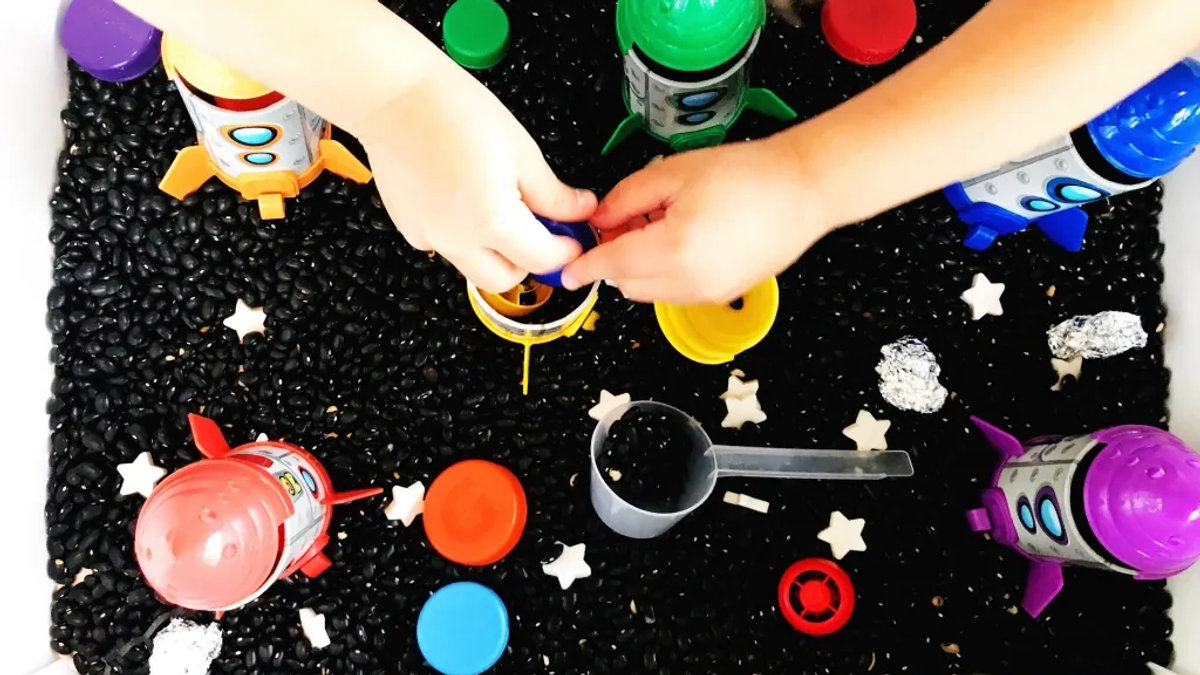
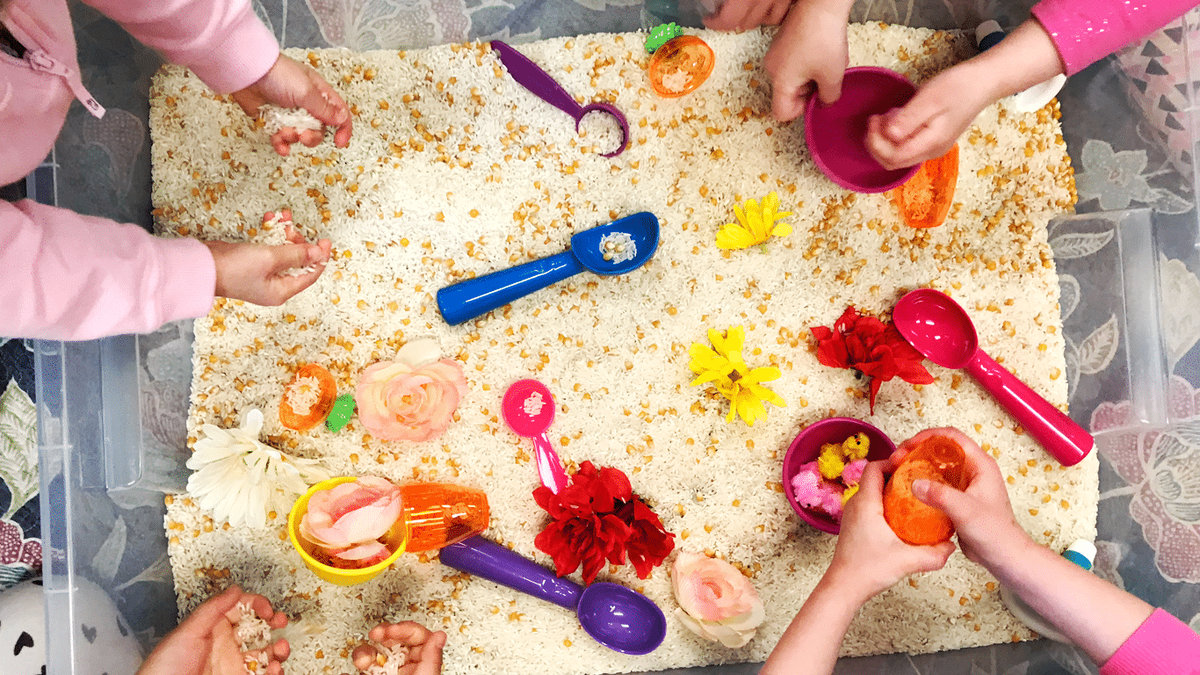
- Using a discovery box filled with varied materials (rice, beans, velvet fabric, sandpaper) — the sensory box concept works just as well at home.
- Hand or foot massage with a roller or soft brush.
- Using a chewable tool for children with an oral sensory need.
- Spinning the Rolliii, a ring that slides onto the pencil, during homework — a small tactile input, in silence.

Auditory and visual activities
- Listening to calming music or nature sounds during transitions or before bed.
- Wearing noise-cancelling earmuffs in loud places (cafeteria, gym, shopping mall).
- Using soft, coloured or dimmable lighting to calm, or brighter light to wake the system up.
- Following a visual timer, such as a giant sand timer, to make time and transitions predictable.
Tip: for hypersensitive children, always offer the activity rather than imposing it. Control is itself regulating: a child who chooses to touch a texture experiences less anxiety than one who has it thrust upon them.
Applying the sensory diet day to day
The key to a successful sensory diet is consistency. The nervous system benefits far more from predictable, repeated stimulation than from intense but irregular sessions. Here are a few principles to embed the program in family life:
- Ritualize the breaks: anchor each sensory break to an existing cue (after breakfast, arriving home from school, before pyjamas). Predictable cues reduce resistance.
- Involve the child in choosing: offer two or three activities and let them decide. This sense of autonomy boosts buy-in and supports self-regulation itself.
- Communicate with the school: share the program with the teacher. Many schools welcome short sensory breaks — a discreet fidget on the desk, a wobble cushion — especially if they have access to the occupational therapist's plan.
- Be patient: the effects of a sensory diet are measured over weeks, not days. Track gradual changes: fewer meltdowns, easier bedtime, better concentration in class.
Adapt the environment as well: softer lighting, less background noise and seating that suits your child (a wobble cushion, a beanbag chair) create a sensory-friendly backdrop in which the diet works best. And celebrate every bit of progress: positive reinforcement makes your child more eager to take part in their sensory activities. For homework time in particular, our free e-book SOS Homework & Lessons offers more ready-to-use strategies.

The range of sensory toys available today makes a sensory diet accessible even on a modest budget. What matters is not the quantity of tools but how well they match the child's profile and how regularly they are woven into the day.
Signs the sensory diet is working
How do you know the program is starting to pay off? Here are the indicators most commonly reported by parents and occupational therapists:
- Meltdowns are less frequent, less intense or shorter.
- The child asks for their favourite sensory activities on their own — a sign they are developing awareness of their own needs.
- Falling asleep is faster and sleep is more stable.
- Concentration at school or during homework improves.
- Transitions (switching activities, moving from play to meals) happen with less friction.

If after four to six weeks you see no improvement, it often means the child's sensory profile has not been identified precisely enough — and an occupational therapy consultation is needed to refine the program.