Puzzles are far more than a pastime: they actively train the brain to analyze, plan and persevere. Each piece placed reinforces spatial logic, working memory and frustration tolerance — three core problem-solving skills. And those gains transfer directly to the classroom and everyday life.
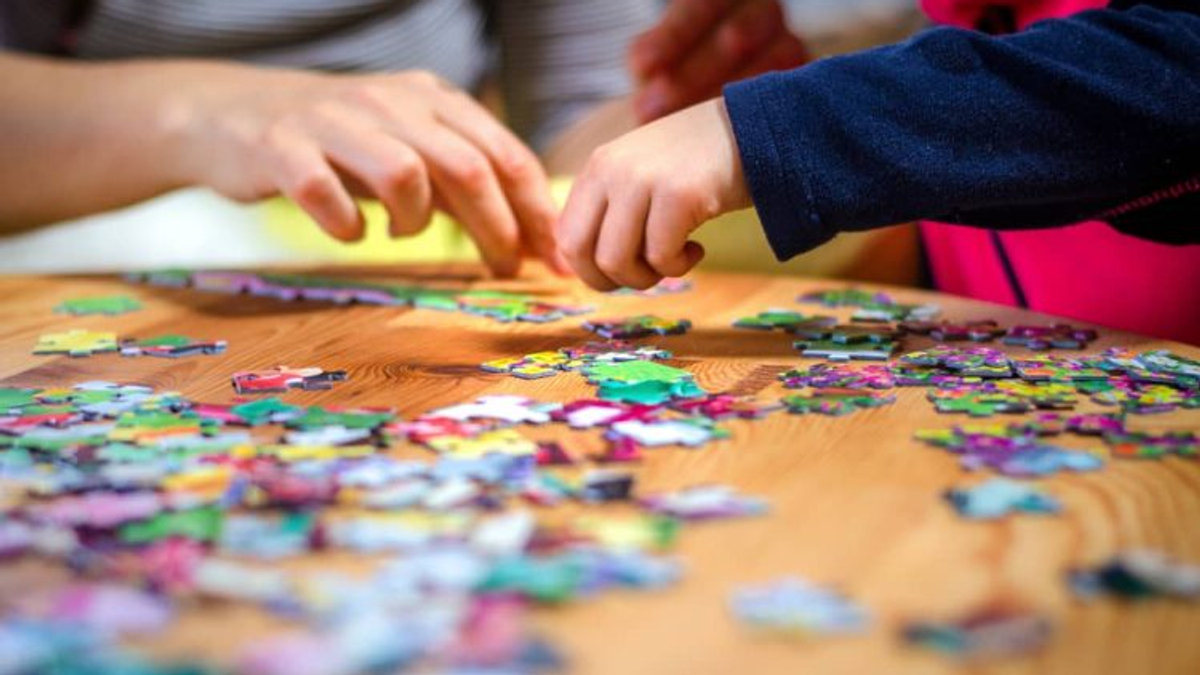
Have you ever watched a child work through a puzzle? They fumble, turn a piece every which way, try — fail — try again. What looks like a simple activity is actually a remarkable cognitive workout: the child simultaneously engages their visual memory, spatial logic, perseverance and ability to learn from mistakes. These are not small things. They are skills closely tied to success at school and beyond.
At Robiii, we work every day with teachers, occupational therapists and parents of children with diverse needs — ADHD, autism, anxiety, dyslexia. One toy that comes up consistently in their recommendations is the puzzle. Not because it is trendy, but because it works. Here is why, and how to get the most out of it.
Why puzzles develop problem-solving skills
Solving a puzzle is solving a problem — in the most literal sense. The child receives disordered data (the pieces) and must find a coherent structure (the completed image) by following a logical process. That process involves several essential mental operations:
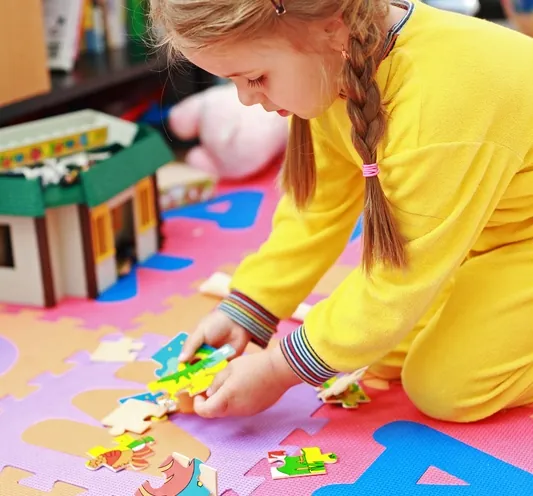
- Active observation: distinguishing shapes, colors, patterns and edges to sort information before acting.
- Planning: deciding where to start — the border, a block of color, a recognizable detail — rather than trying at random.
- Hypothetical-deductive reasoning: "This round blue piece can only go here, so that one goes there."
- Error management: recognizing that an attempt failed without giving up, adjusting and trying again.
- Delayed gratification: accepting that the result is not immediate and maintaining effort over time.
These five abilities are exactly what a student draws on to solve a math problem, write a structured text or break down a complex task. A puzzle is, in a sense, a gym for the developing brain.
The documented cognitive benefits
Research on puzzles is still limited, but it points to several benefits:
Working memory and sustained attention
To assemble a puzzle, a child must hold in mind the target image, the position of pieces already placed and the features of remaining pieces — all while keeping their attention on track. It is a natural workout for working memory and focus.
Spatial reasoning
Mentally rotating a piece to fit a given space is pure spatial reasoning. Spatial skills are closely associated with later performance in mathematics and science. In a 2012 study (Levine et al., Developmental Psychology), toddlers who played with puzzles more often between ages 2 and 4 had better spatial skills at age 4½, even after accounting for family income and education.
Frustration tolerance and perseverance
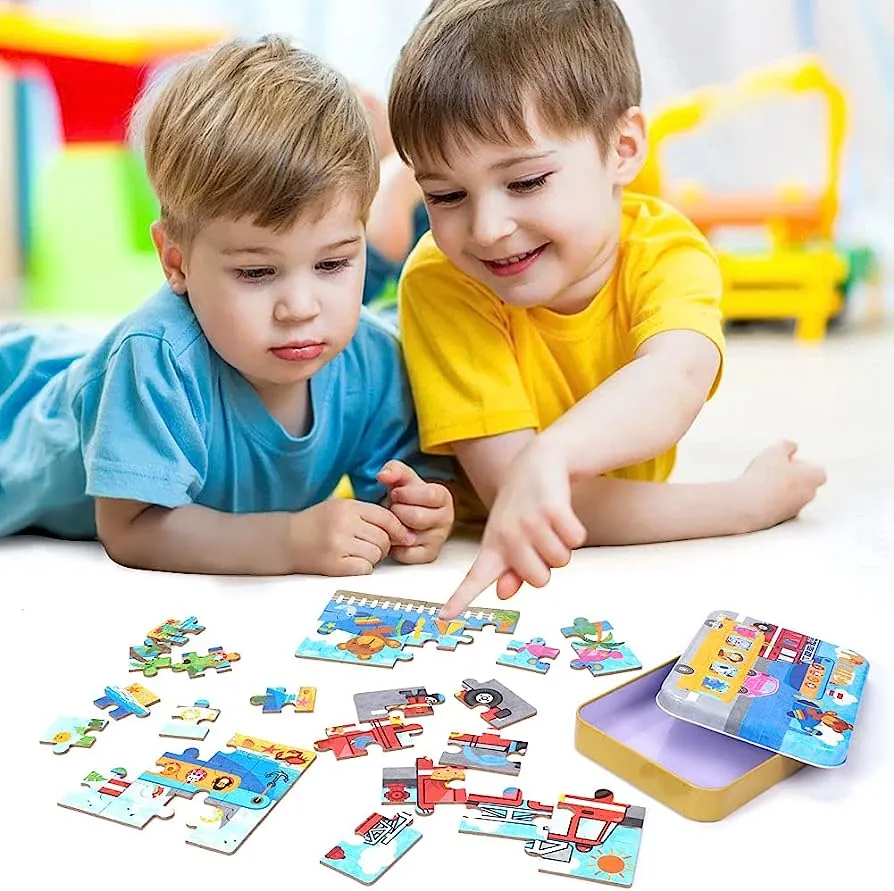
A puzzle is not always immediately rewarding. Some pieces resist. This controlled friction — challenging but not impossible — is ideal for building persistence: the ability to stay in the effort even when things do not work the first time.
Creative thinking
Puzzles and logic games also stretch creativity: when the obvious approach fails, the child has to look for an "outside the box" solution. That habit of imaginative problem-solving carries over to schoolwork and everyday life — at any age, since there are puzzles for every level, from toddlers to adults.
A child who learns not to throw the puzzle when a piece does not fit is a child who learns not to give up when a problem resists. — The Robiii team
Choosing the right puzzle by age
A puzzle that is too hard causes frustration; too easy, and it bores. Here is an age-by-age guide:
| Age | Number of pieces | Recommended type | Target skill |
|---|---|---|---|
| 12–24 months | 2–4 pieces | Wooden inset puzzles, simple shapes | Fine motor, shape/space |
| 2–3 years | 4–12 pieces | Picture puzzles, chunky pieces | Visual recognition, vocabulary |
| 3–5 years | 12–30 pieces | Themed puzzles (animals, vehicles) | Logic, organization, attention |
| 5–7 years | 30–100 pieces | Classic puzzles, simple tangrams | Planning, spatial reasoning |
| 7 years and up | 100–500 pieces | Complex puzzles, 3D logic games | Strategy, perseverance, problem-solving |
Good to know: for children with ADHD or anxiety, opt for puzzles with fewer pieces but a motivating theme. The visual reward of a completed image needs to come quickly enough to sustain motivation.
Beyond the classic puzzle: logic and deduction games
Classic puzzles are only the starting point. There is a whole family of logic games that develop problem-solving skills in an even more targeted way:
- Mazes: planning a path, anticipating dead ends, adjusting strategy mid-course.
- Tangrams: composing shapes from geometric pieces — spatial reasoning and creativity at once.
- Soma cubes and Rubik's cubes: 3D manipulation, sequence memory, algorithmic thinking.
- Deduction games: eliminating hypotheses to find a unique solution — formal logic accessible from age 6.
- Mechanical puzzles (rings, towers): understanding systems, methodical trial and error.
Tip: alternating game types (puzzle, maze, tangram) prevents routine and forces the brain to mobilize different strategies each time — this is what researchers call cognitive flexibility.
Bringing puzzles into the classroom
Many teachers who integrate puzzles into their classrooms find they help the classroom climate and student engagement. Here is how to use them effectively in a school setting:
- Quiet play corner: a space with 3 to 5 puzzles at varied levels, accessible during transitions or free time.
- Cooperative activities: solving a puzzle in pairs or threes develops communication and negotiation on top of logic.
- Monday challenge: a new puzzle or logic game each week, to be solved as a group by Friday.
- Calm-down tool: a simple puzzle placed on a desk can help a restless student refocus without requiring verbal instruction.
- Differentiation: offering multiple levels simultaneously lets every student work at their own zone of proximal development.
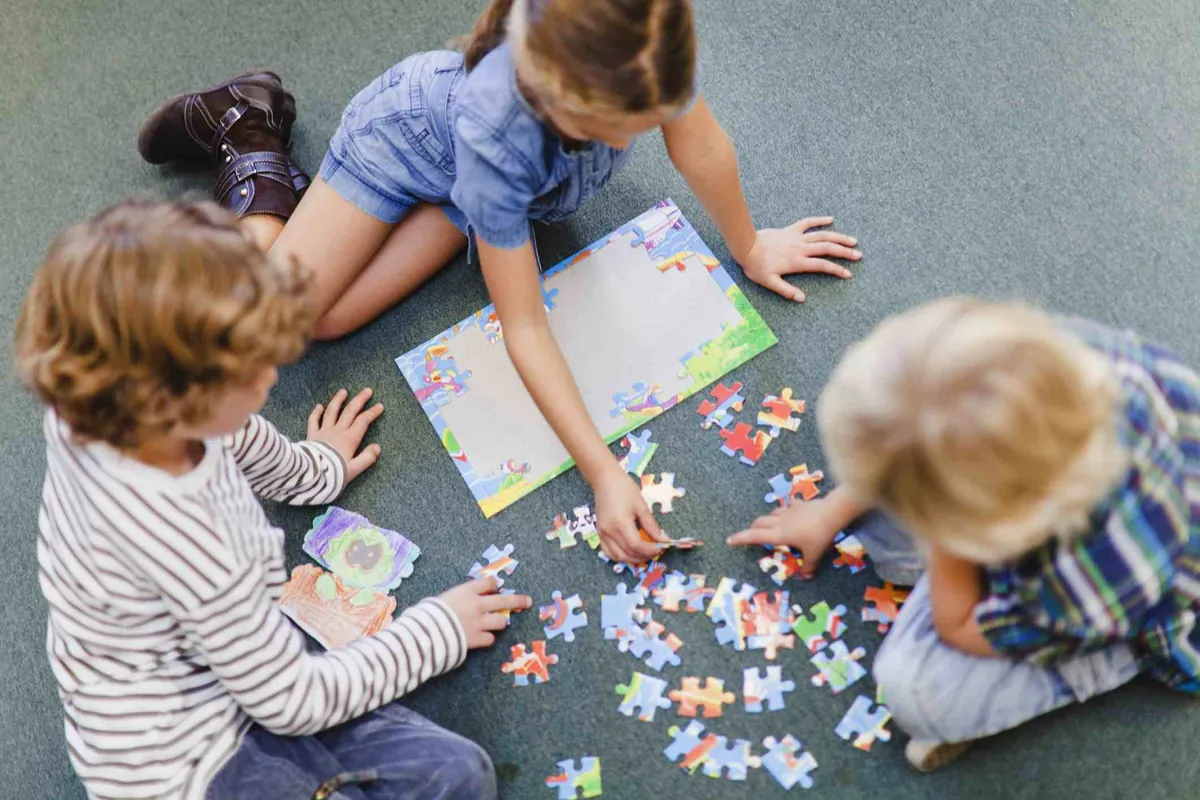
These practices fit naturally into an approach of educational toys in the classroom that values learning through exploration. They also complement the learning aids many schools now include in their teaching materials.
Puzzles and children with special needs
Puzzles and logic games offer specific advantages for children who live with certain neurological differences:
Children with ADHD
ADHD is often characterized by difficulty sustaining attention on tasks with low stimulation. A puzzle provides enough visual and tactile stimulation to support engagement, while offering frequent micro-successes (each piece placed) that feed intrinsic motivation. The activity is also flexible in duration: the child can stop and resume.
Autistic children
The predictable, structured, clear-rule nature of a puzzle is often very well received by autistic children. The activity can be done alone if needed, is non-verbal and delivers a concrete, visible result. Many autistic children also have strengths in visual-spatial tasks, which can make puzzles a satisfying area of success.
Anxious children
The concentration a puzzle requires acts as a cognitive anchor: it brings the mind into the present moment and interrupts the flow of anxious thoughts. It can be a helpful calming activity, especially before exam periods or difficult transitions.
Practical tips for parents
To turn puzzles into an enriching habit rather than a chore:
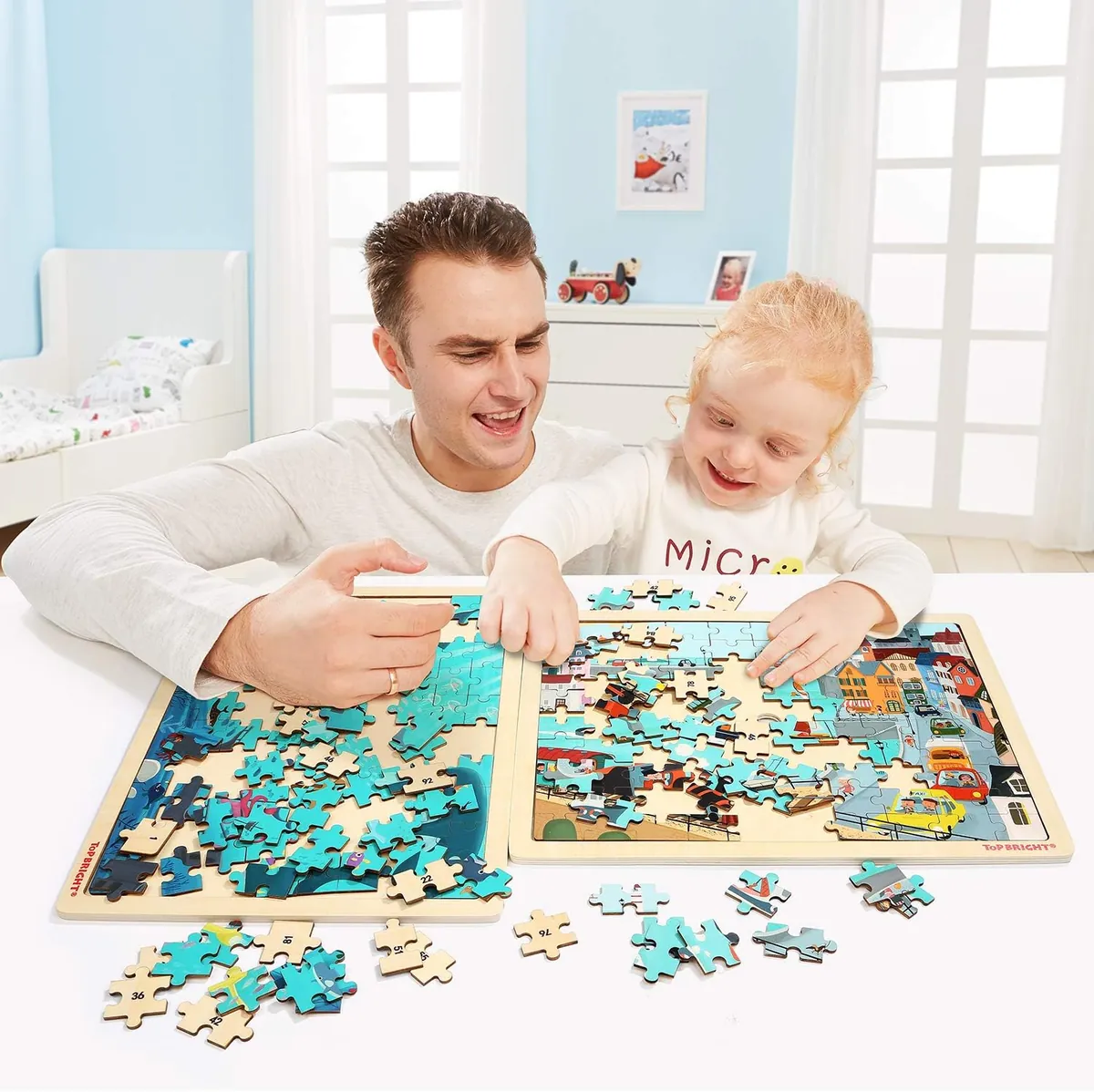
- Play together at first. Your presence reassures and models strategies ("I always start with the border").
- Let the child lead. Resist the urge to point to the right piece — controlled frustration is part of the learning.
- Choose themes they care about. A child who loves dinosaurs will invest far more in a dinosaur puzzle than in a landscape that leaves them cold.
- Keep the unfinished puzzle in sight. A tray or dedicated table makes it easy to pick up again — puzzles left half-done are often the most motivating to finish.
- Increase difficulty gradually. When a level becomes easy, move up. The brain grows in the zone of managed discomfort.
For ideas about toys that support development at every stage, or to explore the link between play and learning mathematics, our blog is full of practical resources. And if you are looking to equip a classroom or daycare, our store offers a selection of logic games available wholesale.