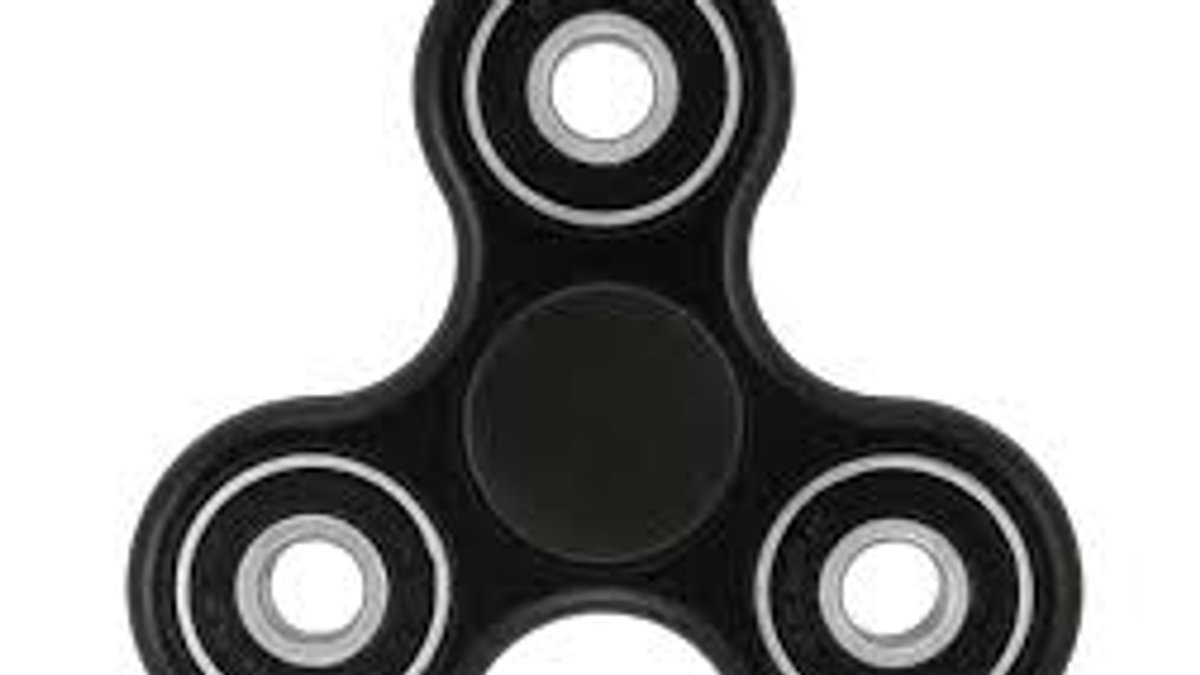
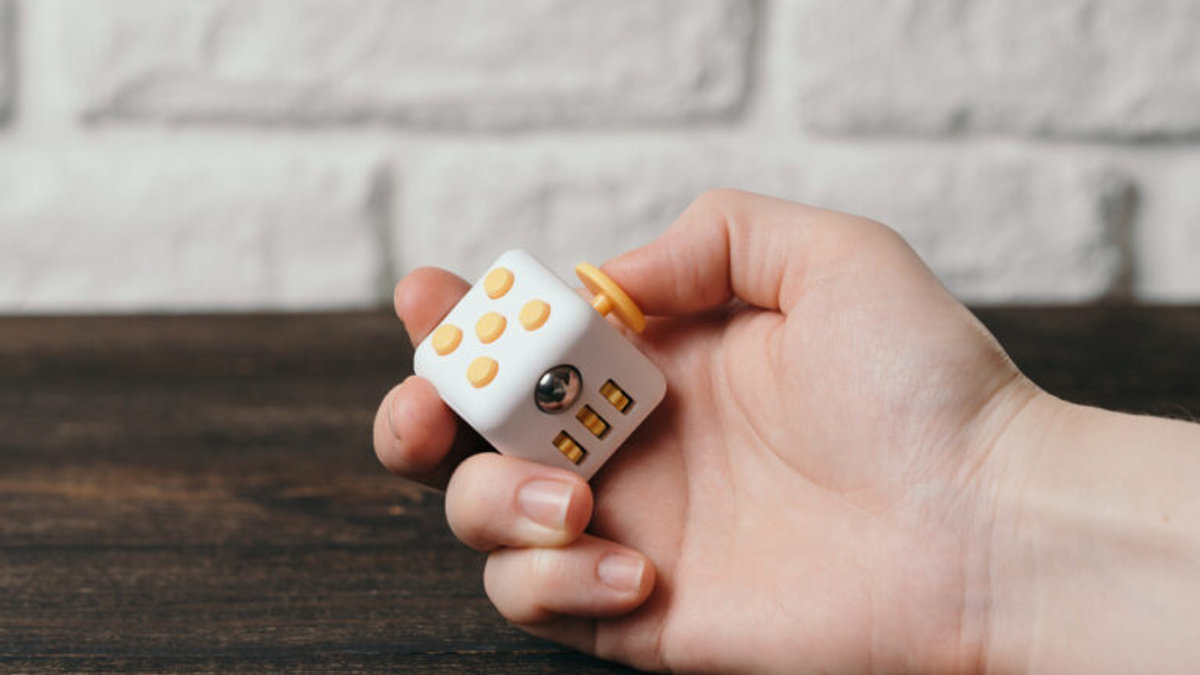
Fidget toys help the ADHD brain by supplying a light, repetitive sensory input that keeps the motor-restlessness part of the brain satisfied — freeing up attention for the main task. Keeping hands busy in a low-cognitive, automatic way raises arousal just enough for sustained focus without overloading the nervous system.
Have you ever noticed that a person with ADHD (attention-deficit/hyperactivity disorder) thinks more clearly when they can move? Tapping a pencil, spinning a ring, kneading an eraser — these are not random nervous habits. They are the brain instinctively seeking what it needs to function. Fidget toys were designed precisely to answer that need: a constant, controlled, discreet sensory stream that lets the rest of the brain get on with the job.
Over the past decade, fidgets have moved from therapists' offices into classrooms, workplaces and living rooms. Their popularity is not just word-of-mouth: research is starting to explain why these small objects can help — and when they don't. In this article we break down the mechanism, survey the most effective fidget types for ADHD, and share practical tips for getting the most out of them — at school and at home.
The ADHD Brain and Its Need for Stimulation
To understand how fidget toys help people with ADHD focus, you first need to understand what is happening in this particular brain. ADHD is not a lack of willpower: it is a difference in how certain neural circuits manage dopamine and norepinephrine — two neurotransmitters essential to attention and impulse regulation.
Arousal that sits too low for sustained focus
An influential theory — the optimal stimulation model proposed by Purdue researcher Sydney Zentall (Zentall, 1975) — holds that many people with ADHD need more stimulation than average to stay alert. In practice, their brain actively searches for additional stimulation to reach the minimum threshold needed for sustained concentration. A task perceived as boring or repetitive — listening to a lecture, working through math exercises, reading a long passage — does not generate enough activation to keep attention anchored.
Sensory stimulation as a self-regulation lever
When you add a light sensory input — pressing an object, sliding fingers over a texture, spinning a ring — arousal rises just enough for the prefrontal cortex (the brain region responsible for focus, planning and impulse control) to operate properly. This is called sensory self-regulation: using sensory input to bring the nervous system into an optimal tolerance window.
Moving your hands during a cognitive task is not a distraction — it is often the condition that makes the task possible at all. — The Robiii team
What the Research Says About Fidgets and ADHD
Research on movement, fidgets and ADHD is still limited, but a few studies are worth knowing:
- University of Central Florida (Sarver et al., 2015): boys with ADHD did better on working-memory tasks at the moments they moved more, while typically developing children did slightly worse when they moved more.
- UC Davis (Hartanto et al., 2016): in children with ADHD, more intense movement during an attention task was linked to more accurate answers — a link not seen in typically developing children.
- Schilling et al. (2003): in a small classroom study of three students with ADHD, sitting on therapy balls instead of chairs improved in-seat behaviour and legible written output.
- Graziano et al. (2018): not every fidget helps — in a classroom study of 60 young children with ADHD, fidget spinners were associated with poorer attention.
Important caveat: fidgets do not replace medical follow-up, occupational therapy or educational accommodations. They are one tool among many in a holistic approach. Always consult a healthcare professional to build an individualized support plan for your child.
The Most Effective Fidget Types for ADHD
Not all fidgets are equal. To be genuinely useful, a fidget must engage the hand in a repetitive way, require no visual attention, and stay unobtrusive in school or work settings. Here are the categories most often recommended.
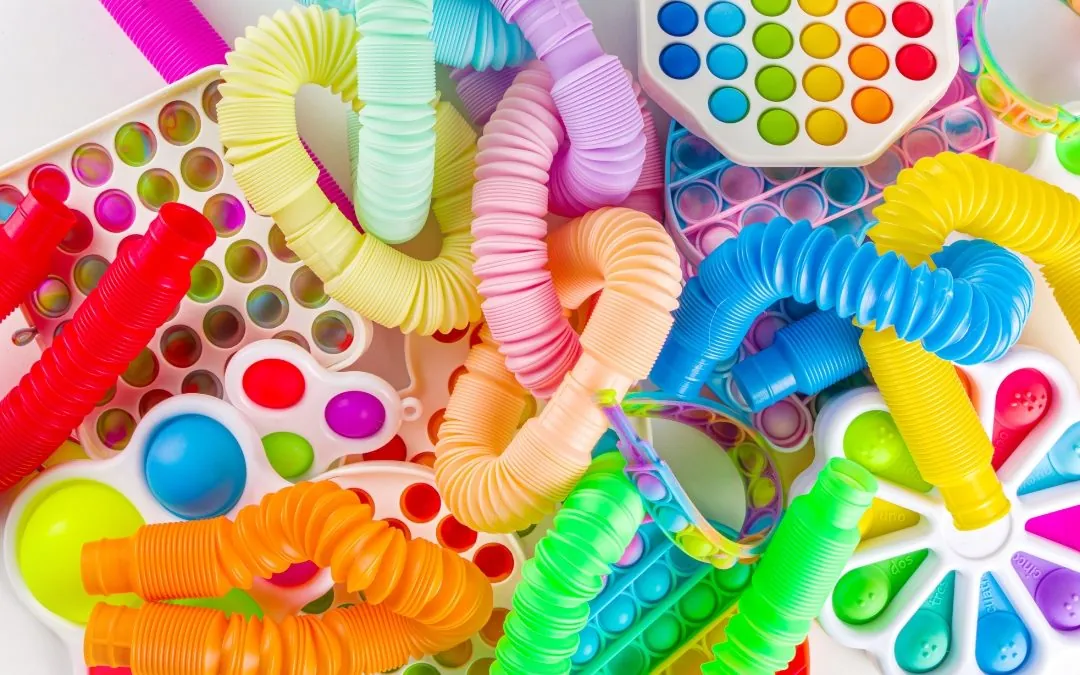
Tactile fidgets
The most versatile category. They rely on pressure, texture or flexibility: silicone rings, textured bracelets, squeeze buttons, multi-face cubes. They work with the fingers alone, stay silent and fit in a pocket. This is the ideal starting point for a child discovering fidgets for the first time.
Spinning fidgets
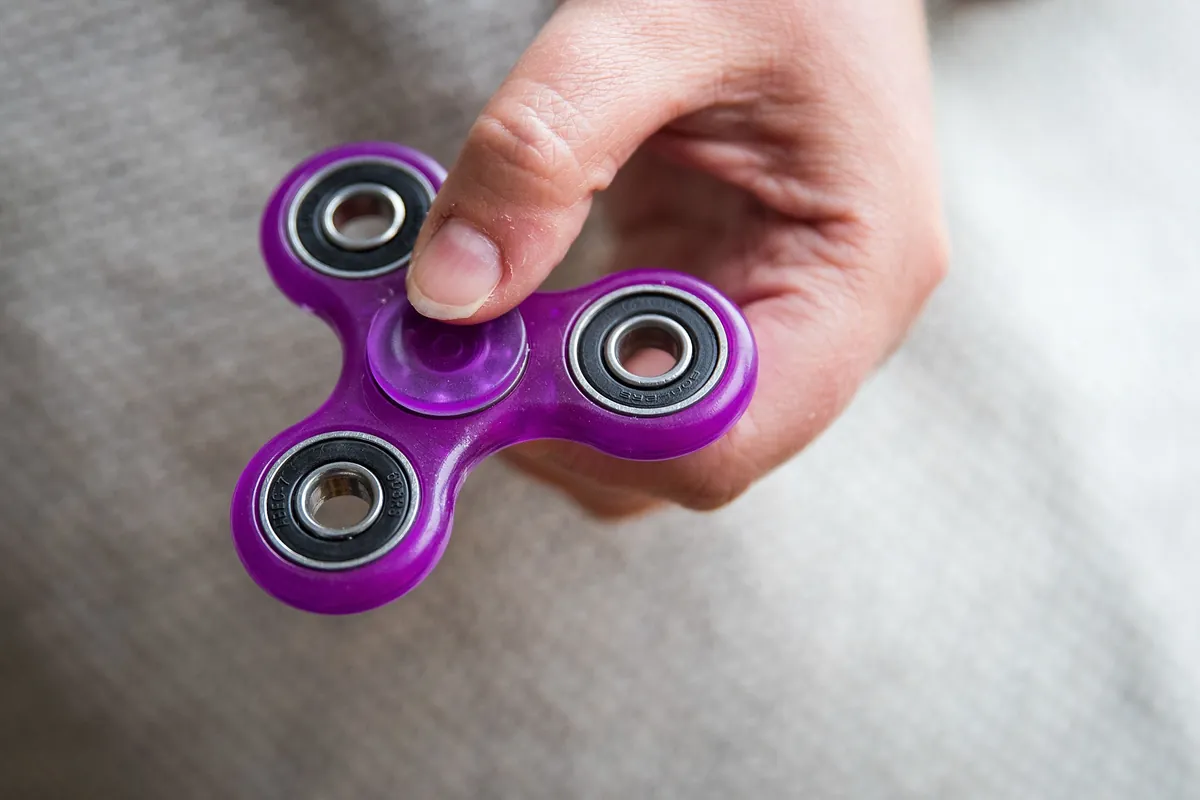
Fidget spinner rings, rollers and certain cubes allow a repetitive circular motion that is especially soothing for brains with a sensitive profile. The smooth, predictable movement has an almost meditative effect that helps bring activation down during anxiety or sensory overload. For our reviewed selection, check the article on the best fidget toys.
Compression fidgets
Stress balls, therapy putty, tough chew rings — these objects leverage proprioception (the sense of pressure and body position) to calm the central nervous system. Particularly useful for children who also have oral sensory needs (chewing), compression fidgets offer a safe, socially acceptable outlet.
| Fidget type | Main mechanism | Best for | Discreet in class? |
|---|---|---|---|
| Silicone ring / textured bracelet | Tactile, pressure | All ages, beginners | Yes ✓ |
| Fidget cube / pad | Multi-sensory | 5 yrs +, varied profile | Yes ✓ |
| Fidget spinner ring | Rotation, light visual | 8 yrs +, anxiety | Yes ✓ |
| Therapy putty | Compression, proprioception | Fine motor, stress | Partial |
| Fidget spinner (large) | Visual, rotation | Personal use, home | No ✗ |
Bringing Fidget Toys Into the Classroom: A Guide for Teachers and Parents
Introducing a fidget for a student with ADHD takes a little preparation to set it up for success. Here is how to make the transition smoothly.

Choose the right fidget with the student
Involving the child in the selection is essential. An imposed fidget meets resistance; a chosen fidget gets used. Offer two or three options and let the student trial each for a week. The school's occupational therapist can also guide this choice based on the child's sensory profile.
Set clear ground rules from day one
- The fidget stays under the desk or in hand — never displayed on top of the table.
- It is not lent to other students during class time.
- It goes back in the bag at recess to prevent loss or conflict.
- If the fidget becomes a distraction for the student themselves or their neighbors, it gets put away.
- The teacher reviews its usefulness after two weeks and adjusts if needed.
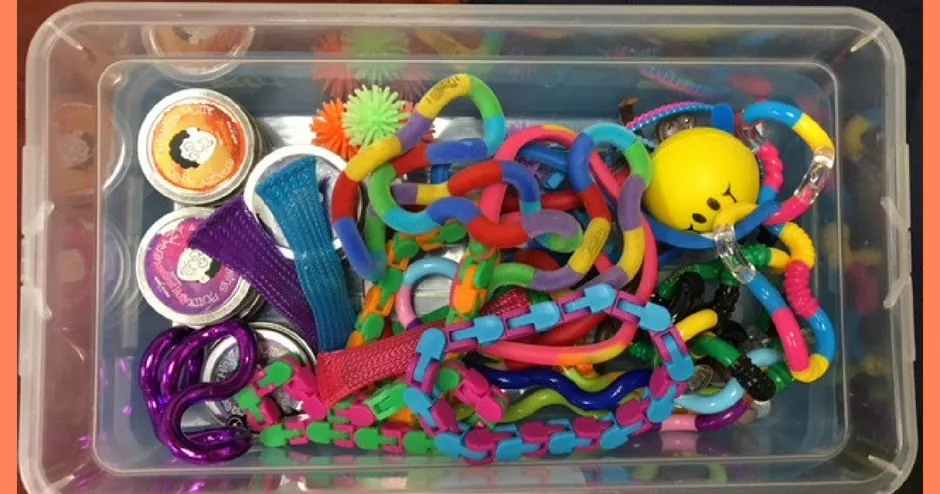
Tip: to avoid jealousy, some teachers introduce a classroom sensory box accessible to everyone. It normalizes the tool and reduces stigma. See our article on the classroom sensory box to set up this system.
Fidgets at Home: Homework, Routines and Hard Moments
Home is often where ADHD challenges show up most clearly — homework that drags on for hours, conflict-laden transitions, evenings that spiral out of control. Fidgets can play a quiet but real stabilizing role here too.
During homework
Set up a fidget before the work period starts, before restlessness sets in. A silicone ring worn on the finger or a cube next to the notebook lets the child self-regulate without interrupting their task. Paired with a giant sand timer for visible time management, this duo is remarkably effective.
During transitions
Moving from one activity to another is a high-risk moment for children with ADHD. Slipping a fidget into the child's hand a few minutes before the switch ("In five minutes we're heading to the bath — here's your ring") gives them a sensory anchor that eases the change.
Before stressful situations
Back-to-school day, a doctor's visit, a lively family dinner — high sensory or emotional contexts are exhausting for an ADHD brain. A pocket fidget (discreet, silent) acts as a portable regulator. For broader strategies, see our article on stress management for kids.
How to Choose the Right Fidget Toy for a Child or Adult with ADHD
The market is full of fidgets, and quality varies widely. Here are the criteria to check before buying.
- Silent: avoid fidgets that click loudly, whistle or make sounds in school or office settings.
- Durable: children with ADHD work their fidgets hard. Look for medical-grade silicone or solid ABS plastic.
- Safe: confirm the product is free of phthalates and BPA, especially for children under 10 or those who chew on things.
- Matched to the sensory profile: a child who is touch-sensitive will prefer a soft texture; one who is under-sensitive may need firmer pressure (stiff putty, a ring with pronounced ridges).
- One-hand operable without looking: if the child has to glance down to use the fidget, the benefit is lost.
For a curated, annotated selection, visit our guide to the best fidget toys. And if you want to understand exactly what "fidgeting" means from a neuroscience perspective, our article on the meaning of fidgeting has the answers.
Fidgets for Adults: ADHD at the Office and in Everyday Life
ADHD does not disappear at 18. Follow-up studies suggest that about two-thirds of children with ADHD still have some impairing symptoms around age 25, even though only about 1 in 6 still meets the full diagnostic criteria (Faraone et al., 2006). In professional settings, fidgets offer a discreet, effective way to maintain focus during long meetings, phone calls or computer work.
Adults with ADHD tend to favor:
- Fidget spinner rings worn on the finger — invisible in meetings, active at all times.
- Compact fidget cubes that fit in the palm and slip into a jacket pocket.
- Therapy putty kept in a desk drawer for high-pressure moments.
The key for an adult is choosing a fidget that requires no social explanation — an object that passes for a piece of jewelry or an ordinary accessory. The most effective fidget is the one you are not embarrassed to use in public. Browse our store for a selection curated for every age and profile.
The ADHD classroom strategies guide makes an important point: the accommodations that work for children — fidgets, movement breaks, structured environments — are often equally relevant for adults in the workplace. The brain's needs do not change; only the setting does.