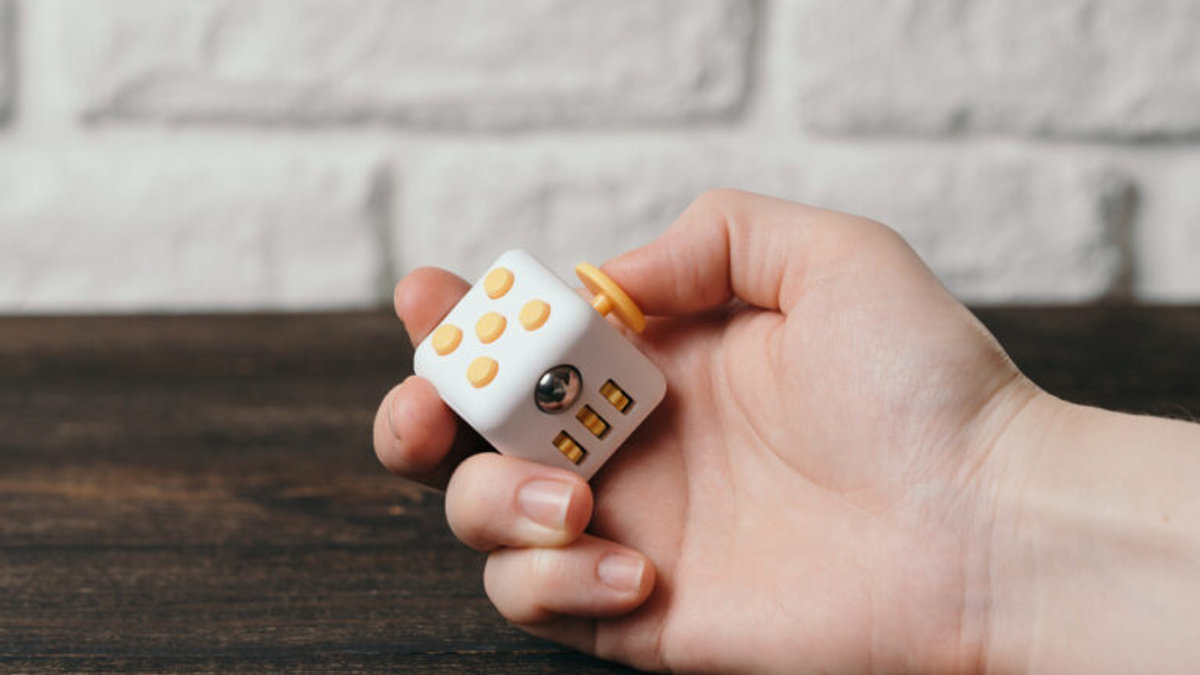

Fidgeting means moving in a repetitive, often unconscious way — tapping fingers, bouncing a leg, twisting a pen or object. Far from being a sign of distraction, this behaviour helps certain brains stay alert and focused during extended tasks. It is especially common in people with ADHD, anxiety or a particular sensory profile.
Do you ever tap your pen on the desk, bounce your leg under the table or twist your jacket zipper during a meeting or a class? If so, you are fidgeting. The word describes an irrepressible need to move part of the body in a repetitive and often unconscious way. Understanding the meaning of fidgeting, its causes and its effects can completely change how we respond to this behaviour — and how we support those who need it most.
Fidgeting is not a sign of disinterest or poor willpower. For a significant portion of the population, especially children and adults living with attention-deficit/hyperactivity disorder (ADHD), moving the hands or body is an involuntary regulation strategy that helps the brain maintain its arousal level. Understanding this mechanism is the first step to better equipping those who depend on it.
What exactly is fidgeting?
Fidgeting covers a broad range of small motor behaviours, all sharing the same core trait: repetitive, rhythmic and partially involuntary movement. Common examples include:
- Tapping fingers or nails on a surface
- Bouncing or swinging a foot or leg rhythmically
- Twisting or handling an object — pen, eraser, clothing, jewellery
- Rocking back and forth on a chair
- Cracking knuckles
- Chewing a pencil or the inside of the cheek
- Rolling and unrolling a thread or cord between the fingers
Most of the time, the person doing it has no idea it is happening — it takes someone else's reaction to bring it to their attention.
The dictionary definition of "fidget"
Fidget (verb, /ˈfɪdʒɪt/; forms: fidgets, fidgeting, fidgeted): to keep moving your hands or feet, or to keep shifting in your chair, most often because you are nervous, stressed, excited, bored — or trying to stay focused. Fidget around and fidget with mean the same thing; to fidget with something is to make small, often unconscious movements with it to stimulate the brain and stay alert (Collins English Dictionary).
Example: "During the exam, our teacher let us fidget with a discreet fidget tool to help us stay focused."
Good to know: the word "fidget" also gave its name to a whole category of objects — fidget toys — designed to channel this movement need in a discreet and socially appropriate way.
Why do we fidget? The causes behind the need to move
Fidgeting is not a bad habit or a personal failing. It responds to real neurological needs, and its causes are multiple.
The need for sensory stimulation
The human nervous system needs a certain level of activation to perform at its best. During monotonous tasks — a long lecture, a repetitive document, a slow-paced class — that arousal tends to drop. The brain compensates by seeking additional stimulation: the repetitive movement of fingers or feet provides exactly the sensory input needed to maintain the attention level required by the task.
Emotional regulation
Anxiety and stress also trigger fidgeting. Twisting an object, tapping fingers or rocking can have a calming effect — similar to a deep breath, but expressed through movement. This mechanism explains why fidgeting intensifies before an exam, during a difficult conversation or in a waiting room.
Managing energy surges
Some individuals — particularly those with an ADHD profile — generate levels of energy that are hard to contain while sitting still. Fidgeting offers a partial outlet that makes it possible to stay seated without becoming overwhelmed.
Moving is not the opposite of concentrating. For some brains, it is precisely what makes concentration possible. — The Robiii team
What science says about fidgeting and the brain
Long dismissed as disruptive behaviour to be corrected, fidgeting has attracted renewed scientific interest over the past fifteen years. The findings are nuanced, but several points emerge consistently.
Fidgeting and dopamine
One hypothesis is that movement raises arousal in brain systems — including dopamine pathways, which are involved in motivation and attention and work differently in ADHD. That could help explain why people with ADHD often fidget more than average, but it remains a hypothesis rather than a demonstrated mechanism.
The optimal arousal hypothesis
Studies by Mark Rapport's team in the Journal of Abnormal Child Psychology measured children's movement during working-memory tasks. Children with ADHD moved more when the task was harder (Rapport et al., 2009), and those who moved more tended to perform better — a link not seen in typically developing children (Sarver et al., 2015). Movement, in other words, may be partly compensatory.
The limits
Fidgeting does not improve focus for everyone. For people whose nervous systems are already well regulated, extra movement can actually hurt performance. The key is personalisation: recognising for whom and in which context fidgeting is genuinely beneficial.
Tip: if your child fidgets in class, resist the impulse to tell them to stop immediately. Instead, observe whether their focus and overall behaviour improve when they can move discreetly. If so, a quiet fidget toy may be a far better solution than a reprimand.
Fidgeting, ADHD and anxiety: close connections
While everyone fidgets, the behaviour is noticeably more pronounced and more frequent in certain populations. Here is how it shows up by profile.
| Profile | Common fidgeting type | Main function |
|---|---|---|
| ADHD | Leg bouncing, tapping, object handling | Maintain alertness and focus |
| Anxiety | Object twisting, nail-biting, rocking | Reduce emotional tension |
| Autism (ASD) | Stimming (rocking, hand-flapping) | Self-regulate sensory overload |
| Neurotypical | Tapping, foot-shaking | Manage boredom or fatigue |
In ADHD, fidgeting is often one of the first things parents notice: the child cannot sit calmly for more than a few minutes, constantly moves their feet under the table, touches everything in reach. Understanding that this behaviour is not defiance but a regulation mechanism fundamentally changes how you can respond to it. For more, read our article on how fidget toys help people with ADHD focus.
In anxiety, fidgeting tends to accompany situations perceived as stressful. It can take less socially acceptable forms — nail-biting, hair-twisting, scratching — that signal distress worth addressing rather than suppressing.
In autism spectrum disorder (ASD), fidgeting takes the shape of stimming (self-stimulatory behaviours) such as body rocking, hand-flapping or repeating sounds. These behaviours serve an essential sensory function and should never be eliminated without offering a suitable alternative.
Fidget toys: channelling the need productively
This is where fidget toys come in: objects designed specifically to offer a discreet, silent and appropriate outlet for the movement need. Instead of tapping on the desk or spinning a pen — risking disturbing others — a student or adult can manipulate an object in the palm of their hand, out of sight.
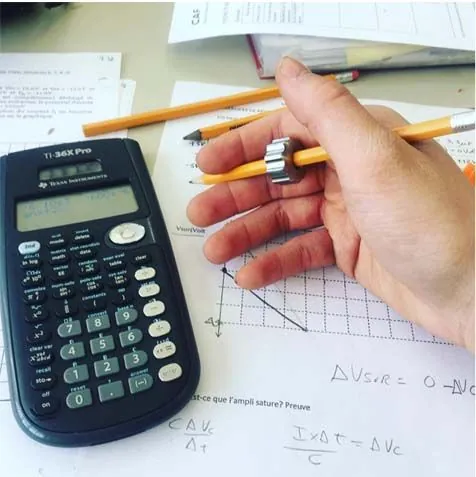
- Textured rings — slip onto a finger, discreet and rollable.
- Fidget pads — surfaces with buttons, levers and dials to activate with the thumb.
- Therapy putty — silent dough to knead, excellent for fine motor development.
- Spinner rings — a ring with an integrated spinning band, wearable everywhere.
- Sensory balls — to squeeze, grip or gently toss.
- Chew tools — for oral-sensory needs, made from food-grade silicone.
- Pencil-top fidgets — like the Rolliii, which slides onto a pencil or pen: discreet enough for school or the office.

Choosing the right fidget toy depends on the person's sensory profile, their age and the context of use (classroom, office, transit). Our guide to the best fidget toys will help you find the right match.
The effectiveness of fidget toys rests on a simple principle: they satisfy the movement need with minimal visual and auditory intrusion, letting the person redirect attention to the task at hand. For a deeper look at the science behind this, see our article on why keeping your hands busy helps you focus.
Fidgeting in class: allow it or limit it?
The question comes up regularly in staff rooms and parent-teacher meetings: does the student who constantly moves around distract others? Should we step in? The answer depends on the form the fidgeting takes.
When it is acceptable — even beneficial
Discreet, silent fidgeting — handling an object under the desk, gently swinging a foot, sitting on an inflatable cushion — does not affect other students and can help the focus of the student who needs it. Many school occupational therapists recommend these simple sensory accommodations as part of classroom support — alongside, not instead of, the treatment plan decided with the child's doctor.
When adjustment is needed
When fidgeting distracts others (repetitive sounds, flying objects, overly large movements), the right response is to offer an alternative, not to ban movement outright. Swapping a clicking pen for a silent ring, moving the student somewhere with more space, giving regular movement breaks — all of these fit naturally within a broader set of ADHD strategies for teachers and parents.
The key distinction: functional vs. disruptive
Functional fidgeting improves performance without disturbing others. Disruptive fidgeting harms the group without necessarily helping the person doing it. This distinction — not the presence or absence of movement itself — should guide classroom decisions.
Watch out: flatly prohibiting fidgeting for a child with ADHD without offering an alternative can worsen their restlessness and anxiety. It is far better to redirect the behaviour toward something discreet than to eliminate it entirely.
Practical tips for parents and teachers
Whether you are the parent of a child who fidgets constantly or a teacher looking to manage it in the classroom, here are some concrete starting points.
At home
- Normalise the behaviour: explain to the child that moving to concentrate is perfectly normal, and that plenty of adults do it too.
- Offer a designated object: a fidget toy reserved for homework time prevents the child from reaching for anything nearby (pencils, caps, wrappers).
- Set up the space: a posture cushion, a slightly rocking chair or an elastic band under the desk all allow discreet movement during schoolwork.
- Honour movement breaks: five minutes of jumping or dancing between two homework blocks is worth more than thirty minutes of fighting to sit still.
In the classroom
- Introduce fidget tools gradually: present them as tools for the whole group, not as treatment for one particular student.
- Set clear rules: the object stays under the desk, it must be silent, and it is not shared during the lesson.
- Collaborate with the school occupational therapist if one is available — they can recommend tools best suited to the student's sensory profile.
- Build in active breaks: two minutes of stretching or breathing between subjects can be enough to recharge the entire class's attention level.