
Supporting a student with ADHD in the classroom comes down to three complementary levers: targeted physical and pedagogical accommodations, predictable routines that lower cognitive load, and sensory tools that channel energy without disrupting the group. The key is consistency between school and home.
A child with attention-deficit/hyperactivity disorder (ADHD) does not lack willpower — they lack the neurological fuel to sustain attention, inhibit impulses and manage time. In the classroom and at home, the most effective strategies do not ask for more effort from the child: they reshape the environment so that effort becomes possible.
This article brings together the best practices for teachers and parents: concrete accommodations, structured routines, well-chosen sensory tools and school-family collaboration tips. Whether you are navigating your first year with an ADHD student or looking to refine strategies already in place, you will find actionable ideas here that you can start using tomorrow morning.
Understanding ADHD to support it better
ADHD is a neurodevelopmental disorder that affects an estimated 5 to 9 percent of children, according to CADDAC. It presents in three main profiles: inattentive (difficulty sustaining focus), hyperactive-impulsive (restlessness and quick reactions without a filter) or combined (both). Symptoms do not disappear through discipline — they ease with the right support.
What the ADHD student experiences in class
A student with the inattentive profile may spend an entire class staring out the window without noticing they have drifted. Their brain is not "lazy" — it is constantly searching for stimulation. The hyperactive-impulsive student is more visible: they speak before raising a hand, get up without permission and struggle to wait their turn — behaviors often mistakenly read as defiance. Understanding the neuroscience behind these patterns is the first step toward not taking them personally.

What recent research tells us
The evidence points in a clear direction: school-based support helps. A meta-analysis of 60 studies found positive effects of school-based interventions on the classroom behaviour of students with ADHD, with more modest and less consistent effects on academic results (DuPaul, Eckert & Vilardo, 2012). In practice, supports tend to work best when school and home apply them consistently.
Good to know: ADHD often co-occurs with other challenges — anxiety, dyslexia, oppositional behavior. A child who refuses tasks is not necessarily defiant; they may simply be overwhelmed. Identifying co-occurring conditions helps choose the right tools.
Concrete accommodations for teachers in the classroom
Physical and instructional accommodations are the cornerstones of school support for a student with ADHD. They rarely require additional resources — a different organization often does the job.

The physical environment
- Preferential seating: place the student near the teacher, away from windows, doors and noise sources. This single adjustment reduces involuntary disengagement.
- Noise reduction: noise-cancelling earmuffs during writing or test periods help the sound-sensitive student stay focused.
- Cleared workspace: a desk free of excess material limits visual distractors. Only what is needed for the current task should be visible.
- Alternative seating option: an inflatable cushion or a gentle rocking chair provides soft proprioceptive input that helps the student re-centre without disturbing the class.
Instructional adjustments
- Short, sequenced instructions: give one step at a time, visually when possible (numbered on the board). A child with ADHD can lose the thread after two consecutive instructions.
- Comprehension check: ask the student to restate the instruction rather than simply nodding.
- Movement breaks: two to three minutes of movement (stretches, jumping jacks) between learning blocks improves re-engagement. This is not lost time — it is an investment.
- Chunked tasks: a sheet of 20 problems looks overwhelming. The same sheet split into four sets of 5, handed out one at a time, becomes manageable.
- Immediate positive reinforcement: praise a specific behavior the moment it appears ("Great job — you waited for me to finish before speaking") rather than saving feedback for end of day.
| Common challenge | Accommodation strategy | Suggested tool |
|---|---|---|
| Attention drift | Preferential seating, discreet signal | Seating cushion, noise-cancelling earmuffs |
| Motor restlessness | Movement breaks, alternative seating | Inflatable cushion, under-desk fidget |
| Difficulty with time | Visual time cue | Giant sand timer, visual timer |
| Impulsivity, interruptions | Posted visual rules, reminder signal | "I have an idea" card placed on the desk |
| Losing materials | Tidy-up routine, visual checklist | Colour-coded subjects, laminated checklist |
Building solid routines at home
At home, predictability is an ADHD child's best ally. The ADHD brain functions better when it knows in advance what is coming — this frees up bandwidth for learning and reduces transition meltdowns.
Building the routine chart
A visual chart posted at eye level, with pictures or icons for each step, eliminates repetitive negotiations. The child sees what is coming, checks off completed steps and gains a sense of mastery. For younger children (ages 4 to 7), actual photos of the child doing each activity are even more meaningful than generic drawings.
The homework routine in 4 steps
- Active break (10 min): running outside, skipping rope, riding a bike. Physical activity can make the next stretch of focus easier: in one study, 20 minutes of brisk walking improved attention and test performance in children with ADHD (Pontifex et al., 2013) — more productive than forcing the child to sit down immediately.
- Snack and water: a working brain burns glucose. A protein-rich snack (cheese, nuts, egg) sustains focus better than quick sugars.
- 15-to-20-minute blocks with a timer: use a giant sand timer or visual timer to mark each block. When the sand runs out, it is a 5-minute break — not a negotiation, that is the timer's rule.
- Micro-celebration: each completed block deserves immediate recognition: a sticker, a nod, a genuine "you did it!" Do not save all the reward for the very end.

A child with ADHD does not resist rules to provoke you. They resist because transitions cost their brain an enormous amount of energy. Your role is to make that cost lighter — not to eliminate it through punishment. — The Robiii team
Sensory tools: what, why and how
Sensory tools are not gimmicks — they meet a genuine neurological need. A child with ADHD whose hands are occupied by a discreet fidget satisfies part of their need for stimulation, leaving more cognitive resources available for learning. Here are the most useful categories.
Discreet fidgets
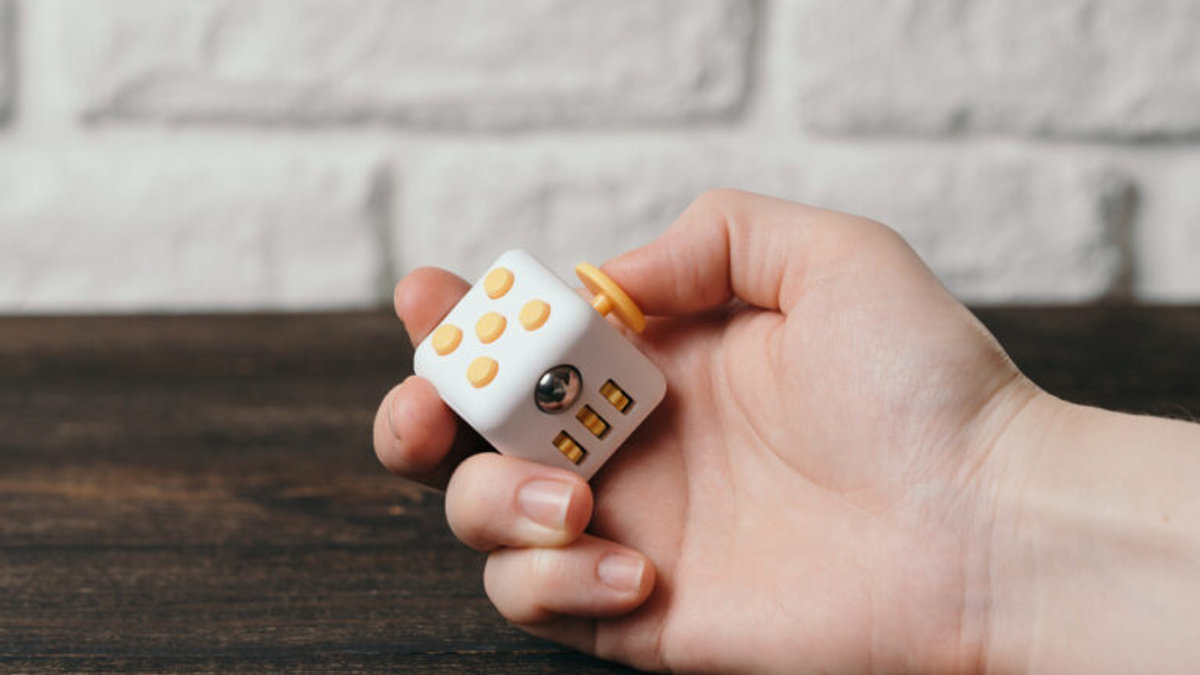
A fidget pad, a spinner ring or a textured bracelet fits in the palm or stays under the desk without drawing attention. To work in a classroom, the fidget must be silent, without lights and without a visible mechanism. Take time to agree with the student on a clear rule: the fidget stays under the desk and is never thrown or lent out.
The sand timer as a time anchor
"Time blindness" is one of the least-recognized features of ADHD. Making time concrete with a giant sand timer turns an abstract concept into visual information. At home, a 15-minute timer for homework and a 5-minute timer for the transition signals wordlessly what is coming next.
The sensory box in class
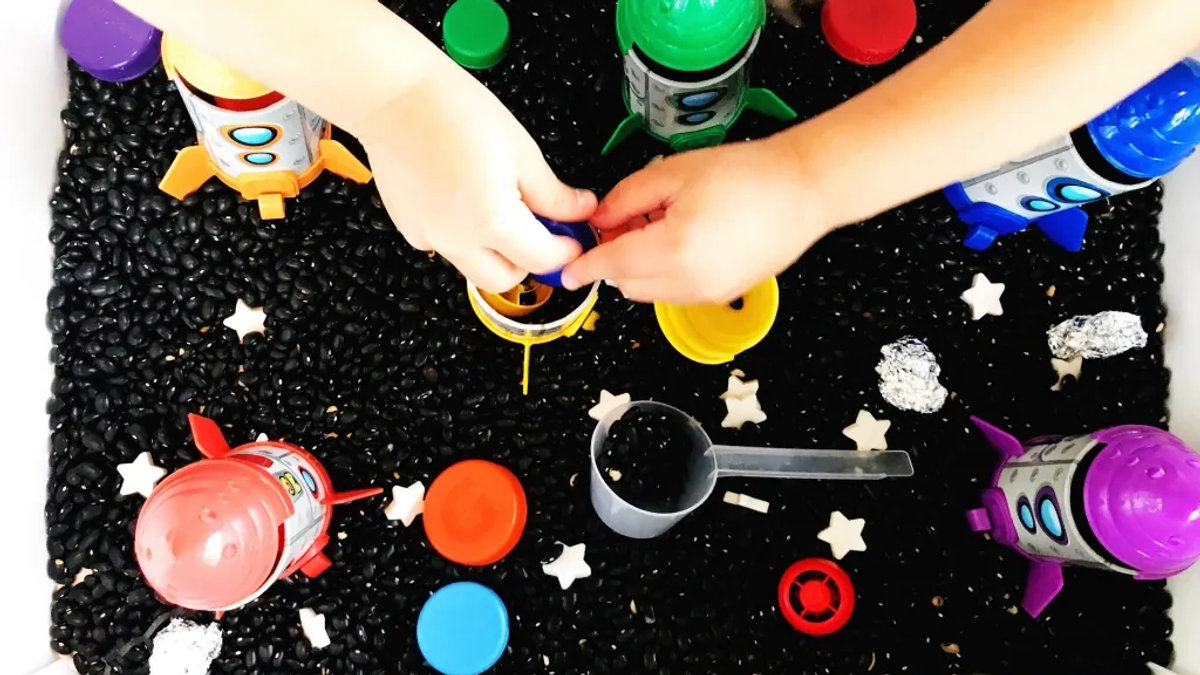
A sensory box tucked in a quiet corner of the classroom lets a student who feels overload building self-regulate discreetly. It might hold a fidget, a stress ball, therapy putty, noise-cancelling earmuffs and a breathing card. Access is on request or by a pre-agreed signal — never as punishment.
Tip: let the student choose their fidget from two or three options. That sense of control increases buy-in and how well the tool works. An imposed object often triggers resistance.
School-family collaboration: the force multiplier
Even the most sophisticated strategies lose power if they are only applied in one place. Consistency between school and home is what genuinely makes the difference over the long term.

The communication notebook
A notebook — physical or digital — that travels between teacher and parent allows you to flag difficult days, highlight successes and note adjustments to try. The tool works best when it leads with the positive first: one good piece of news each day, even a small one, keeps everyone motivated.
The monthly check-in
Scheduling a short meeting (15 to 20 minutes) once a month lets you adjust strategies, share observations and prevent difficulties from piling up into a crisis. Inviting the student to this meeting — depending on their age — helps them develop their own awareness of their needs.
The individual education plan (IEP) or accommodation plan
When difficulties persist despite informal adjustments, it is time to formalize support in a written plan. This document specifies goals, chosen strategies, each adult's role and progress indicators. It is reviewed by the team at regular intervals during the school year.
Bringing in specialists
School psychologists, occupational therapists, psychoeducators and special-education teachers can observe the child, suggest tailored strategies and help adjust the plan. Many children with ADHD benefit from non-medication approaches — behavioural therapy, structured routines and classroom accommodations — whether or not they also take medication. Questions about medication or diet (some studies suggest omega-3s and fewer artificial additives may help certain children) should always be discussed with a health professional.

Managing emotions and preventing meltdowns
ADHD often comes with emotional dysregulation: emotions rise fast, hit hard and come down slowly. A child who "loses it" at the slightest obstacle is not trying to manipulate anyone — their brain was flooded before they could stop it.
Spotting early warning signs
Every child has their own alarm signals before a meltdown: tapping the desk, squirming, going silent or flushing. Learning to read these allows you to step in early. A quiet signal agreed upon between teacher and student (a card placed on the desk, a light tap on the shoulder) can be enough to defuse the build-up before it becomes unmanageable.
Regulation techniques to teach
- Box breathing: inhale 4 counts, hold 4, exhale 4, hold 4. Simple, silent and effective.
- The calm corner: a dedicated space in the classroom or at home (cushion, sensory box, favourite book) where the child can recharge — not as punishment.
- Movement-based regulation: two minutes of jumping jacks or intense stretching helps discharge tension and often works better than a reasoned conversation at the peak of a meltdown.
For more on emotional support and stress-relief tools, read our article on stress management for kids.
Resources, tools and the Robiii store
Adapted sensory tools are an integral part of a well-built ADHD support plan. At Robiii, every product is chosen with the real needs of children with ADHD, autism, anxiety or dyslexia in mind — and with school and family budgets in view.
- Discreet fidgets (pad, ring, bracelet) — to channel energy in class without disrupting others.
- Giant sand timer — to make time visible at home and in the classroom.
- Noise-cancelling earmuffs — for students sensitive to sound during focused work periods.
- Therapy putty — to work fine motor skills while calming down.
- Sensory box — to offer a quiet self-regulation space in the classroom.
You will find these products and many more in our online store. For schools and educators looking to equip multiple classrooms, wholesale pricing is available — reach out through the Wholesale section.
To round out your reading, our article on top tips for parenting children with ADHD offers concrete home-side strategies, while our guide on how fidget toys help the ADHD brain explains the science behind these tools.