Fidget toys are sensory self-regulation tools designed to keep hands quietly occupied so the brain can better focus, calm down or decompress. They are often especially helpful for children and adults with ADHD, anxiety or sensory sensitivities. Our selection covers the most effective types matched to different profiles and situations.
Have you ever watched a child tap a pen endlessly, chew a pencil cap or rock their chair non-stop? That behaviour — fidgeting — is not a lack of discipline or a focus problem: for many children, it is the opposite. For brains wired with ADHD, anxiety or sensory sensitivity, hand movement is cognitive fuel. The right fidget turns scattered energy into a steady, predictable and discreet signal that helps the brain stay on task.
But not all fidget toys are created equal — and the right choice depends on the person's profile, age and context. In this article we share our pick of the best fidget toys, field-tested and backed by real feedback from families and special-education professionals, along with the concrete criteria you need to choose the best fit for your child — or yourself.
How do fidget toys work?
Before diving into our picks, it is worth understanding the mechanism. Fidgeting engages the proprioceptive sensory system — the one that processes pressure, movement and resistance signals from muscles and joints. When this system is activated in a gentle, repetitive way, it sends the brain a stable arousal signal without overloading it.
For an ADHD brain, whose arousal level swings constantly between too low (boredom, disengagement) and too high (restlessness, overflow), that stable signal can be valuable: it can help keep the brain in its optimal performance zone. For an anxious child, a repetitive, predictable movement can be calming. This is why fidgets can both increase focus and reduce anxiety — two seemingly opposite effects that stem from the same self-regulation mechanism.
Research note: a 2015 study (Sarver et al., Journal of Abnormal Child Psychology) found that boys with ADHD who moved more during working-memory tasks tended to perform better. But a 2020 classroom study found that classic fidget spinners were linked to poorer attention in young children with ADHD. The type of fidget matters — and individual results vary.
Our pick of the best fidget toys
Here are the five main families of fidgets, their characteristics and their best uses. Each type has its strengths — the ideal setup is often to have two or three for different situations.
1. The fidget pad or sensory cube
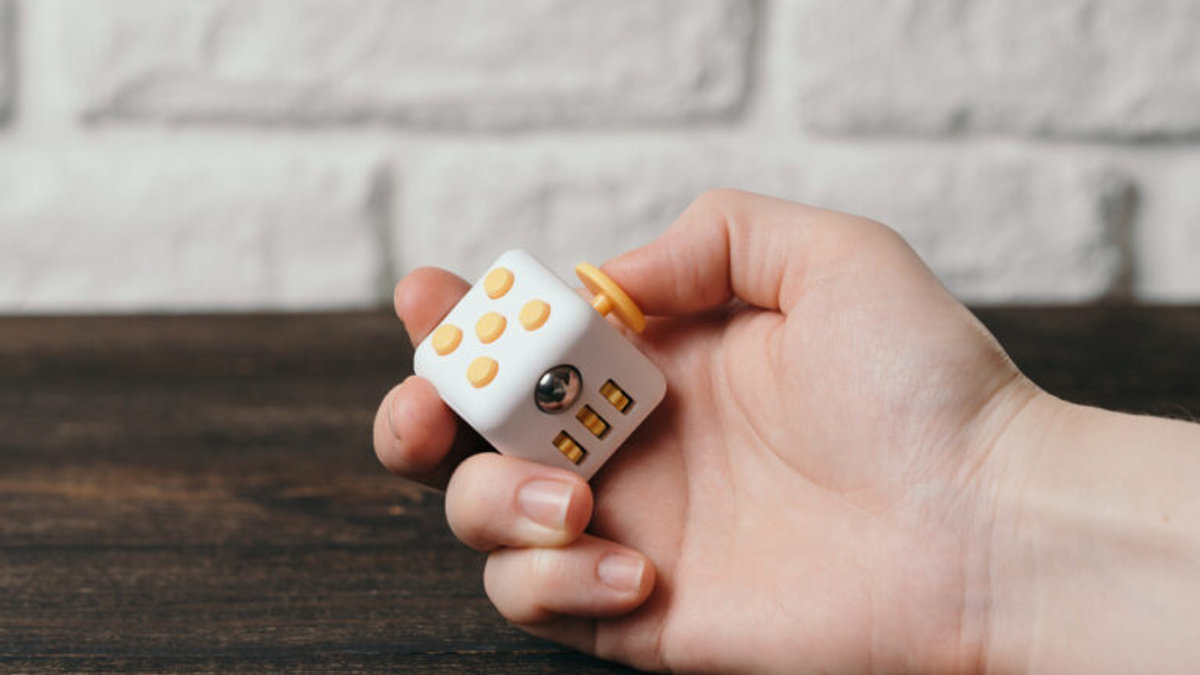
The fidget pad is arguably the Swiss Army knife of fidgets: it packs multiple textures and mechanisms into one compact object — buttons to press, a roller, a switch, a joystick, a matte zone to rub. Its versatility makes it an excellent first fidget for children who do not yet know which type of stimulation works best for them.
It is also one of the most discreet: palm-sized and whisper-quiet, it works perfectly in class or in a meeting. It is particularly well suited to ADHD profiles with a strong impulsivity component — the fingers always find something to do. For a deeper look, read our guide on the Fidget Pad for children with ADHD.
2. The fidget spinner ring
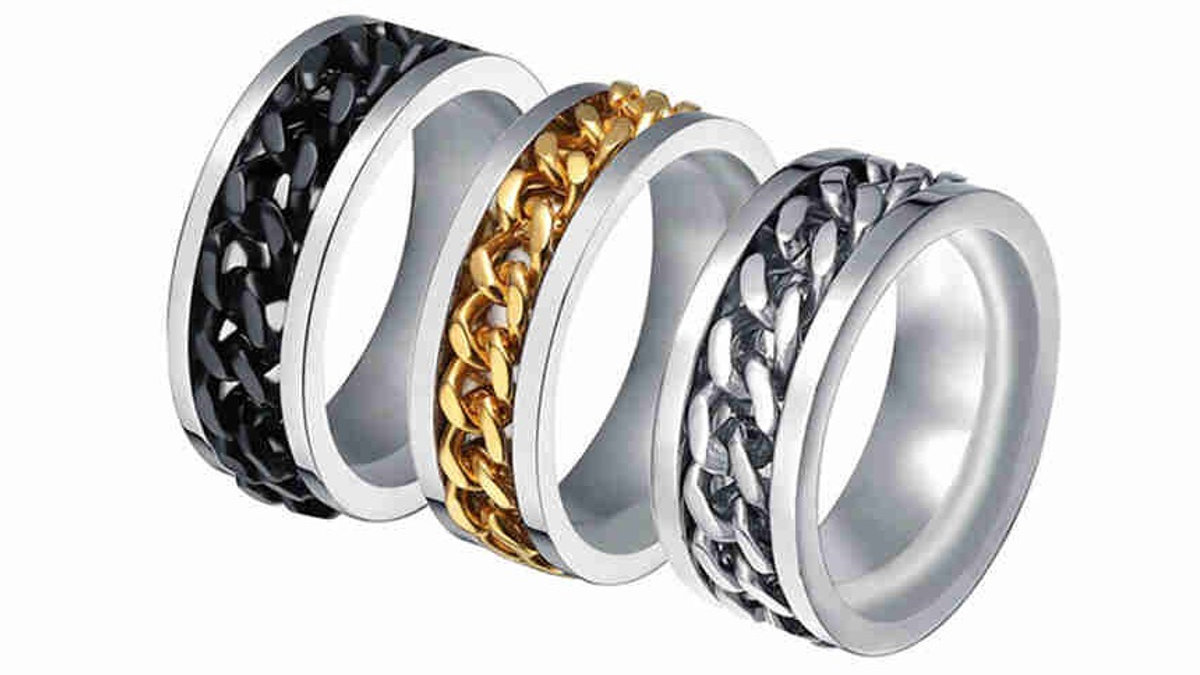
The fidget spinner ring is the most discreet option of all: worn on a finger, it is virtually invisible. The outer band spins freely around the inner ring, providing a gentle, continuous stimulation. It is especially popular among older children, teens and adults who want a fidget available at all times without drawing notice.
It excels in social settings — an ordinary classroom, a team meeting, a waiting room — where pulling out an object would be too conspicuous. It works equally well for mild anxiety and moderate ADHD. Explore our full guide on the fidget spinner ring.
3. Therapy putty
Therapy putty (kneading clay) offers genuine physical resistance: you stretch it, knead it, roll it into a ball, twist it. That resistance engages the proprioceptive system deeply and has a discharge effect that is particularly powerful for children who are highly agitated or in the middle of an emotional overflow.
It comes in several resistance levels — from very soft (ideal for young children and beginners) to firm (for teens and adults). It is also an excellent fine-motor strengthening tool, frequently recommended in occupational therapy.
4. The squeeze ball
Simple, accessible and universal, the squeeze ball is often the first fidget offered to an anxious child. It provides bilateral hand compression — a natural, instinctive gesture for releasing tension. Textured versions (nubs, ridges) add an extra tactile dimension that amplifies the calming effect.
It works very well during difficult transition moments — before an exam, in a queue, during a car trip — and can be tucked in a pocket or bag. For children with tactile hypersensitivity, smooth-surface versions are preferable.
5. The sensory flow tube
The sensory flow tube (or bubble tube) is a transparent cylinder filled with a viscous liquid in which coloured beads or bubbles travel. The child tilts it slowly side to side and watches the hypnotic movement of the liquid. It is the fidget most focused on visual relaxation and immediate stress relief.
It is especially well suited to anxious or autistic profiles, and to calm-down moments after a meltdown. Its relaxing effect comes from both the proprioceptive movement of tilting and the visual stimulation of the flow — a powerful combination for children with a dual sensory profile.
Other popular fidget toys worth knowing
Beyond these five families, a few specific fidgets have earned a loyal following with students, parents and adults at work:
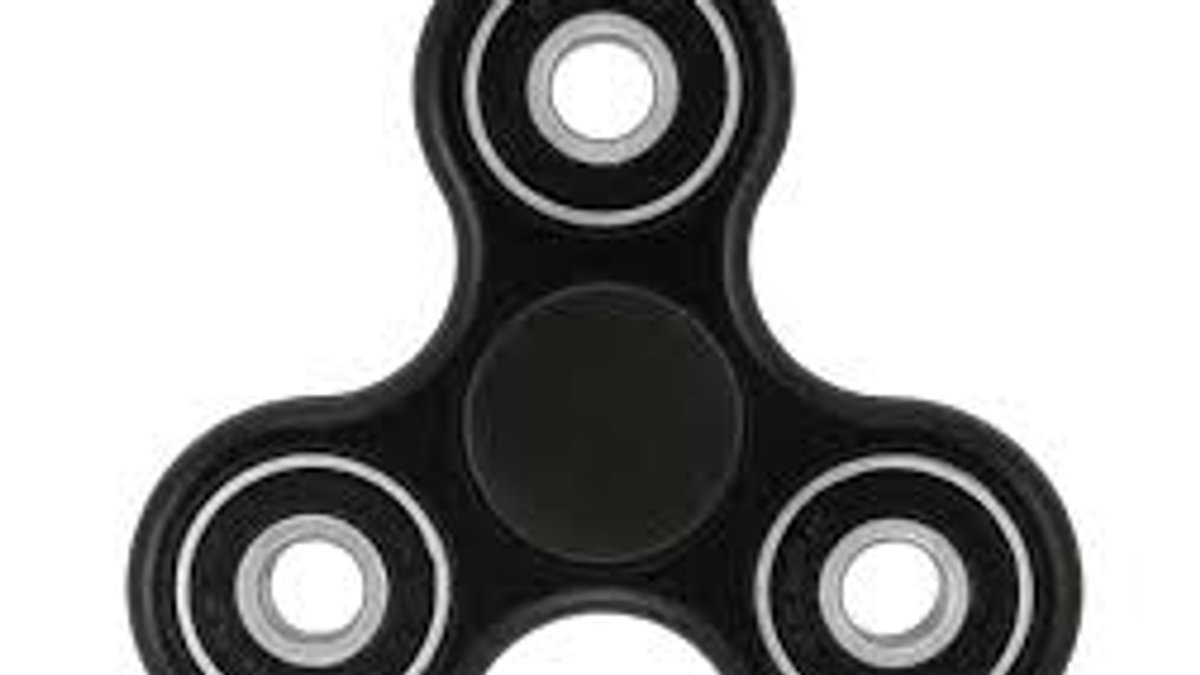
- The classic fidget spinner — the one most people picture first. Many brands sell it at every price point; a good one spins for several minutes on its bearings, and models with several bearings run smoother and quieter once broken in.
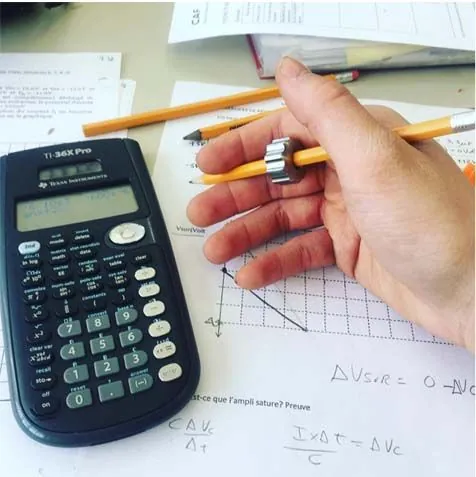
- Rolliii — a fidget that slides onto a pencil or pen and spins under the fingers. It is one of the quietest fidgets there is, which makes it our favourite for school.
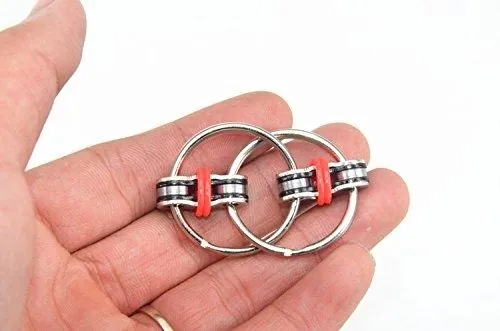
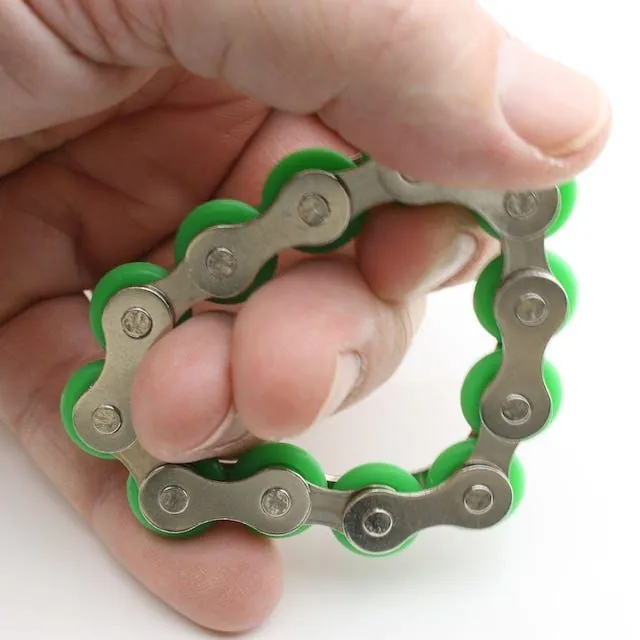
- Flip chain — stainless steel links and rings wrapped with silicone O-rings. Nearly unbreakable and non-corrosive, it folds into countless shapes and fits in a pocket (just over 2 inches long). Robiii's version is the Flippiii Chain.
- Roller chain — a bike-chain-style loop with soft silicone rings that make no sound, so it can be worked under a desk without anyone noticing. Its small size (about an inch) can be awkward for very large hands.
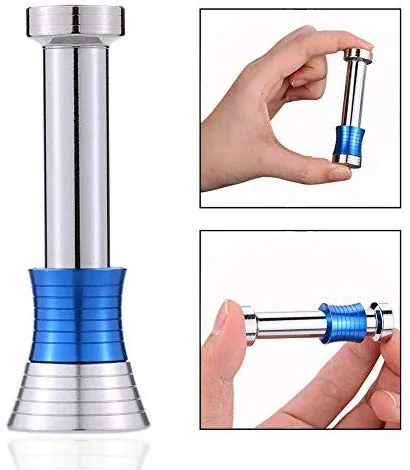
- Magnetic desk fidget (Moon Drop type) — a small anti-gravity slider that glides and spins over magnets on a stand: slow, soothing movement for people who calm down with gentle motion rather than speed.
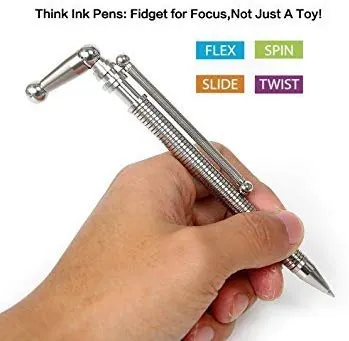
- Fidget pen (Think Ink type) — a working pen with a flexible spring barrel, a detachable magnetic clip and a magnetic sphere to play with. Discreet at the office, but not for children because of its small magnetic parts — for kids, choose a fidget pencil instead.
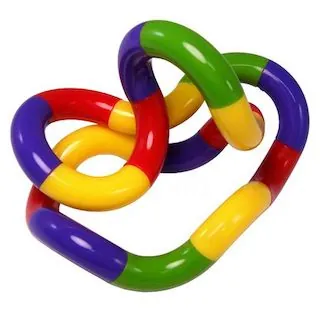
- Tangle Therapy — a loop of curved, rubber-coated segments that twist independently, a modern take on worry beads. It is marketed for hand and finger rehabilitation (its maker holds a U.S. FDA medical device establishment registration) and is an excellent stress-buster too.
Comparison table: which fidget for which profile?
Here is a quick-reference table to help you choose based on the primary need:
| Fidget toy | ADHD | Anxiety | Autism / ASD | Classroom discretion |
|---|---|---|---|---|
| Fidget pad / cube | ⭐⭐⭐ | ⭐⭐ | ⭐⭐ | ⭐⭐⭐ |
| Fidget spinner ring | ⭐⭐ | ⭐⭐⭐ | ⭐⭐ | ⭐⭐⭐ |
| Therapy putty | ⭐⭐⭐ | ⭐⭐⭐ | ⭐⭐⭐ | ⭐⭐ |
| Squeeze ball | ⭐⭐ | ⭐⭐⭐ | ⭐⭐ | ⭐⭐ |
| Sensory flow tube | ⭐⭐ | ⭐⭐⭐ | ⭐⭐⭐ | ⭐ |
Tip: if your child has never used a fidget before, start with a fidget pad or a squeeze ball — they are the most intuitive. Watch how your child uses them naturally before investing in other types.
How to choose the right fidget toy: 5 essential criteria
Picking a fidget should not be a guessing game. Here are five questions to ask before buying:
- What is the primary need? Focus (ADHD), calming (anxiety) or sensory input (autism, ASD)? Each need points to a different type of fidget.
- What context will it be used in? In class, the fidget must be silent and discreet. At home or in therapy, something more expressive like putty is fair game.
- What textures and resistances does the child prefer? Some love the silky softness of putty; others prefer the firm click of a button. Ideally, let the child try before committing to a purchase.
- Are there any physical constraints? A child with low hand tone will struggle with firm putty. A child with fine-motor challenges will do better with a flow tube or a simple ball.
- Is the object safe and durable? Check safety certifications (CE, ASTM standards), the absence of BPA, and the sturdiness of any moving parts to avoid choking hazards or fast breakage.
Using fidgets in the classroom: a guide for teachers and parents
Integrating fidgets into a school setting is a nuanced subject — some teachers see them as a distraction while others treat them as valuable allies. Here is how to approach it constructively.
Talking to the school
Before sending a fidget in your child's bag, discuss it with their teacher. Explain why you are suggesting it, ideally with a recommendation from an occupational therapist, psychologist or family doctor. A professional note often opens doors that would otherwise stay closed. Many teachers are willing to accommodate discrete tools once they understand their purpose.
Ground rules for the child
For the fidget to stay a tool and not become a distraction toy, set clear rules:
- The fidget stays under the desk or in the hand — not on the table where it draws attention.
- It does not get traded with classmates.
- If a teacher asks to put it away, it goes away without argument.
- Reserve it for individual work time — not during group instruction.
A fidget is not a reward or a toy: it is a tool, just like a ruler or a pencil. Treating it that way — with clear rules and expectations — helps the child use it responsibly. — The Robiii team
To go deeper on classroom support strategies, read our article on ADHD strategies for teachers and parents. If you want to understand the science behind fidgets, our article on how fidget toys help the ADHD brain walks you through what the research does — and doesn't — show.
Fidgets for adults: just as effective, often overlooked
Most conversations about fidget toys focus on children — but adults benefit just as much. An estimated 3 to 5% of adults live with ADHD (CADDAC), many of them undiagnosed or untreated, and many others have developed spontaneous fidgeting habits (clicking a pen, bouncing a leg, twisting hair) without ever putting a name to it.
For adults, the most popular fidgets are:
- The fidget spinner ring — worn as an ordinary accessory, completely invisible in a meeting.
- Therapy putty on the desk — great for work-from-home days or open offices.
- Meditation beads (mala) — an ancient fidget that fits perfectly in any context.
- A compact fidget pad — slipped in a pocket to handle waiting time or commutes.
For more on managing everyday stress, our article on stress management for kids contains tips that translate well to adults too. And to understand what fidgeting actually means, our article on what fidgeting means unpacks the common misconceptions.
Watch out: the classic spinner fidgets from the 2017 craze are often too visually stimulating and can include detachable parts that are a choking hazard for young children (the U.S. CPSC advises keeping them away from children under 3). Opt for fidgets specifically designed for self-regulation, with no parts that can come loose.
Robiii fidgets: our recommended lineup
At Robiii, every product is chosen against strict criteria: certified safety, BPA-free materials, durability, and — above all — real-world effectiveness tested with families and special-education professionals. Here are our three essential references in the fidget category:
- Robiii Fidget Pad — the versatile all-rounder, the ideal starting point. Silent, sturdy, from age 5. Learn more →
- Robiii Fidget Spinner Ring — the discreet option for social situations. For ages 8 and up. Learn more →
- Robiii Therapy Putty — available in three resistance levels to suit every age and need. View in store →
All our fidgets are available wholesale for schools, occupational therapy clinics and specialty retailers. Contact us for volume pricing.