Shared play is one of the most powerful tools for building children's social skills. When playing together, kids learn to share, negotiate, read others' emotions and resolve conflicts — the core competencies for a healthy social life. The right toys create natural opportunities for cooperation without children feeling like they are in school.
"Share!" "Wait your turn!" "Say sorry!" These phrases echo through every home and classroom. Yet decades of developmental psychology research point to a humbling truth: children do not really learn to cooperate through adults' words. They learn by playing together. A board game around the kitchen table, a block tower built by four hands, a pretend restaurant with rules improvised on the fly — these are the true laboratories of social life.
At Robiii, we believe that choosing the right toy is also choosing which skills you want to nurture. This article explores the connection between toys and social skills, explains the mechanisms at work, and offers practical ideas for enriching children's play — at home and in the classroom.
Why play is the best teacher of socialization
Russian psychologist Lev Vygotsky theorized it in the 1930s: play creates a "zone of proximal development" for social learning. Through play, children push beyond their current abilities, try out behaviours they have not yet mastered and adjust them based on their peers' immediate reactions. No formal lesson can replicate that dynamic.
In practice, shared play trains several skills simultaneously:
- Empathy: reading a friend's face when they lose, understanding their disappointment.
- Communication: explaining ideas, listening to others, finding common ground.
- Emotion regulation: accepting a loss, tempering one's own excitement to avoid upsetting the loser.
- Conflict resolution: negotiating rules, repairing a perceived injustice.
- Cooperation: setting aside immediate self-interest for the group's goal.
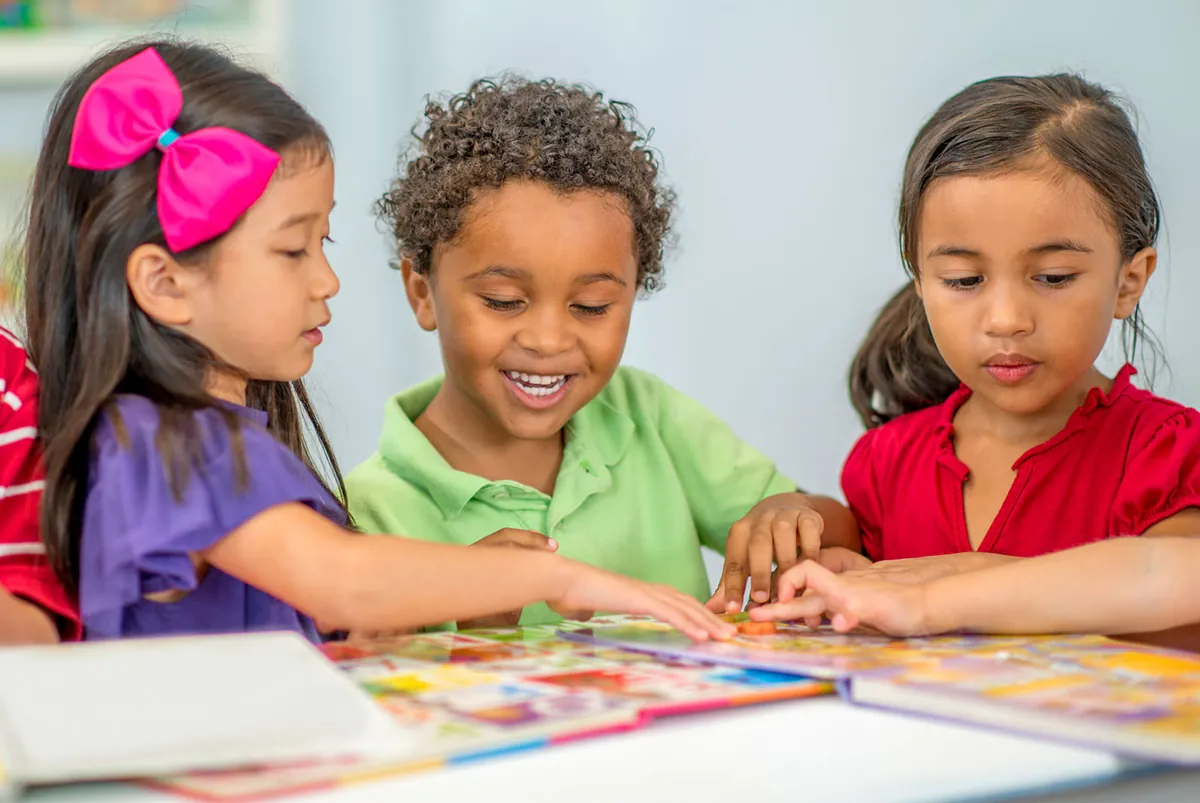
Good to know: the American Academy of Pediatrics encourages plenty of free, child-directed play alongside guided activities (The Power of Play, 2018). Sometimes let children invent their own rules — that is when social negotiation is most intense.
Stages of social play: from watching to cooperating
Social play follows a well-documented progression, first described by researcher Mildred Parten in 1932. Understanding these stages helps you pick the right toy at the right time.
Solitary play (0–2 years)
The child plays alone, showing little interest in others. This is a perfectly normal and healthy stage that builds concentration and creativity. Simple sensory toys — rattles, textured balls, stackers — are ideal here.
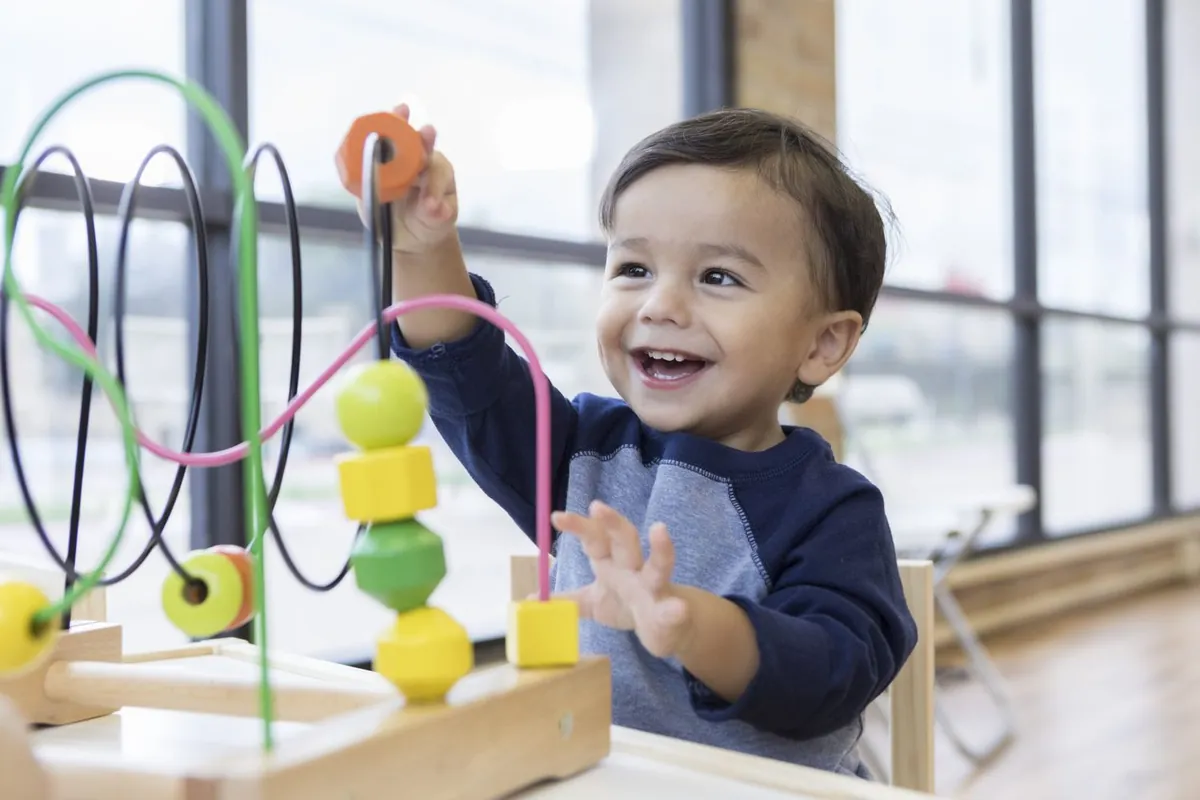
Parallel play (2–3 years)
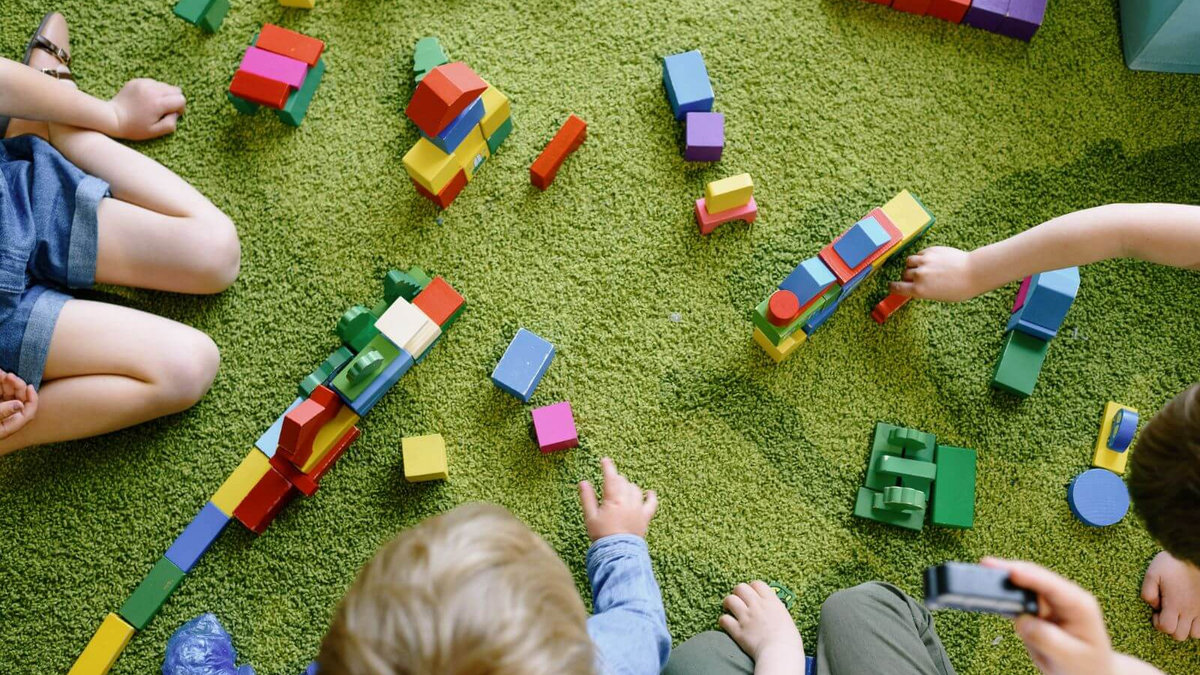
Children play side by side without truly interacting, but they watch each other carefully. This phase is an essential rehearsal: the child learns to tolerate another's presence and begins to imitate. Building blocks and sandbox toys accessible to several children at once work well.
Associative play (3–4 years)
Children interact and share materials, but without a shared goal. They chat, swap toys and copy one another. This is the true beginning of active socialisation.
Cooperative play (4 years and up)
Children pursue a collective objective, assign roles and establish rules. This is the richest stage for social skills. Board games, elaborate pretend play and shared construction projects shine here.
| Stage | Typical age | Recommended toys |
|---|---|---|
| Solitary | 0–2 yrs | Rattles, stackers, sensory toys |
| Parallel | 2–3 yrs | Blocks, sand play, playdough |
| Associative | 3–4 yrs | Play kitchen, dress-up, trains |
| Cooperative | 4 yrs + | Cooperative board games, group building sets |
Which toys best develop social skills
Not all toys are equal when it comes to socialization. Here are the categories most often recommended for building children's social skills development, along with the mechanisms behind each.
Cooperative board games
Unlike traditional games with a single winner, cooperative games put all players on the same team against a shared challenge. Children learn to share information, support teammates and accept that victory — or defeat — belongs to everyone. In a classic study of 70 preschoolers, cooperative games increased cooperative behaviour and reduced aggression — and the effect carried over into free play afterwards (Bay-Hinitz et al., 1994).
Pretend play and role play
Playing restaurant, doctor or grocery store is far more than entertainment. These make-believe games give children practice with theory of mind — the capacity to step into someone else's shoes and understand their intentions. Research has linked pretend play with social skills, although a major review concluded that it is still unclear how much of the benefit comes from the play itself (Lillard et al., 2013).
Building blocks and construction sets
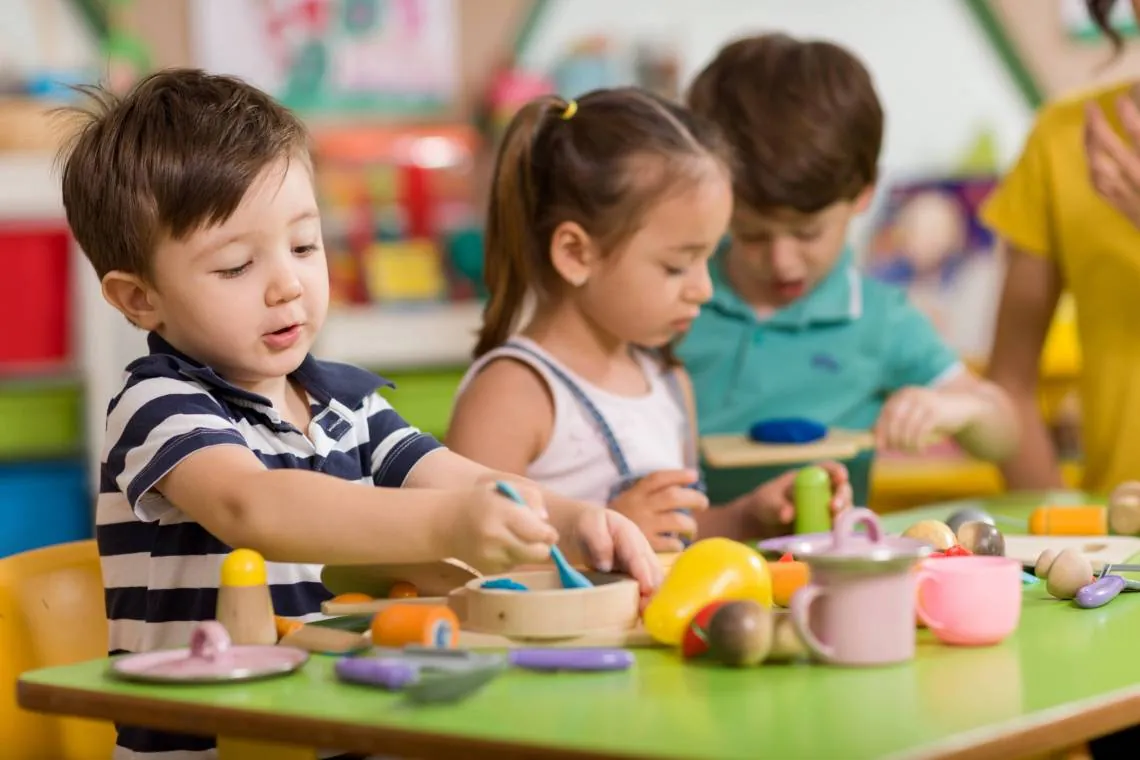
Building a castle, bridge or imaginary city together requires constant negotiation: who places which piece, how space is shared, what to do when a tower falls. These micro-negotiations, repeated hundreds of times, forge lasting cooperation habits.
Sports and outdoor games
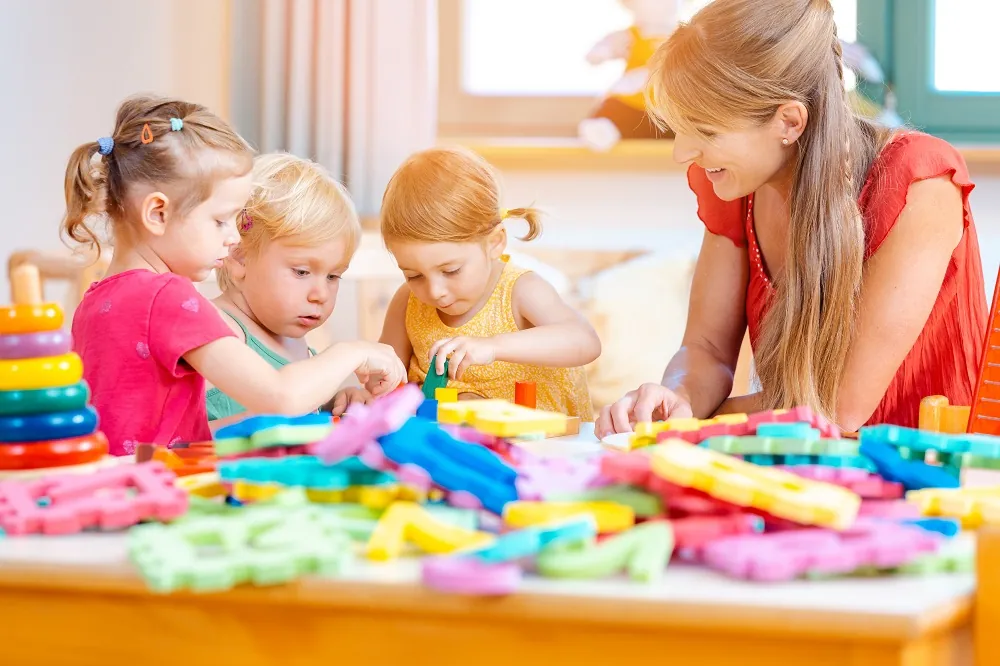
Team sports — whether soccer, dodgeball or an invented chasing game — combine physical effort with the rapid reading of others' intentions. Anticipating a teammate's movement, distributing roles, motivating each other: all social competencies that transfer to every area of life.
Diverse dolls, figures and storybooks
Dolls, action figures and picture books that represent a variety of cultures, family types, abilities and backgrounds invite children to explore other points of view. Playing out stories with characters who do not look like them builds empathy, tolerance and a natural acceptance of differences.
Emotion cards and feelings games
Emotion cards, feelings-recognition games and "how would you feel if…" activities support emotional intelligence: children learn to name what they feel, recognize emotions on other people's faces and respond with empathy — a solid foundation for healthy friendships.
Play is not a break from learning: it IS learning, in its most natural and effective form. — The Robiii team
Toys and social skills for children with special needs
For autistic, ADHD, anxious or otherwise neurodiverse children, building social skills through play remains essential — but it often calls for closer support and adapted tools.
Autistic children
Children on the autism spectrum benefit from toys with clear, predictable rules that reduce social anxiety. Puppets and symbolic play characters also offer a setting where children can rehearse social scripts — greeting, asking, thanking — in a safe, low-pressure environment. For a broader look at supporting an autistic child's development, see our article on parenting a child with autism.
Children with ADHD
Short games with clear turn structures suit children with ADHD better, since impulsivity can make lengthy, complex games frustrating. Toys designed for special needs — including certain fidgets and sensory tools — can help regulate activation levels during shared play, enabling better listening and participation. Alternating active and calm play moments also helps maintain social engagement. For more practical ideas, explore our piece on tips for parenting children with ADHD.
Shy or anxious children
For a shy child, entering a group mid-play can feel paralyzing. Toys that allow gradual participation — first observing, then contributing one piece at a time to a collective project — offer a gentle bridge toward interaction. Pairing stress-management strategies with shared play creates a particularly effective approach for children who struggle with social anxiety.
Tip: for a child who struggles to join a group, start with two-player games before gradually expanding. The pair is the simplest social unit to manage — one partner, one dynamic.
The adult's role: facilitate without taking over
Adults — parents and teachers alike — play a key role in social skills development through play. But that role is subtler than it appears.
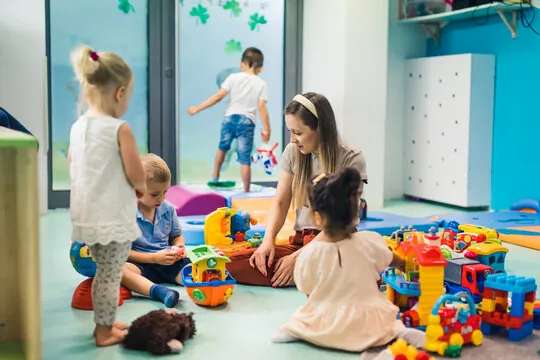
- Set up the right environment: spaces where children can interact freely, with enough materials to prevent unnecessary resource conflicts.
- Model social behaviours: sometimes play alongside children to demonstrate how to share, how to congratulate, how to repair a disagreement.
- Name emotions out loud: "I can see you're disappointed it's not your turn. That makes sense. What could you do?" helps children build an emotional vocabulary.
- Let conflicts work themselves out: stepping in too quickly robs children of the chance to exercise their own resolution tools. Intervene when safety is at stake, but not at the first sign of friction.
- Praise cooperation over competition: comment positively on spontaneous sharing, solidarity and generosity — not just victories.
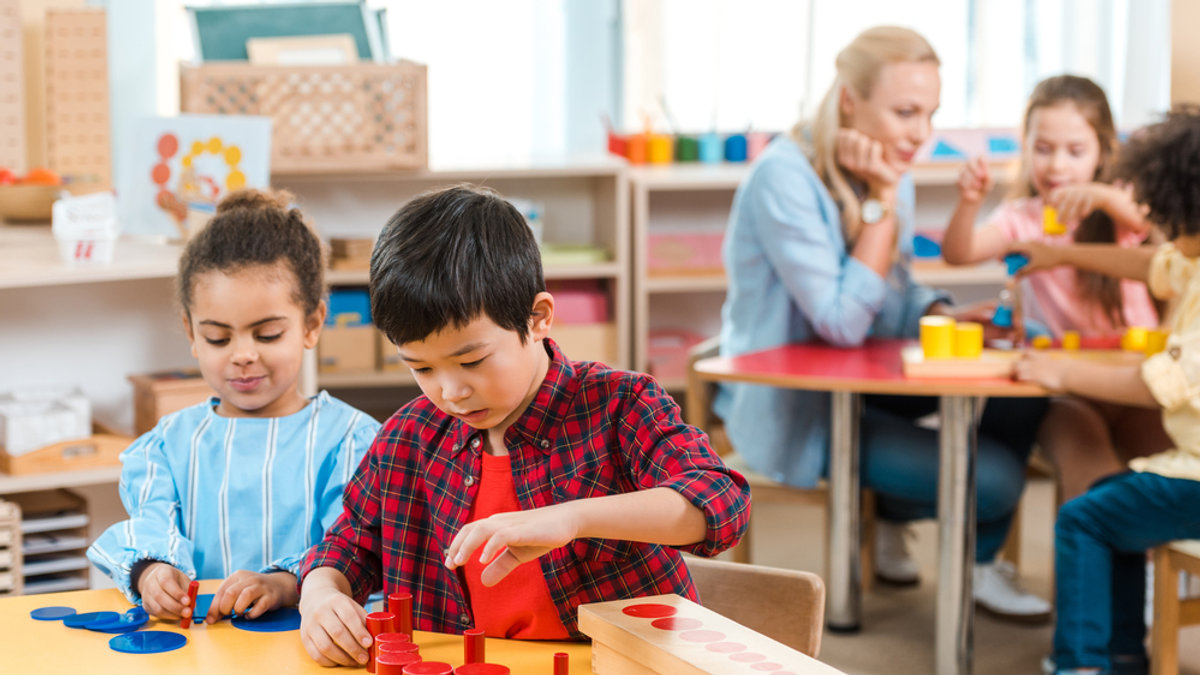
These practices align with the Montessori approach to play, which places the child at the centre of their learning and sees the adult as a quiet guide rather than a director. In this framework, social mistakes — arguing, forgetting to share — are not failures but precious learning opportunities.
How to choose a toy that builds social skills
Standing in front of a store shelf or scrolling a catalogue, how do you spot the toys that will have the greatest impact on socialization?
- It requires at least two participants: a toy that works perfectly alone is, by definition, limited for social development.
- It creates asymmetric interactions: different roles (seller/buyer, doctor/patient, architect/builder) enrich the range of interactions possible.
- It invites negotiation: rules are not carved in stone; children can adapt them, generating communication opportunities at every turn.
- It tolerates failure: a toy that is too easy or too hard drains motivation. The sweet spot is just beyond current ability — what Vygotsky called the zone of proximal development.
- It is age-appropriate: follow age recommendations not just for safety, but to ensure children have the cognitive and language tools to handle the interactions the toy demands.
- It favours face-to-face play: electronic toys can entertain, but they rarely offer the same back-and-forth of looks, words and shared decisions as a traditional toy used together.
To deepen your understanding of the role of play in child psychology, we recommend our dedicated article exploring the work of Piaget, Vygotsky and Winnicott. And if you want the best toys for your child's overall development, check out our guide to the best toys for child development — every choice is explained alongside the skills it builds.
Note: avoid highly competitive toys with children under 6. At this age, children do not yet have the emotional tools to handle repeated defeats; it can discourage shared play rather than foster it.