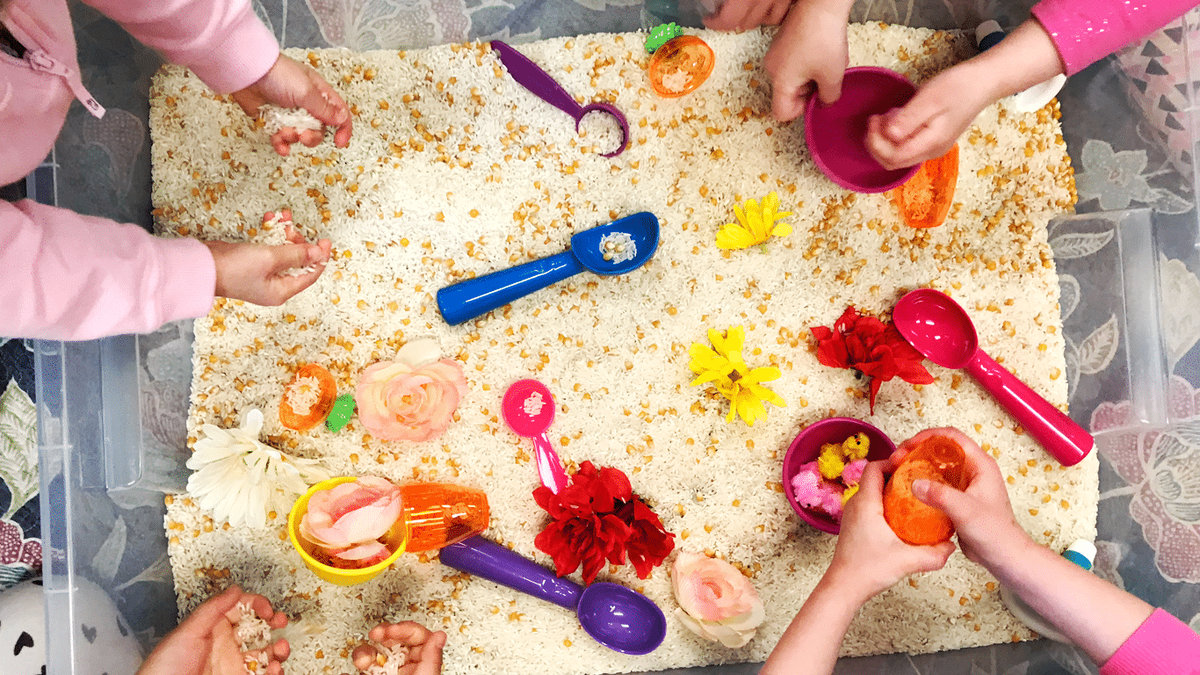

Parenting a child with autism means learning to see the world through their eyes. Adapted communication, stable routines and sensory support form the foundation of a calmer daily life and a strong connection. There is no single recipe — every autistic child is unique — but proven principles can transform your family life in meaningful ways.
Whether you have just received an autism spectrum disorder (ASD) diagnosis for your child or you have been living with this reality for years, one question keeps coming up: how do you build the best possible life for them while also forging a deep connection? Parenting a child with autism calls for extra creativity, patience and humility. Above all, it asks you to truly know that particular child — with their strengths, their challenges and their own distinct way of being in the world.
In this article we share concrete, compassionate tips to help you build a strong bond with your autistic child, navigate daily life more smoothly and find the tools — sensory, visual, relational — that genuinely make a difference. Because behind every autistic child who thrives, there is almost always a parent or caregiver who learned to meet them on their own terms.
Understanding autism to better support your child
Autism spectrum disorder (ASD) is a neurodevelopmental condition that affects communication, social interaction and sensory processing. The word "spectrum" is key: two autistic children can look very different from each other. One may be highly verbal; another may be non-speaking. One may be hypersensitive to sound; another may actively seek intense stimulation.
What autistic children share is a different — not lesser, not superior, simply different — way of processing information. Understanding this changes everything about the relationship:

- Repetitive behaviours (stimming) are not tantrums: they regulate the nervous system and help the child self-soothe or focus.
- Social difficulties do not mean a lack of affection: many autistic children feel emotions intensely but express them differently.
- Intense interests are not a problematic obsession: they are often a source of deep joy and an extraordinary lever for learning.
- Refusals and rigidity usually signal sensory or emotional overload, not defiance.
The more you understand how your child's brain works, the more targeted and effective your support becomes — and the less energy you spend fighting their nature rather than working with it.
Adapting how you communicate to build connection
Communication is often the first major challenge for parents of autistic children. Yet parenting a child with autism while nurturing a genuine dialogue is entirely possible — provided you adapt your tools and your expectations.
Simplify your verbal language
Use short, direct and concrete sentences. Avoid metaphors ("it's raining cats and dogs"), sarcasm and double meanings. If you ask your child to "calm down," specify exactly what that looks like: "sit on the couch, take slow breaths." Give one instruction at a time, wait for it to be processed, then move on to the next.

Lean on visual supports
Many autistic children are visual thinkers. Picture cards, illustrated routine charts, checkbox lists and visual timers are invaluable allies. A "first / then" board (first bath, then bedtime story) reduces uncertainty-related anxiety and eases transitions. The simpler and clearer the visual, the more effective it is.
Honour processing time
An autistic child may need several seconds — or even a few minutes — to process a question and formulate an answer. Resist the urge to repeat or rephrase immediately: let the silence do its work. Processing time is not disinterest; it is simply the rhythm of their brain. Waiting patiently is one of the most respectful things you can do.
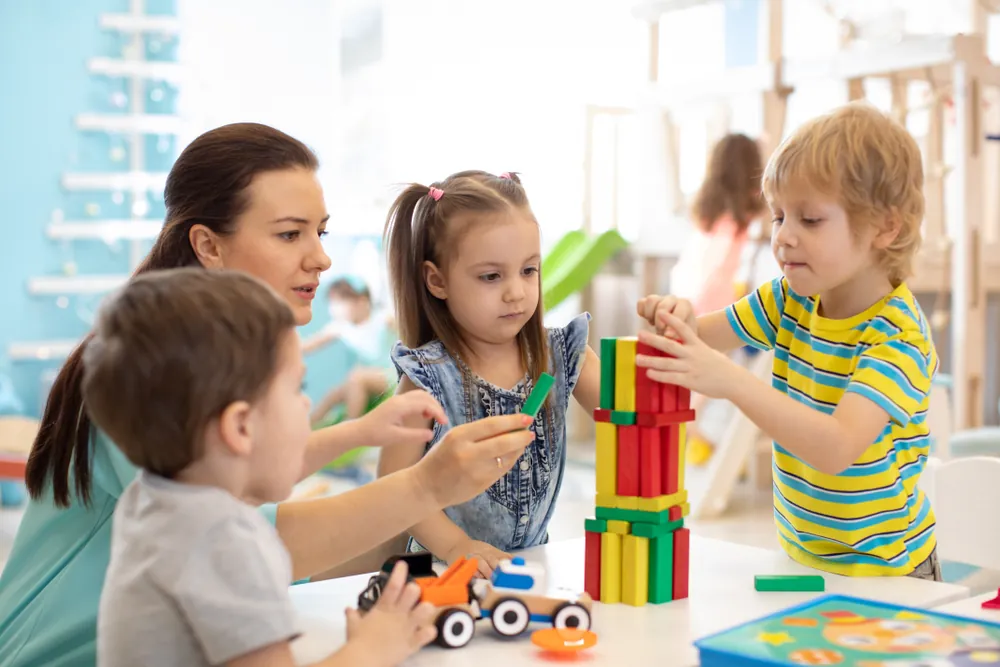
When we stop filling every silence, many children start answering. Often they don't need us to talk less — they need us to wait longer. — The Robiii team
The power of routines and predictable structure
Routines are among the most powerful tools available when parenting a child with autism. They are not a rigid constraint: they are a safety framework that frees up cognitive energy for learning and connection.
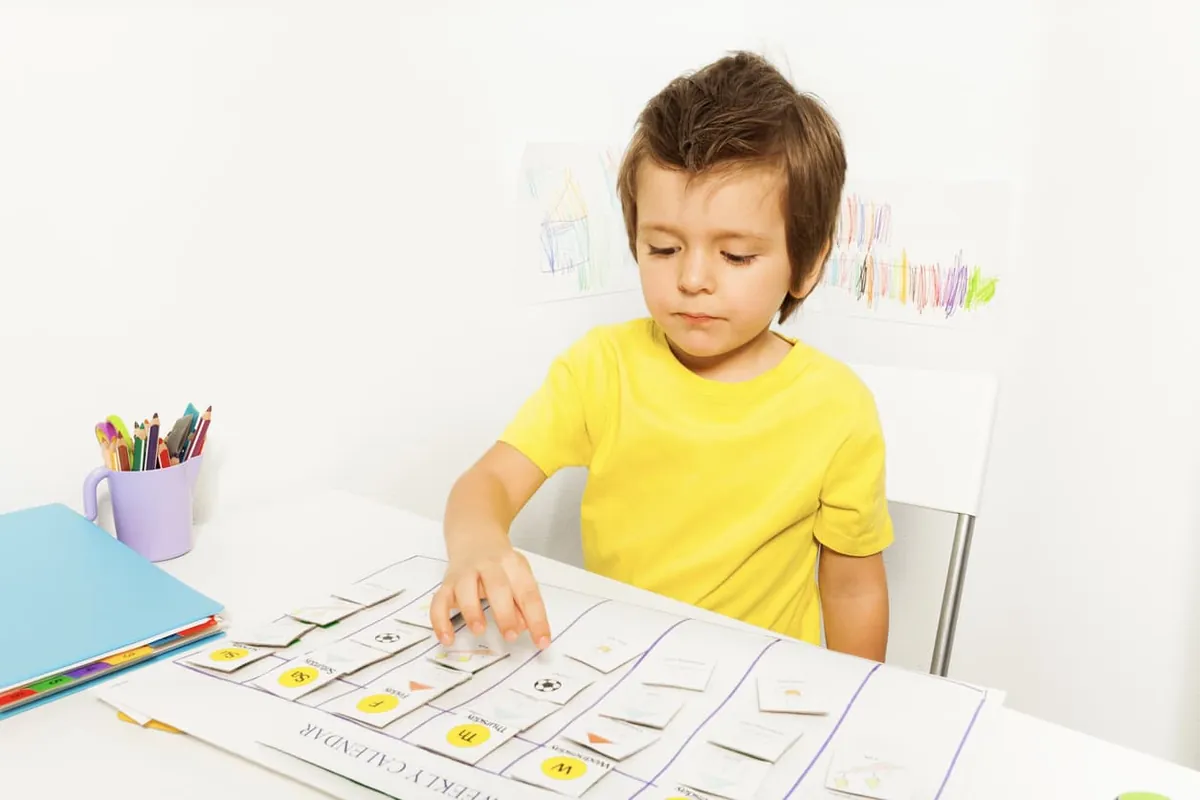
Here is why routines work so well:
- They reduce uncertainty anxiety. When a child knows exactly what to expect — wake up, breakfast, get dressed, leave — they do not have to spend energy anticipating the unpredictable.
- They ease transitions. Moving from one activity to another is often hard. A predictable transition signal (a song, a visual timer, a "now it's time for…" card) prepares the brain to shift modes.
- They build independence. Once a routine is well established, the child can carry it out on their own, building self-confidence along the way.
- They create repeated moments of connection. The regularity of rituals — bedtime reading, morning hug — becomes a strong relational anchor point.
Practical tip: prepare your child for routine changes well in advance. A simple warning — "in ten minutes we'll put away the toys" — paired with a visual timer often reduces resistance and meltdowns.
When a routine change is unavoidable (travel, holiday, medical appointment), give as much advance notice as possible, explain what will be different using visuals, and keep as many familiar elements as you can: the same meal, the same comfort toy, the same bedtime ritual.
Creating a sensory-friendly environment
Atypical sensory processing is one of the most common and least understood characteristics of autism. Some children are hypersensitive — an ordinary noise feels unbearable, a clothing tag is physically painful. Others are hyposensitive — they actively seek intense stimulation: crashing, jumping, chewing. Many switch between the two depending on context and stress level.

Building a sensory-friendly environment means observing your child closely and making adjustments across their senses:
| Sense | Hypersensitivity: adaptations | Hyposensitivity: adaptations |
|---|---|---|
| Hearing | Noise-cancelling earmuffs, soft background music, avoid crowded places at peak hours | Rhythmic music, sound-producing activities, simple instruments |
| Vision | Dimmed lighting, avoid fluorescent bulbs, blackout curtains in bedroom | Bright-coloured toys, light-up sensory toys, projectors |
| Touch | Seamless clothing, avoid rough textures, prioritize child-initiated cuddles | Weighted blankets, textured balls, therapy putty, long baths |
| Proprioception | Avoid cluttered spaces, clear open areas for movement | Trampoline, jumping, deep pressure, balance cushions, carrying heavy items |
A dedicated calm corner at home — a quiet, private space with soothing elements (soft blanket, dim light, favourite sensory toys) — can be a game-changer. This is not a time-out space: it is a refuge your child can choose on their own when they feel overwhelmed. See our article on creating a sensory diet for a full framework of daily sensory support.
Good to know: an occupational therapist specializing in sensory integration can assess your child's sensory profile and design a personalized activity programme. This evaluation is often covered through ASD support services in your provincial health network.
Play as the gateway to genuine connection
Play is the universal language of childhood — and autistic children are no exception. They play differently, often more independently or repetitively, but they do play. And it is through play that the strongest bonds are built.

Follow the child's lead
The key is to enter your child's world rather than pulling them into yours. If your child lines toy cars up in a row, sit beside them and line cars up too. No commentary, no different rules imposed. This respectful, present parallel play creates a sense of safety that gradually opens the door to richer interaction — on their timeline.
Build on special interests
Autistic children's intense interests — trains, dinosaurs, planets, numbers, cartoon characters — are often seen as problematic. They are, in fact, a relationship and learning goldmine. Learn everything you can about your child's special interest. Make it shared territory. It is often the doorway through which real conversation begins.

Choose adapted sensory toys
The right toys for children with special needs can turn a play session into both a calming and stimulating experience. Textured balls, therapy putty, quiet fidget tools, adjustable-volume sound toys — these meet sensory needs while creating opportunities for shared play. Browse the Robiii shop for options matched to different sensory profiles.
To build social skills step by step, use social stories that walk through a situation before it happens, role-play everyday scenes (greeting a friend, taking turns) and plan short, structured playdates with one child at a time. Social skills groups led by professionals can take these gains further.
Taking care of yourself to better care for your child
You cannot pour from an empty cup. Raising an autistic child is a deeply rewarding experience, but also a demanding one — physically, emotionally and socially. A parent's wellbeing is not a luxury: it is a baseline requirement for offering your child the consistent, patient support they need day after day.

- Seek support. Parent groups for families of autistic children — in person or online — are invaluable spaces to share, learn and feel less alone. Organizations like Autism Canada and Autism Society Canada connect families with local resources.
- Accept help. Whether it comes from a family member, a respite service or a specialized educator, accepting support is not an admission of failure — it is a smart strategy.
- Celebrate small victories. A first shared glance, a new word, a transition completed without a meltdown — these gains deserve to be noticed and celebrated. They are your child's achievement and your patience made visible.
- Go easy on yourself. Every parent of an autistic child goes through moments of doubt and exhaustion. That does not make you a bad parent — it makes you human.
You do not need to know everything. You need to stay curious, patient and present. That is what real connection looks like. — The Robiii team
Your relationship with your autistic child is a marathon, not a sprint. Progress is sometimes slow, sometimes spectacular, and always meaningful. Behind every step forward is your presence — imperfect, persistent and loving.

Practical tools and resources to go further
Beyond relational strategies, certain concrete tools can significantly improve daily life for an autistic child and their family.
Visual aids
Illustrated routine charts, PECS (Picture Exchange Communication System) cards, visual clocks and timers — these supports help your child anticipate what comes next, stay organized and communicate their needs. They are particularly valuable for children who are minimally verbal or non-speaking.

Sensory tools
When woven into a structured sensory diet, tools such as sensory toys, weighted blankets, noise-cancelling earmuffs and therapy putty help your child self-regulate throughout the day. The goal is to offer regular sensory breaks — not to wait for a meltdown before intervening.
Professional support
An ASD diagnosis opens access to several services: speech-language therapy, occupational therapy, psychoeducation and intensive behavioural intervention (IBI) for children aged two to five. Your family doctor or pediatrician can refer you to the appropriate services in your region. The earlier the support begins, the more significant the outcomes — without closing the window on progress at any age.

At school, ask for an Individualized Education Plan (IEP) — called a plan d'intervention in Québec — so your child's accommodations are written down and reviewed regularly. Stay in close contact with the teacher and the special education team, attend review meetings and share the strategies that work at home.
For families whose children are approaching adolescence, our article on supporting autistic teens through the transition to adulthood offers concrete guidance. And if you want to go deeper into building a calmer shared daily life, check out our companion piece, Parenting a Child with Autism: Building Connection and a Calmer Routine.