Research increasingly supports it: well-chosen toys in the classroom and hands-on materials can improve engagement and learning. Play is not a reward given after real work — it is a learning vehicle in its own right, backed by decades of research in psychology and education science.
When a teacher pulls out a box of coloured blocks or sets up a math manipulative station, you sometimes catch a quiet sigh in the staff room: "We're here to learn, not play." That resistance is human — and understandable. But it rests on a false dichotomy. For decades, child development researchers have documented how much children learn through play — and classroom studies of guided play and hands-on materials point the same way.
This article surveys what research now knows about the success of toys in the classroom — the brain mechanisms involved, the tools most often used, concrete strategies for integrating them without losing classroom order, and classroom scenarios drawn from teachers' experience. Whether you are a parent, educator or school administrator, you will find here the evidence and the tools to take action.
What research says about play as a learning lever
The connection between play and learning is not new. Back in the 1930s, psychologist Lev Vygotsky argued that play creates a "zone of proximal development": it places the child at the edge of their current abilities, precisely where learning is most efficient. Jean Piaget, in turn, showed that children build their understanding of the world through physical action and manipulation — not passive listening.
What later research added
Later research has explored these ideas further. Play that involves handling objects draws on several brain systems at once: the prefrontal cortex (planning, problem-solving), the limbic system (motivation, emotional memory) and the cerebellum (coordination and procedural learning). Engaging several systems at once may help explain why concrete, hands-on activities are often better remembered than a lecture.
A 2013 meta-analysis of 55 studies in the Journal of Educational Psychology found that teaching math with concrete manipulatives produced small-to-moderate gains compared with abstract symbols alone — with the largest effects on retention — although results depended on how the materials were used (Carbonneau, Marley & Selig).
The central role of dopamine
Play triggers the release of dopamine — the neurotransmitter of reward and motivation. Dopamine plays a key role in consolidating learning: an engaged, motivated brain remembers better. That is precisely why students recall the rules of a board game learned in class with precision, while forgetting the definition memorized the night before an exam.
Key takeaway: classroom play is not a break from learning — it is a learning accelerator. The distinction between "work time" and "play time" is neurologically artificial.
The types of toys that have been studied in the classroom
Not all toys are equal in an educational setting. Several categories of classroom materials have been studied:
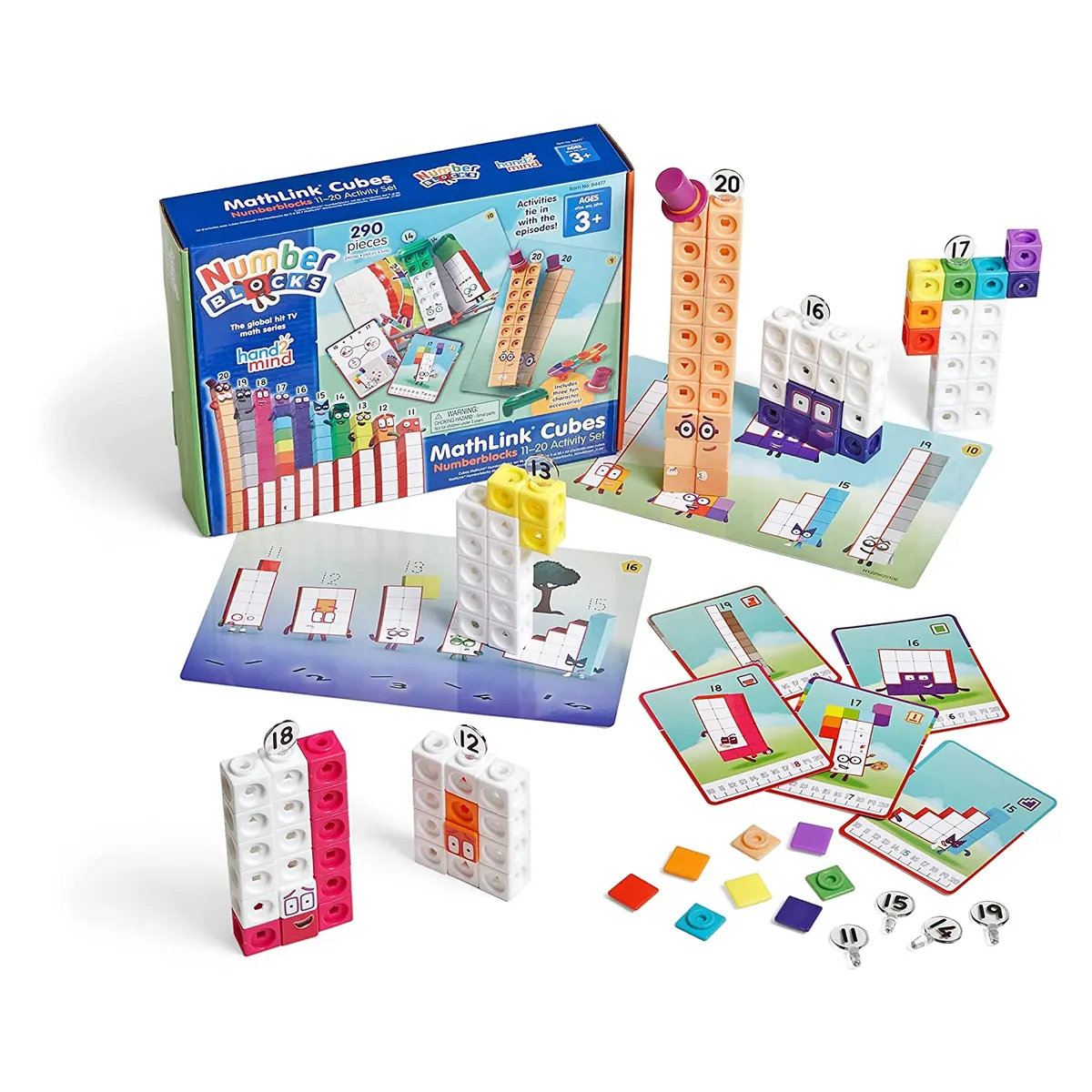
Math manipulatives
From Dienes blocks to counting sticks to weighted balance scales, concrete math materials have been widely studied. Research suggests they help most when the teacher explicitly connects the objects to numbers and written symbols (Carbonneau et al., 2013).
A monkey balance scale, for example, lets a 5-year-old "see" that 3 + 4 = 7 before grasping the symbolic notation. That concrete foundation builds a mathematical intuition that holds over time.
Fidgets and sensory tools
For students with ADHD, anxiety or an atypical sensory profile, fidget toys provide a discreet motor outlet that frees up attentional capacity. In one study, boys with ADHD did better on working-memory tasks at the moments they moved more (Sarver et al., 2015) — but the tool matters: in another classroom study, fidget spinners were linked to poorer attention (Graziano et al., 2018).
Cooperative and role-play games
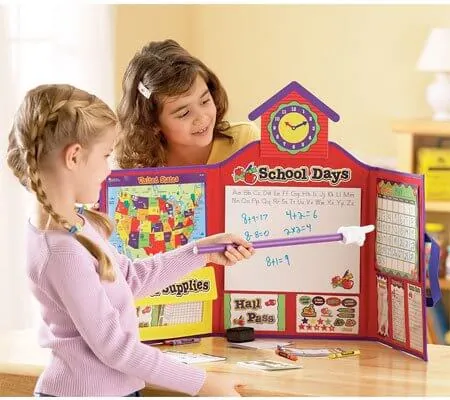
Cooperative board games, dramatic play and role-playing activities develop measurable cross-curricular skills: active listening, conflict resolution, decision-making and critical thinking. These are precisely the competencies that top employer wish-lists and 21st-century curriculum frameworks prioritize.
In preschool, a play kitchen or a dress-up corner is often enough: children take on roles, negotiate responsibilities, resolve conflicts and put words to their emotions — and teachers typically notice language taking off as imaginative conversations multiply.
Construction sets and puzzles
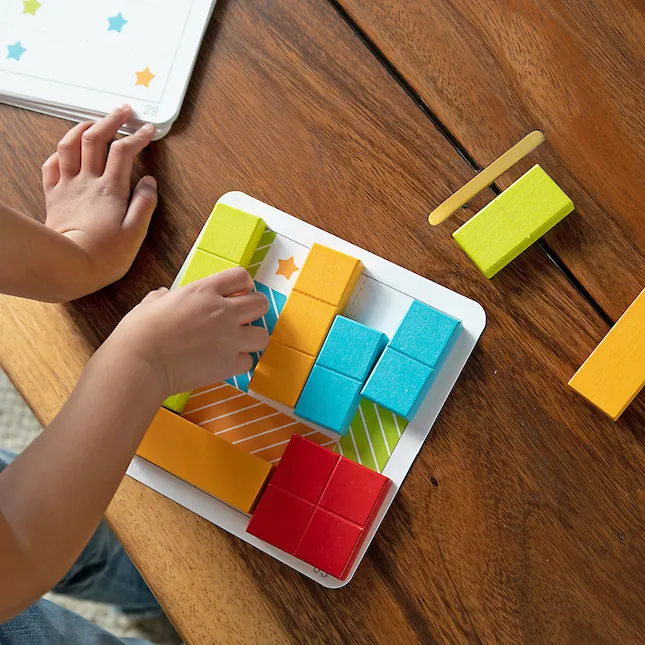
LEGO, building blocks, 3D puzzles — these tools develop spatial reasoning, perseverance and problem-solving. A U.S. longitudinal study found that the complexity of children's block play at age 4 predicted their math achievement in middle and high school, though not in elementary school (Wolfgang, Stannard & Jones, 2001).
In middle school, a series of increasingly difficult logic puzzles works the same way: students who hesitate at first quickly discover the satisfaction of cracking a hard problem, building logical reasoning, perseverance and a growth mindset along the way.
Storytelling props
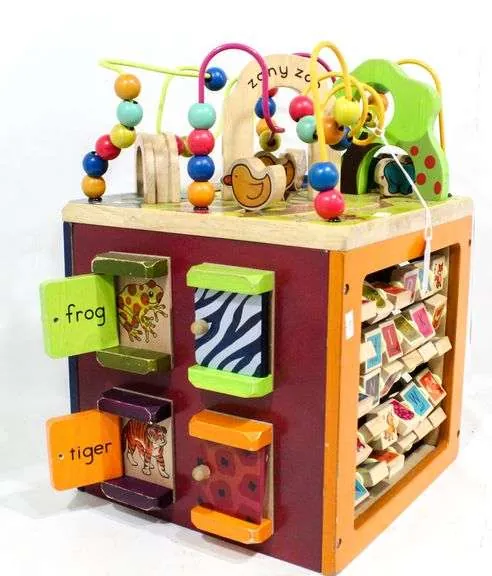
Puppets, story cards and storytelling cubes bring stories to life and invite students to retell stories and invent their own. In elementary classrooms, they enrich vocabulary, sharpen listening skills and build confidence in speaking in front of the group — and they work across subjects, not only in language arts.
Craft kits
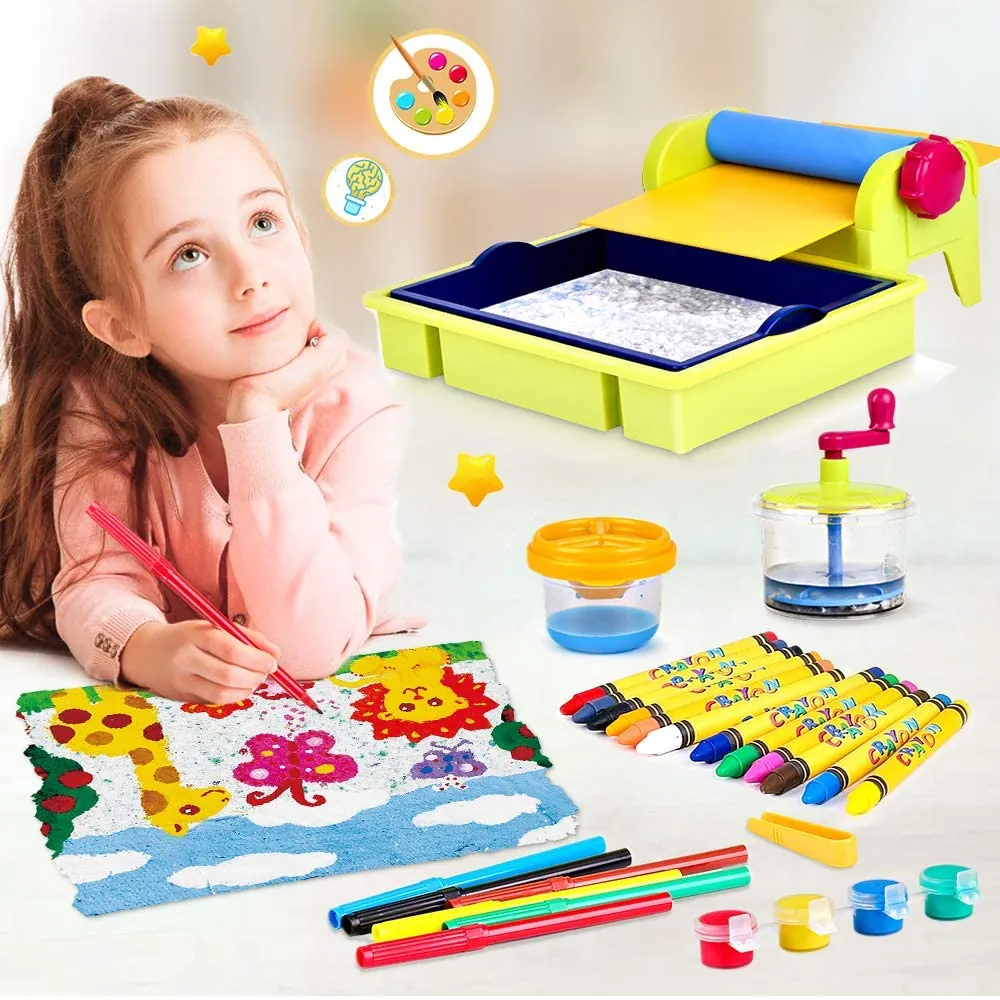
Art and craft kits let students explore different mediums, techniques, colours and materials. Beyond creativity, teachers observe greater self-confidence and a real sense of accomplishment when students display their work — and art connects easily with writing or science projects.
Specific benefits for students with special needs
While all students benefit from toys in the classroom, certain groups see particularly pronounced gains:
- ADHD students: fidgets and manipulatives reduce superfluous motor restlessness and channel energy toward the task. See our article on ADHD strategies for teachers and parents for complementary approaches.
- Autistic students: predictable sensory objects (textiles, balls, putty) help with sensory regulation and reduce anxiety in unpredictable environments.
- Anxious students: structured play offers a safe frame. Handling a familiar object can be enough to lower the stress response and free up cognitive capacity.
- Dyslexic students: tactile tools and concrete learning aids (textured letters, coloured reading rulers) bypass decoding obstacles and give access to content despite reading difficulties.
- Students with learning disabilities: play reduces the sense of failure associated with traditional school tasks and reignites intrinsic motivation.
Play is not a reward granted after effort — it is the effort itself, disguised as pleasure. — The Robiii team
How to bring toys into class without losing control
One of the most common teacher concerns is losing authority or classroom order by introducing toys. That worry is legitimate — but it dissolves quickly when the introduction is structured. Here is a five-step method:
- Choose the right tools — Prioritize discreet toys (fidgets, stress balls, putty) and subject-linked manipulatives. Avoid visually overstimulating toys (flashing lights, sounds) that distract without educational benefit.
- Set the rules from day one — In class, sensory tools serve concentration, not socializing. Present the usage rules (when, how, for how long) before the first session.
- Create a classroom sensory box — Gather tools in an accessible bin with a clear borrowing procedure. Students who need a fidget get one calmly, without disrupting the group. Our article on the classroom sensory box walks through how to set one up.
- Embed manipulatives in lessons — Plan hands-on moments into every math or science lesson. These are not recesses: they are intentional pedagogical steps.
- Observe and adjust — Keep a log for 6 weeks: number of disciplinary interventions, participation levels, assignment results. The data guides your adjustments.
Field tip: start with just one tool — for example, elastic resistance bands under chairs for restless legs. Measure the impact, then add more resources gradually. One change at a time integrates more smoothly and is easier to defend to administration.
Classroom scenarios: what it can look like
Studies are useful, but classroom reality is what convinces teachers. The scenarios below are composites of situations teachers commonly describe — not quotes from specific people.
"The first week, I had doubts"
A teacher who introduces a sensory box often goes through the same arc. In the first week, some students explore the objects instead of listening. Holding the line and clarifying the rules usually pays off after a few weeks, when the most restless students start staying with the lesson noticeably longer.
Concrete math changes everything
In early-grade numeracy lessons, manipulatives let the whole class work at the same time instead of waiting for others to finish. Students who struggle can grasp through the objects what they could not follow orally or in writing, while advanced students deepen their understanding by building their own models — a natural form of differentiation.
A transformed classroom climate
Resource teachers often mention an unexpected effect on classroom climate: when students have tools to manage their restlessness, there can be fewer conflicts and interruptions — and the students who don't use fidgets benefit from a calmer class too.
| Tool type | Primary benefit | Target profile | Ease of integration |
|---|---|---|---|
| Discreet fidgets | Motor regulation, focus | ADHD, anxiety | Very easy |
| Math manipulatives | Conceptual understanding | All students | Medium (requires planning) |
| Sensory box | Self-regulation, stress reduction | ADHD, autism, anxiety | Easy |
| Cooperative games | Social skills, communication | All students | Medium |
| Puzzles and construction | Spatial thinking, perseverance | All students | Easy |
Making the case to school administration
Bringing toys into the classroom may require approval from administration or a school board. Here are the most effective arguments for presenting your request:
- Curriculum alignment: most provincial and territorial curricula explicitly recognize the importance of play and manipulation in learning, from kindergarten through early elementary grades.
- Behavioural data: a meta-analysis of 60 studies found positive effects of school-based interventions on the classroom behaviour of students with ADHD (DuPaul et al., 2012) — and your own before-and-after log will speak to your administration.
- Cost-benefit ratio: a classroom sensory box costs between $50 and $150 and can serve students for several years. It is one of the most accessible educational investments relative to its potential impact.
- The pilot project proposal: asking for 6 weeks in one classroom, with before-and-after measurements, is a low-risk approach that generates persuasive local data.
To go further in equipping your classroom, see our complete guide to wholesale learning aids and our selection of educational toys for the classroom. You can also browse our store for tools designed for Canadian school environments.
What to avoid: don't introduce too many tools at once, and don't use toys that are perceived as rewards rather than work tools. A toy without clear usage rules quickly becomes a source of distraction and conflict among students.
Where to start: your first concrete step
Convinced but not sure where to begin? Here is a minimal action plan to launch your first classroom experiment over five days:
Day 1 — Assess the needs
Observe your class with fresh eyes: who gets up frequently? Who chews their pencil or rocks on their chair? Who disengages after 10 minutes? These behaviours signal an unmet sensory or motor regulation need.
Day 2 — Choose one first tool
Start with a single tool type — ideally a discreet fidget like a spinner ring or a stress ball. Get 4 to 6 copies to prevent access conflicts.
Day 3 — Present the rules to the class
Explain the system in 5 minutes: the tool helps you concentrate, it is not for playing with friends. It gets taken calmly from the bin and put back quietly. If the tool is distracting, it goes back in the bin.
Day 4 — Observe without intervening
Let students make the tool their own. Resist the urge to comment or correct. Note in a journal: who uses it, at what moments, and what you observe about focus and behaviour.
Day 5 — Adjust and decide
Review the week. If the experience is positive, plan to add a second tool. If adjustments are needed (rules to clarify, misuse by some students), make corrections before expanding.