Not all educational toys are created equal. Picking the right toy means looking at your child's age, profile and the skills you want to nurture — motor skills, language, attention, creativity. This complete guide walks you through the main categories, age-by-age landmarks and essential criteria so you can navigate the toy world with confidence.
A toy aisle — or an online catalogue — can be overwhelming: hundreds of products, competing marketing claims and age ranges that blur into each other. Yet choosing the right educational toy is not some arcane art. A handful of solid principles — drawn from developmental psychology and occupational therapy — are enough to make confident choices, whether your child is neurotypical, has ADHD, is autistic, anxious or dyslexic.
At Robiii, a Quebec-based wholesaler specializing in sensory and educational toys, we work every day with parents, teachers and therapists searching for the right tools. This guide is our answer to the question we hear most often: "Where do I even start?" You will find the main toy families, an age-by-age reference table, concrete advice for children with special needs and the most common mistakes to avoid.
The main categories of educational toys
Before talking about age or budget, it helps to understand what each type of toy is actually for. Here are the eight main families:
Construction and building toys
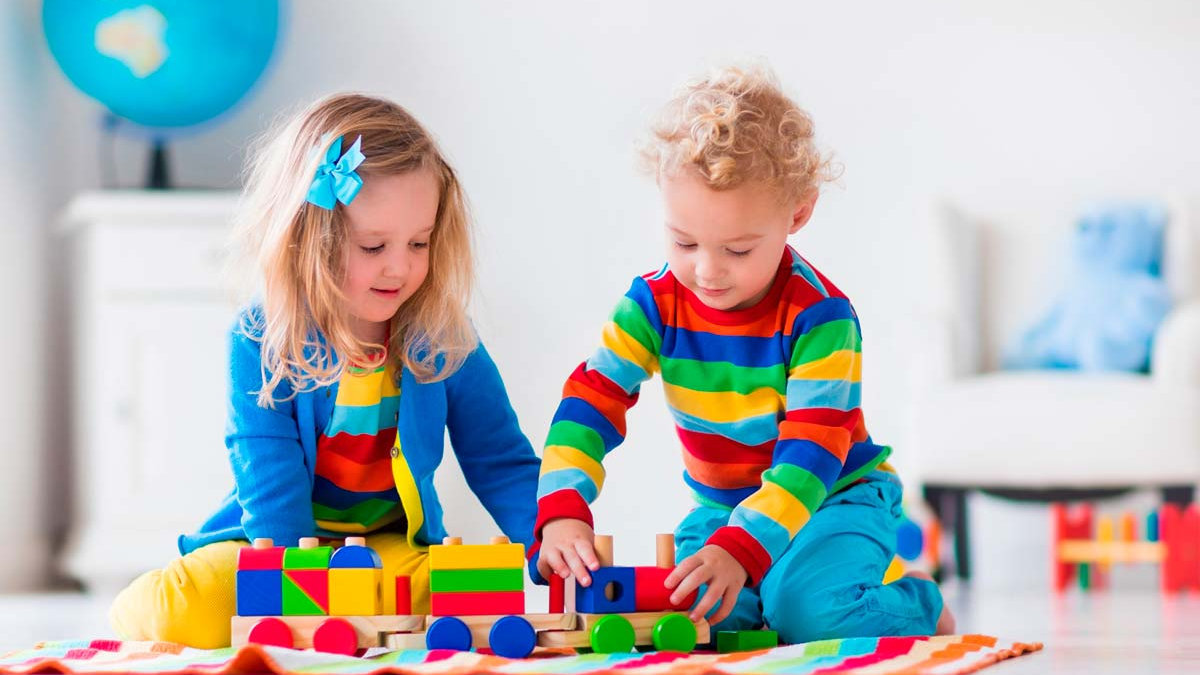
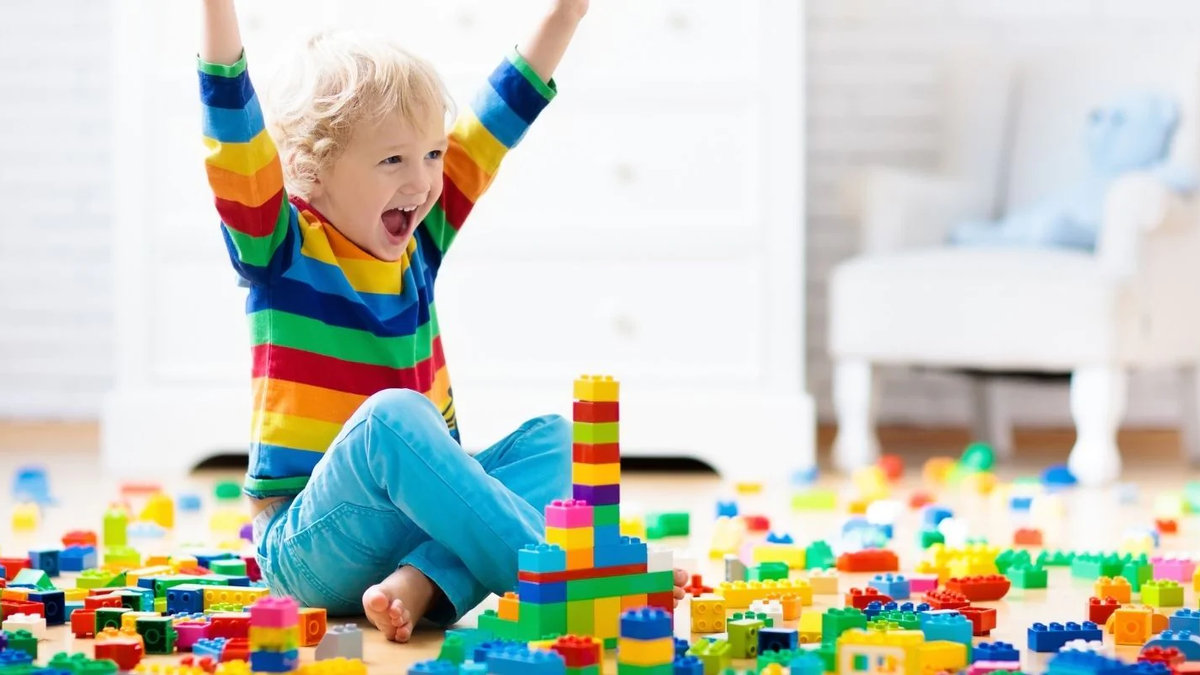
Wooden blocks, LEGO, Duplo, magnetic tiles — these toys build spatial thinking, fine motor skills and problem-solving. A child stacking blocks is learning elementary physics (gravity, balance) long before they know the words. Building also builds perseverance: the tower that falls down needs to be rebuilt.
Sensory toys
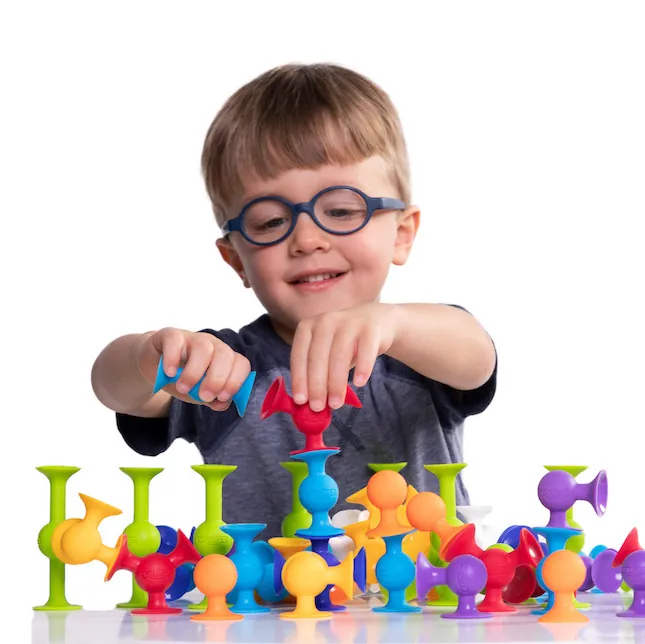
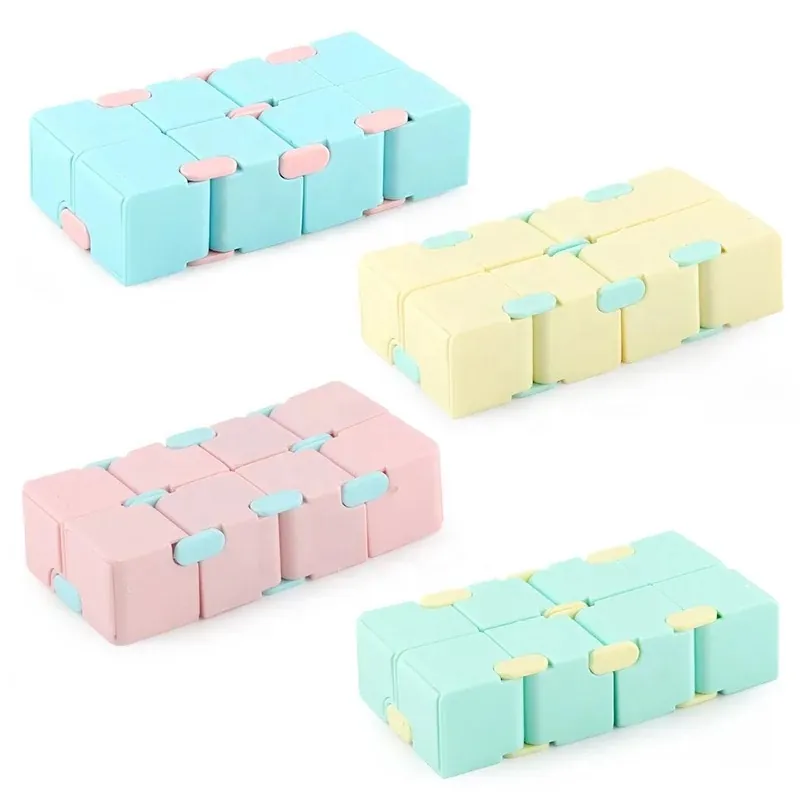
Textured balls, therapy putty, fidgets, chewable tools, sand timers — these tools stimulate or regulate the nervous system. They are especially valuable for children with atypical sensory profiles (hypersensitivity, hyposensitivity, need for movement). Contrary to popular belief, sensory toys are not just for children with difficulties: they benefit everyone, including stressed adults.
Board games and logic games
Memory games, puzzles, cooperative games — they develop sustained attention, logic, rule-following and social skills (turn-taking, managing frustration, cooperation). A board game played as a family is also a rich language opportunity.
Pretend play and imitation toys
Play kitchens, dress-up clothes, doctor kits, chalkboards — symbolic play is one of the most powerful engines of cognitive and emotional development. When children play "make-believe," they rehearse social roles, develop empathy and build narrative thinking.
Gross motor toys
Swings, trampolines, tunnels, balance boards, scooters — they feed the vestibular and proprioceptive systems, two senses that are often overlooked but essential for regulating attention and emotions. Children with ADHD benefit particularly from these movement-rich experiences.
Creative and artistic play
Painting, clay, musical instruments, puppet theatre — creativity is not a luxury; it is a learning lever. These activities develop emotional expression, self-confidence and the ability to tolerate imperfection — a skill especially precious for anxious or perfectionist children.
Academic learning aids
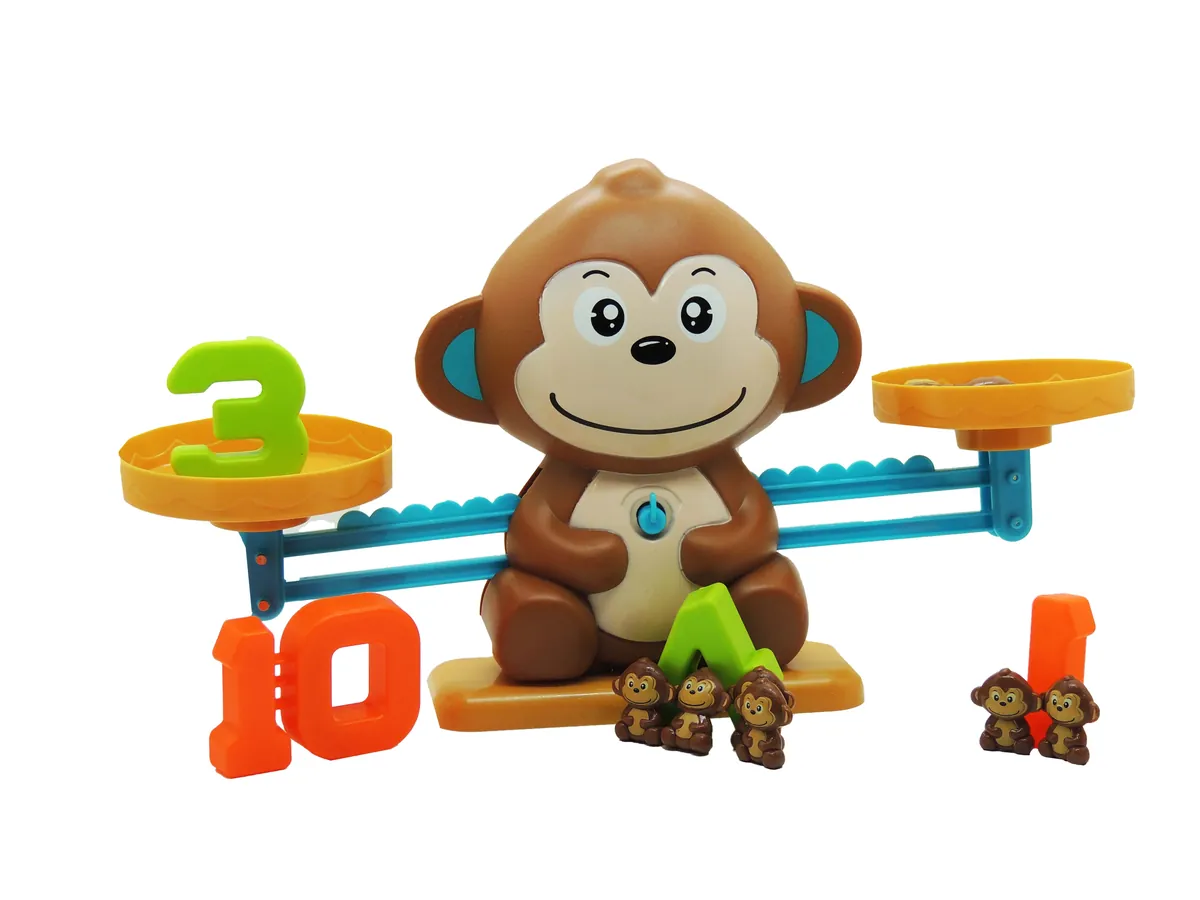
Letter sets, counting balances, reading rulers, math flash cards — these tools make abstract concepts concrete. A monkey balance, for instance, teaches equality and fractions long before a child can add on paper.
Educational technology toys
Coding robots, learning tablets, electronics kits — used in moderation, these tools build computational thinking and problem-solving skills. They work best introduced after age 5 and always within a supervised screen-time framework.
Age landmarks: which toy for which stage?
The age ranges printed on boxes are safety guidelines (piece size, choking risk), not rigid prescriptions. Here is a development-based reference table:
| Age | Developmental stage | Suitable toys |
|---|---|---|
| 0–12 months | Sensory exploration, gross motor | Rattles, mobiles, play mats, textured balls |
| 1–2 years | Walking, imitation, language | Shape sorters, stacking cups, board books, push toys |
| 3–4 years | Symbolic play, fine motor | Play kitchens, building blocks, playdough, 4–6 piece puzzles |
| 5–6 years | Rules, cooperation, pre-literacy | Simple board games, tactile alphabet sets, drawing kits |
| 7–9 years | Logic, socialization, reading | LEGO, card games, musical instruments, complex puzzles |
| 10–12 years | Abstract thinking, autonomy | Robotics kits, strategy games, creative projects |
Keep in mind: a child playing with a toy meant for younger kids is not regressing — they are exploring mastery and leadership. A child playing with something "too old" is learning through challenge, as long as they are not set up for repeated failure.
Educational toys for children with special needs
At Robiii, this is precisely our specialty: toys that make a real difference for children with atypical profiles. Here is practical guidance for each context.
ADHD: channeling energy and supporting attention
Children with attention deficit hyperactivity disorder often need to move in order to think. Fidget toys — cubes, spinning rings, putty — occupy hands without occupying the mind. Short-duration games with simple rules maintain engagement without triggering overwhelm. The best fidget toys are silent, discreet and built to last.
Autism: predictability and matched sensory input
For autistic children, play works best when it is predictable and structured. Marble runs, sand timers, spinning tops and cause-and-effect toys reassure through repetition. Sensory toys must be selected to match the child's profile: a hyposensitive child will seek intense input (vibration, pressure), while a hypersensitive child needs gentle textures and low sounds.
Anxiety: regulating without patronizing
Anti-stress toys — putty, fidgets, balance boards — offer a physical outlet that short-circuits the anxiety spiral. They give hands something to do while the mind processes its feelings. Cooperative games with no winner or loser also ease performance pressure for perfectionist children.
Dyslexia: making reading concrete and less daunting
Reading aids — colored rulers, tactile wooden letters, phonics cards — turn a painful learning experience into a sensory one. Combined with the Orton-Gillingham method (multisensory), they lower cognitive load and build confidence.
How to choose the right toy: 5 essential criteria
Standing in a toy aisle or browsing a website, ask yourself these five questions before buying:
- Does the toy meet the child where they are, not where you want them to be? A good educational toy responds to the child's actual interest or need, not a parental ideal. A train-obsessed child will learn maths better with a train-themed game than with a classic abacus.
- Does the toy offer productive resistance? Too easy equals boredom; too hard equals discouragement. Aim for the "zone of proximal development" — just slightly beyond what the child can already do.
- Is it open-ended or closed? An "open" toy (blocks, putty, playdough) offers infinite possibilities and fuels creativity. A "closed" toy (a single-solution puzzle) builds logical thinking and persistence. Both have their place.
- Is it safe and durable? Check certifications (CE, ASTM, Health Canada) and materials. Small parts are a choking hazard up to age 3. Choose sturdy materials that will survive several children — and the test of time.
- Does the child get a say? Involving the child in the choice increases buy-in and extends the toy's useful life. A toy the child picked will be played with far longer than one imposed by an adult.
Budget matters too, but price alone says little about value. A well-made, durable toy (solid wood or sturdy plastic built to withstand rough play) that gets used for years costs less per hour of play than a cheap one that breaks in a week. Watch for sales, and for schools, daycares and retailers, buying in bulk lowers the cost per unit.
The best toy in the world is the one the child chooses to pick up again the next morning, before breakfast. — Antoine Robillard, founder of Robiii
The most common mistakes parents make
Even with the best intentions, certain habits get in the way of play and learning. Here are the ones worth avoiding:
- Buying too many toys at once. A University of Toledo study found that toddlers given fewer toys played longer with each one and in more varied ways (Dauch et al., 2018). A small, rotating selection beats a warehouse.
- Choosing by packaging rather than by use. A flashy box and bold marketing claims cannot replace a simple observation: watch your child play, note what captivates them, and shop in that direction.
- Throwing out "too young" toys. A 7-year-old returning to baby building blocks is not regressing — they are exploring mastery. Keep open-ended toys as long as possible.
- Using toys as a substitute for presence. Even the best educational toy cannot replace 20 minutes of shared play. Parental co-presence is the true accelerator of learning, especially before age 6.
- Avoiding sensory toys out of stigma fear. A child who needs a fidget or a chewable tool will find other, less discreet ways to meet that need. Better to offer the right tool.
Rotation tip: split your toys into three groups. Make one third accessible, put the rest away. Swap every two to three weeks. A "rediscovered" toy after an absence holds just as much appeal as a brand-new one — without the cost.
What toy market trends tell us
The global toy market reached about USD 123 billion in 2025, up 8%, according to Circana — growth driven largely by adult buyers, emerging markets and digital habits. For families and educators, three trends stand out: STEM toys (science, technology, engineering, math), sustainable toys made from natural materials, and inclusive toys designed for children with special needs.
In Canada, toy market trends show rising demand for sensory and anti-stress products, driven by growing recognition of ADHD, autism and childhood anxiety. Retailers and educators who bring these categories into their offering are addressing a real and expanding need.
For retailers looking to enter this space, Robiii offers a full wholesale range with attractive margins and in-store support. Visit our become a distributor section to learn more.
Why play is a child's work
The phrase is often attributed to Maria Montessori, and research on play supports the idea. When a child plays, their brain is anything but idle: it integrates sensory information, tests hypotheses, manages emotions, practices language and builds social connections — all at once, and with a level of intrinsic motivation no classroom lecture can match.

Supporting child development through play is not about finding the perfect toy or spending a fortune on materials. It is about free time, a safe space and a present adult who knows when to step in and when to step back. Toys are catalysts — accelerators of experience — but they never replace play itself.
By choosing toys that match your child's age, profile and interests, you are not just buying an object: you are investing in hours of discovery, challenge and joy. And that is where real learning happens. To go deeper on making the right call, read our step-by-step guide on how to choose the right educational toy for each age and stage.