
For children with Down syndrome, play is far more than a pastime — it is the primary engine of development. Adapted, sensory and educational toys support fine motor skills, language and cognitive abilities, often well beyond what early assessments suggest. Playing together also builds an irreplaceable bond.
Every child with Down syndrome is unique. Some walk at two, others take their first steps at four — and all of them can surprise the people who support them. What decades of research confirm is that play-based stimulation plays a decisive role in their developmental trajectory. Far from trivial, carefully chosen toys become genuine therapeutic tools, accessible at home and at school alike.
In this article, we explore how adapted play supports the development of children with Down syndrome: which types of toys to favour at each stage, how to set up a play space, and why sensory toys hold a special place in these children's sensory diet. The goal is not to add pressure on families, but to equip them with concrete, realistic ideas.
Understanding Down syndrome and its effects on development
Down syndrome is a chromosomal condition caused by the presence of an extra copy of chromosome 21. It leads to differences in physical, cognitive and language development, whose intensity varies considerably from one child to the next. In Canada, about 1 in 781 babies is born with Down syndrome, according to the Canadian Down Syndrome Society.
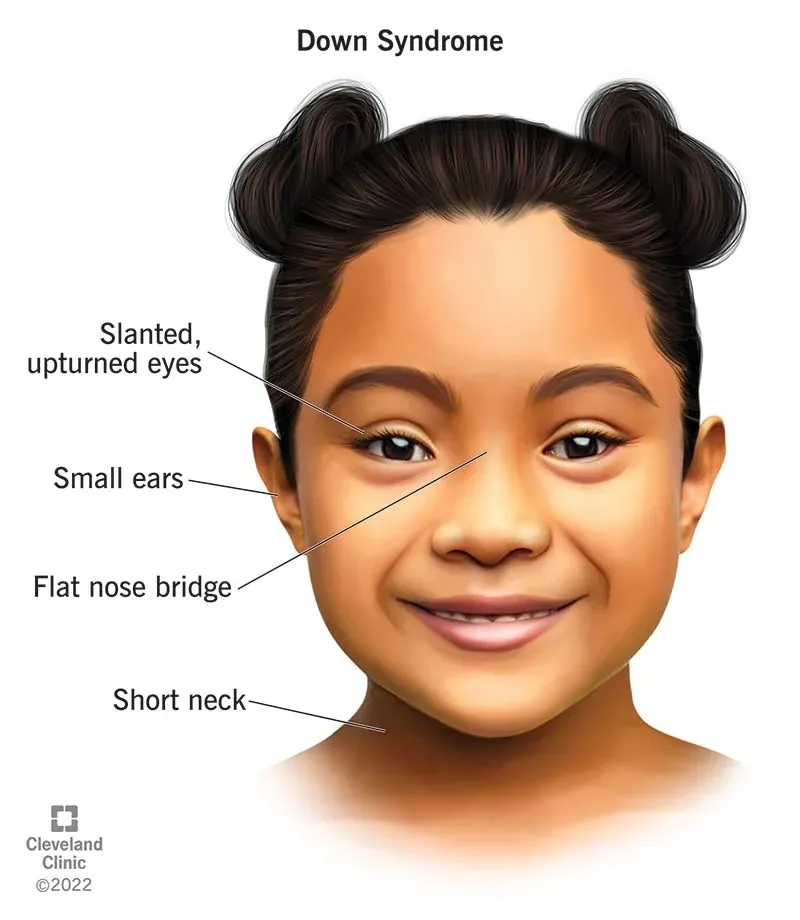
In most cases, the extra chromosome appears by chance when the egg or sperm cell forms, or very early in development — it is not caused by anything the parents did. Common physical features include flattened facial features with a small nose and upward-slanting eyes, low muscle tone and a higher risk of certain health conditions such as heart defects and hearing loss. Down syndrome cannot be cured, but early intervention, good medical care and education make a real difference throughout life.
Down syndrome life expectancy
Life expectancy for people with Down syndrome has risen dramatically in recent decades: from about 25 years in 1983 to about 60 years today, according to the U.S. National Institute of Child Health and Human Development (NICHD). The Canadian Down Syndrome Society reports the same average of about 60 years in Canada, and some people live well beyond that.
This progress owes a great deal to heart surgery — about half of babies born with Down syndrome have a congenital heart defect — and to better overall health care. Today, conditions that become more common with age, especially Alzheimer's disease, which tends to appear earlier in people with Down syndrome, are the main obstacle to further gains. That is why regular medical follow-up throughout adulthood matters as much as early intervention in childhood.
To hear one family's story, watch “The Truth About Down Syndrome” on YouTube (Children's Hospital Colorado, 12 minutes).
Key developmental domains to watch
Without being exhaustive, here are the main areas where children with Down syndrome progress at their own pace:
- Gross motor skills: walking, balance, coordination — often slightly delayed due to hypotonia (low muscle tone).
- Fine motor skills: pinching, buttoning, drawing — hypotonia and finger morphology can make these movements more challenging.
- Language and communication: receptive language generally outpaces expressive speech; many children with Down syndrome benefit from augmentative communication (signing, picture symbols).
- Cognition: learning through trial and error, often strong visual memory, weaker short-term auditory memory.
- Social skills: children with Down syndrome are often very social and expressive — a tremendous asset for learning through play.
Key takeaway: chronological age is a poor guide when choosing toys for a child with Down syndrome. Base your choices on their actual developmental stage, assessed with the help of an occupational therapist or speech-language pathologist.
The role of play in the development of a child with Down syndrome
Play is the universal language of childhood — and for children with Down syndrome, it is also a powerful therapeutic lever. Unlike structured exercises, play engages children naturally, without performance pressure. They repeat movements, explore materials, imitate adults and peers: all of these are learning opportunities disguised as fun.

Brain plasticity: a window not to miss
The first six years of life represent a period of exceptional brain plasticity. The brain is particularly receptive to new experiences: each new stimulation creates or strengthens neural connections. For children with Down syndrome, early intervention programs — of which guided play is a central component — are associated with developmental gains, although the size of the effect varies from one child and one program to another.
Play and self-esteem
Completing a shape sorter, finishing a puzzle, stacking blocks without them falling — these small daily victories build self-esteem. For a child who faces more obstacles than their peers, every success counts double. A well-chosen toy — neither too easy (boring) nor too hard (discouraging) — creates that accessible success zone that motivates a child to keep going.
The best toy for a child with Down syndrome is the one that says "you can" — not one that reminds them of what they cannot do yet. — The Robiii team
Toys to support fine and gross motor skills
Hypotonia is one of the most common features of Down syndrome. It slows the acquisition of both gross motor skills (walking, climbing stairs) and fine motor skills (object manipulation, writing). The right toy can function as a physical therapy session — without the child even noticing.
For fine motor skills
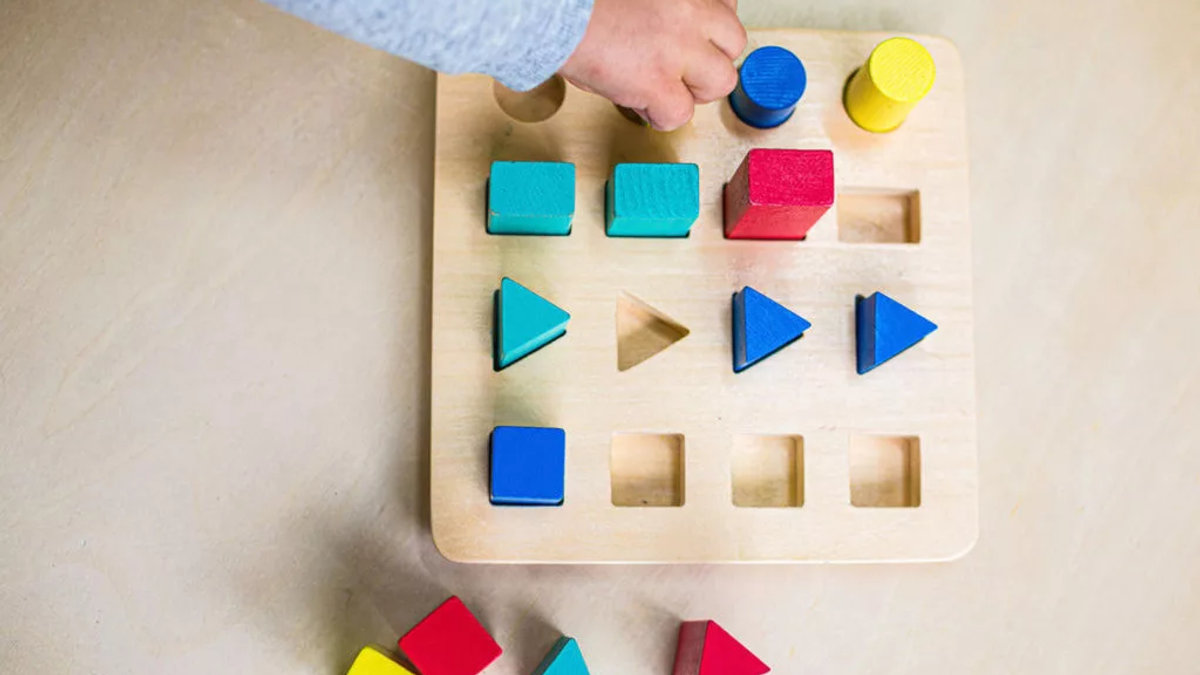
- Large-knob shape sorters: encourage the pincer grasp and eye-hand coordination.
- Modelling clay and therapy putty: strengthen the muscles of the fingers and hand while stimulating the sense of touch. Therapy putty comes in several resistance levels to match the child's progress.
- Large beads to thread: develop focus and two-handed coordination.
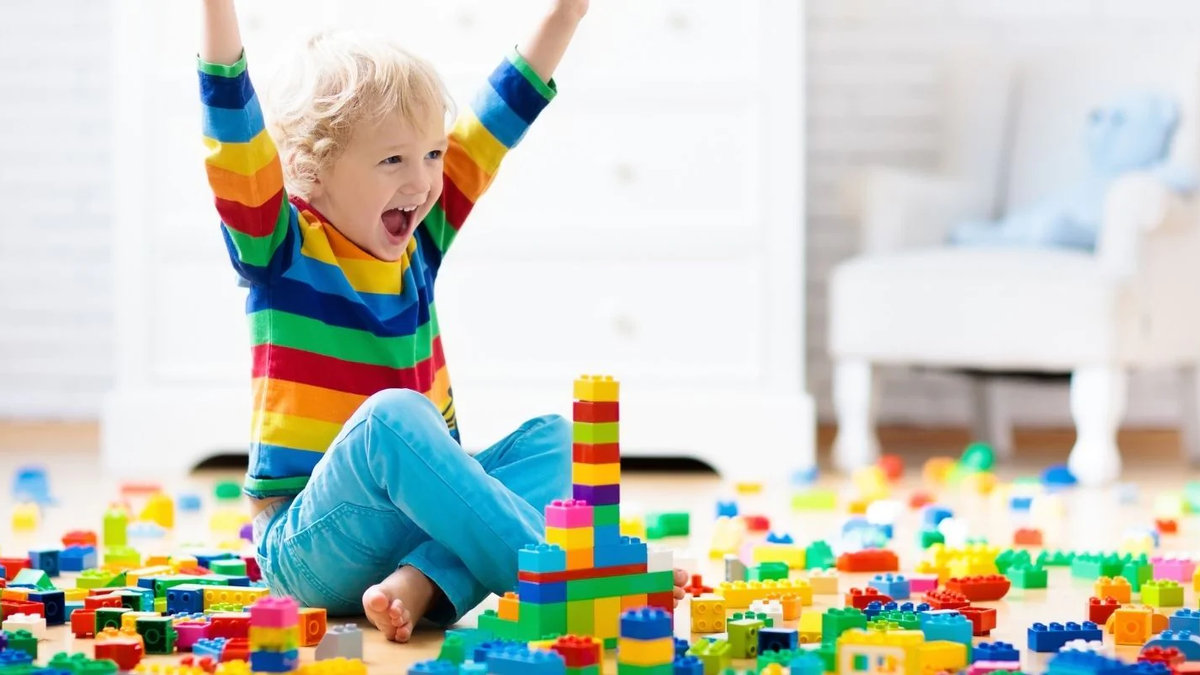
- Large-piece construction toys: Duplo blocks, magnetic tiles — connecting and disconnecting pieces engages the fingers and stimulates planning.
- Pouring and transferring games: funnels, colanders, cups — simple and remarkably effective for motor control.
For gross motor skills
- Balls of different sizes and textures: throwing, catching, rolling — each movement challenges balance and coordination.
- Tunnels and balance cushions: stimulate proprioception and strengthen core muscle tone.
- Push and pull toys: encourage walking and develop dynamic balance.
- Secure mini-trampolines: rhythmic impact stimulates the vestibular and proprioceptive systems.
| Domain | Recommended toys | Skills targeted |
|---|---|---|
| Fine motor | Shape sorters, putty, beads to thread | Pincer grasp, eye-hand coordination, finger strength |
| Gross motor | Balls, tunnels, mini-trampolines | Balance, coordination, muscle tone |
| Language | Picture books, pretend-play sets, puppets | Vocabulary, turn-taking, expression |
| Cognition | Puzzles, cause-and-effect toys, sorting games | Problem-solving, memory, categorization |
| Sensory | Sensory toys, textured balls, sensory bins | Sensory regulation, tactile exploration |
Sensory toys: an indispensable ally
Many children with Down syndrome have sensory particularities: hypersensitivity to certain sounds or textures, or conversely, an intense drive to seek out tactile and proprioceptive input. Sensory toys address these needs by providing a safe environment to explore and self-regulate.
What goes in a well-stocked sensory box
A well-equipped sensory box can transform a difficult moment into one of calm exploration. Here are the basics for a child with Down syndrome:
- Textured balls — different surfaces (smooth, rough, spiky) stimulate the tactile receptors in the hands.
- Putty or kneading clay — to squeeze or chew depending on the child's needs (consult a therapist for oral use).
- Vibrating or light-up objects — capture attention and stimulate the visual and tactile systems.
- Fabrics with varied textures — velvet, velcro, satin — to feel, rub, wrap.
- Rolling or spinning toy — the steady circular motion has a recognized calming effect.
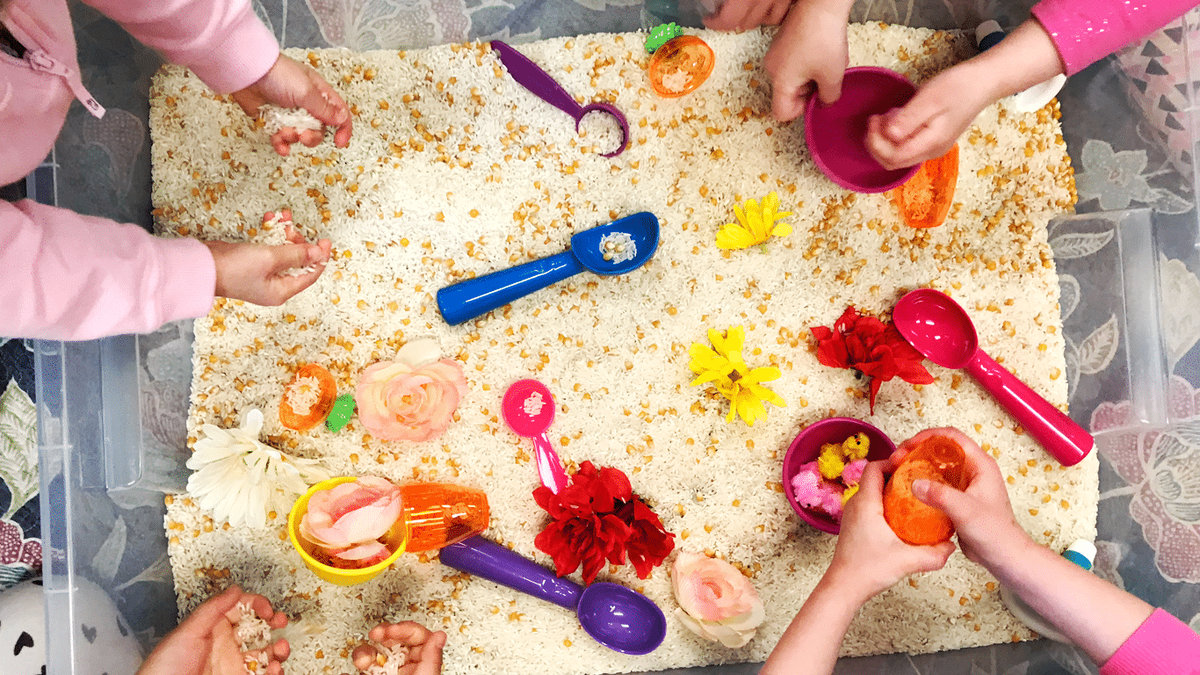
- Kinetic sand or coloured rice — pouring and kneading calm the child while simultaneously building fine motor skills.
Tip: involve the child in building their sensory box. Letting them choose what goes in reinforces their sense of autonomy and increases engagement during play sessions.
Play and language development
Language is often one of the domains most affected by Down syndrome. Receptive language (understanding) typically develops faster than expressive speech — meaning the child understands far more than they can say. Play is one of the most natural and effective contexts for stimulating language, as long as it is approached in the right way.
Play strategies that support language
- Comment, don't quiz: instead of asking "what's that?", simply describe what you see — "oh, a red dog!" The child absorbs vocabulary without pressure.
- Mirror the child: repeat their vocalizations or gestures to create a natural exchange and show them their communication matters.
- Bright, bold picture books: pointing, naming, repeating — reading together is one of the richest language activities there is.
- Puppets and pretend play: children with Down syndrome often love make-believe, which stimulates storytelling, vocabulary and turn-taking.
- Songs and rhymes with gestures: music and rhythm make it easier to memorize words and sentence structures.
Good to know: Augmentative and Alternative Communication (AAC) — Makaton signs, picture symbols, communication apps — complements play and verbal language. It reduces the child's frustration and can actually accelerate the emergence of spoken language.
Setting up a play environment that works
Even the best toy in the world will not reach its full potential in a poorly adapted environment. A few simple adjustments can transform a play space and maximize its benefits for a child with Down syndrome.
Environment design principles
- Accessibility: toys should be within reach, stored at the child's height in open, clearly visible bins. An orderly environment reduces sensory overload and helps the child make choices.
- Toy rotation: too many toys at once discourages deep exploration. Offer 4 to 6 toys at a time and rotate regularly to maintain interest.
- Movement space: keep enough floor space for gross motor play — rolling, crawling, jumping.
- Reducing distractions: turn off the television and limit background noise during focused play sessions. Children with Down syndrome are often easily distracted by auditory stimuli.
- Safety: avoid toys with small parts for as long as the child mouths objects — which may be longer than with neurotypical children.
Playing together: the adult as play partner
Solo play has its place, but shared play with an adult or peer is especially beneficial for children with Down syndrome. The adult models behaviours, introduces new vocabulary, sustains motivation and provides immediate feedback. A few minutes of intentional shared play each day is worth more than an hour of unguided solo play.
How to choose the right toys by developmental stage
Choosing a suitable toy for a child with Down syndrome starts with observation: what does the child do easily? What interests them? What challenges them just slightly? Here are some practical benchmarks by developmental stage — keeping in mind these stages do not correspond to chronological age.
Sensory exploration stage (developmental age 0–18 months)
The child discovers the world through their senses. Prioritize:
- High-contrast mobiles (black, white, red)
- Rattles and food-grade teething toys
- Soft balls with varied textures
- Simple musical toys (cause and effect: press here, hear a sound)
Functional play stage (developmental age 18 months to 3 years)
The child begins using objects according to their function. Offer:
- Large geometric shape sorters
- Imitation toys (toy phone, play kitchen, dolls)
- Thick board books with large pictures
- Balls and push/pull toys to support walking
Symbolic and social play stage (developmental age 3–6+ years)
The child engages in pretend play and begins cooperating with peers. Try:
- Construction sets (blocks, Duplo, magnetic tiles)
- Puppets and figurines for symbolic play
- Simple board games (memory, picture lotto)
- Progressive puzzles (4 to 24 pieces depending on progress)
- Adapted art supplies (triangular crayons, finger paint)
To go deeper on age-appropriate toys, check out our guide to the best toys for child development and our article on toys for children with special needs.