The extra-tough chewable tool gives people with intense oral sensory needs a safe, hygienic and durable outlet. Made from certified food-grade silicone, it replaces shirt collars, pencils and fingernails with something actually built to be chewed — without risk and without judgment.
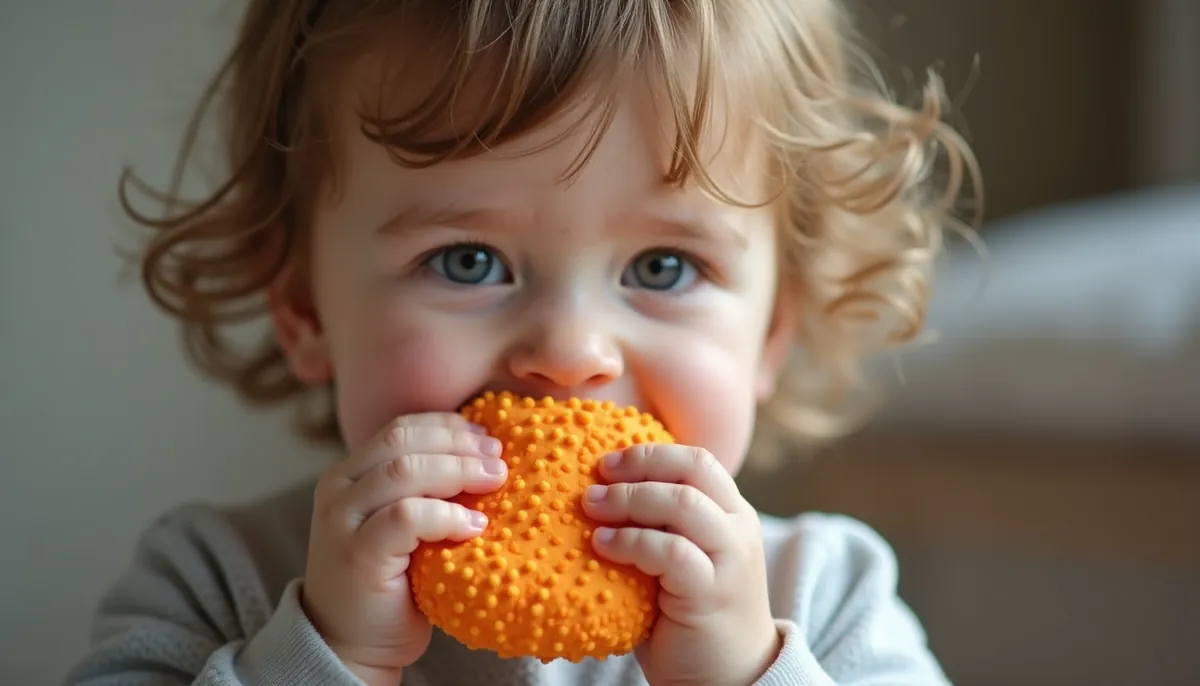
Your child is gnawing through shirt sleeves. They chew pencils in class, bite their nails during homework, or come home with a collar that has been thoroughly soaked and stretched. Before you worry or scold, know that this behaviour has a name and a very real neurological explanation: oral sensory seeking. It is not a bad habit to muscle out — it is the nervous system calling out for input.
The extra-tough chewable tool is purpose-built to answer that need in a way that is safe, hygienic and socially acceptable. It is not a gimmick or a crutch — it is a type of sensory tool that occupational therapists commonly suggest for children and adults with strong oral sensory needs. Here is everything you need to know to choose the right model and make it part of everyday life.
Understanding oral sensory seeking
The oral proprioceptive system — the mouth, jaw, lips and tongue — is one of the most powerful sources of sensory input in the human body. Chewing, biting and sucking activate receptors that send strong signals to the brain — and for many people, they help ease tension, support focus and aid self-regulation.
In some people, this need is especially pronounced. You will find this sensory profile in several contexts:
- Children and adults with ADHD, who use oral stimulation to maintain alertness and concentration.
- Autistic individuals, whose sensory systems may be hyper- or hypo-sensitive, and who find chewing an effective regulator.
- Anxious individuals, for whom chewing acts as a coping mechanism under stress.
- Young children whose nervous systems are still developing and who go through a prolonged oral phase.
- People with Sensory Processing Disorder (SPD) who seek intense proprioceptive input across the body.
Good to know: chewing is not a vice or a sign of regression. It is a natural adaptive behaviour. The goal is not to eliminate it, but to give it a safe and appropriate channel.
Benefits beyond calming
- Oral motor development: for children, chewing against resistance strengthens the jaw muscles and supports the oral motor skills involved in speech and feeding.
- Protection for teeth and gums: a purpose-made tool is far safer than pencils, pen caps or toy parts, which can chip teeth, hurt the gums or break into small pieces.
- Stress relief for adults too: chewing gives anxiety a physical outlet, and a durable tool keeps doing its job through frequent use.
Why choose an extra-tough model?
Not all chewable tools are equal. There are three resistance levels on the market, and picking the right one is essential — both for safety and effectiveness.
Resistance levels explained
Soft models suit people who chew lightly, for instance during occasional stress. Medium models cover the majority of users with a regular but moderate need. The extra-tough model is designed for heavy chewers — those who tend to bite through, tear or destroy standard models within weeks, sometimes days.
Signs you need the extra-tough model
Choose the extra-tough chewable tool if the person:
- bites with strong, constant pressure;
- has already broken or torn a standard chewable tool;
- chews hard objects like wooden pencils, pens or toy parts;
- leaves deep tooth marks in their current tools;
- is a teenager or adult with a more developed jaw.
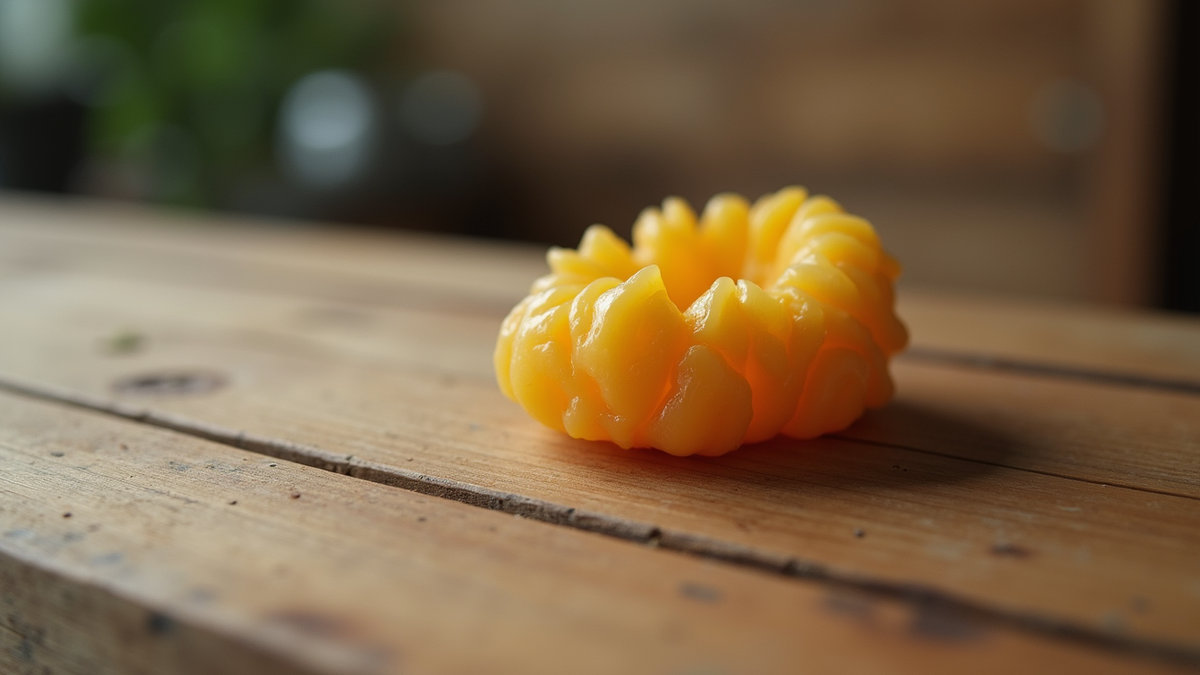
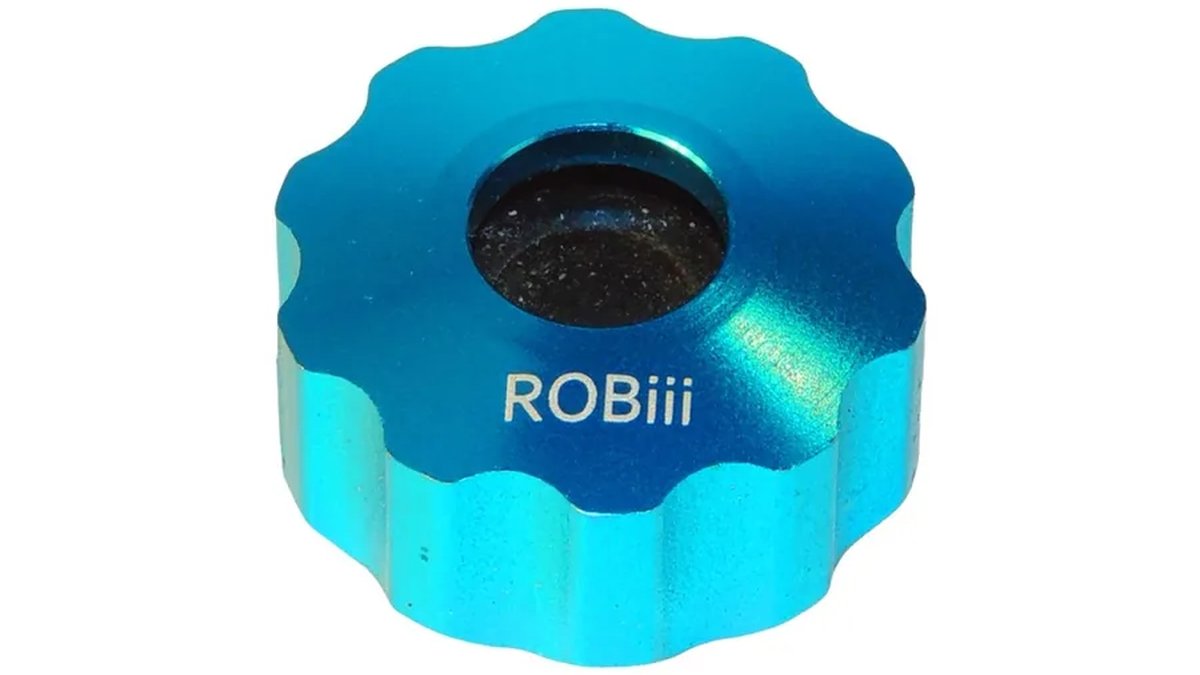
Robiii product
Extra-Tough Chewable Tool
Oral sensory tool made from thick, certified food-grade silicone. Designed for heavy chewers — children, teens and adults — who need superior durability. BPA-free, phthalate-free, latex-free.
$7.99 CAD · View in store →
Safety and materials: what really matters
When a tool is meant to go in someone's mouth, materials are not a matter of preference — they are a matter of health. Here are the certifications and criteria to verify before buying any chewable tool, regardless of the brand:
| Criterion | What it means | Why it matters |
|---|---|---|
| BPA-free | No bisphenol A | Endocrine disruptor linked to hormonal issues |
| Phthalate-free | No chemical plasticizers | Potentially harmful to hormonal development |
| Latex-free | No natural rubber | Prevents severe allergic reactions |
| PVC-free | Pure silicone or food-grade TPE | Inert, stable at high temperatures |
| Canadian standards | Health Canada compliant | Guarantees independent safety testing |
Maintenance tip: check the tool every week. As soon as you notice cuts, tears or pieces starting to break off, replace it immediately to prevent accidental ingestion.
How to make the chewable tool part of daily life
Introducing a chewable tool successfully takes a bit of strategy. Here is how to go about it, whether at home or in school:
At home
- Introduce it positively: present the tool as something special and practical, never as a punishment or an oddity.
- Identify key moments: homework time, busy family dinners, car trips, stressful evenings — have the tool within reach precisely at those times.
- Involve the child in the choice: the shape (pendant, bracelet, hand-held) and colour matter. A child who likes their tool will use it.
- Set up a cleaning routine: rinse with warm soapy water after each use and run it through the dishwasher once a week.
- Rotate two or three tools: having more than one keeps interest high and lets you clean one while another is in use.
- Stay consistent: offer the tool regularly and do not be discouraged if it takes a few days for the child to adopt it.
At school
Coordinate with the teacher and, if possible, the school's occupational therapist. Note in the student's accommodation plan that using a chewable tool is an authorized sensory diet strategy. Many teachers quickly notice that the student is less restless and more focused once their oral need is met appropriately. You may also find our strategies for teachers and parents supporting an ADHD student helpful.
Shapes, styles and how to choose
The market offers several shapes of chewable tools, each suited to a different usage profile. Here is an overview of the most common ones:
- Pendant: worn around the neck on a safety breakaway cord. The most discreet and practical option for school.
- Bracelet: worn on the wrist, always within reach. Ideal for people who need quick oral input without pulling something out of a bag.
- Hand-held chew toy: held in the hand, useful for home work sessions or therapy appointments.
- P- or T-shaped: designed to be held between the teeth on both sides, promoting symmetrical chewing and preventing fatigue on one side of the jaw.
A well-chosen chewable tool does not draw attention — it disappears into daily life and leaves the child free to focus on what actually matters. — The Robiii team
Building a complete oral sensory diet
The extra-tough chewable tool is often the starting point of a broader sensory diet. It is one piece of a set of proactive strategies designed to meet a person's sensory needs before frustration or overload sets in.
For a rounded approach, combine the chewable tool with other complementary sensory supports:
- The Rolliii, a pencil fidget that keeps the hands busy, silently, during homework.
- A fidget tool to keep the hands busy during cognitive tasks.
- Regular movement breaks (jumping, wall push-ups, squats) to discharge built-up energy.
- Chewy foods (carrots, apples, bagels) at snack and meal times.
Together, these elements form a sensory safety net that reduces challenging behaviour — not by suppressing it, but by satisfying the underlying need. The benefits of sensory tools have been discussed in pediatric occupational therapy for decades, and chewing tools are a common part of sensory strategies — although research on classroom sensory-based interventions is still limited and results vary from one child to another (Case-Smith et al., 2015).